StopTheGame Protesters Occupy Department of Sport Over Ireland-Israel Soccer Fixtures
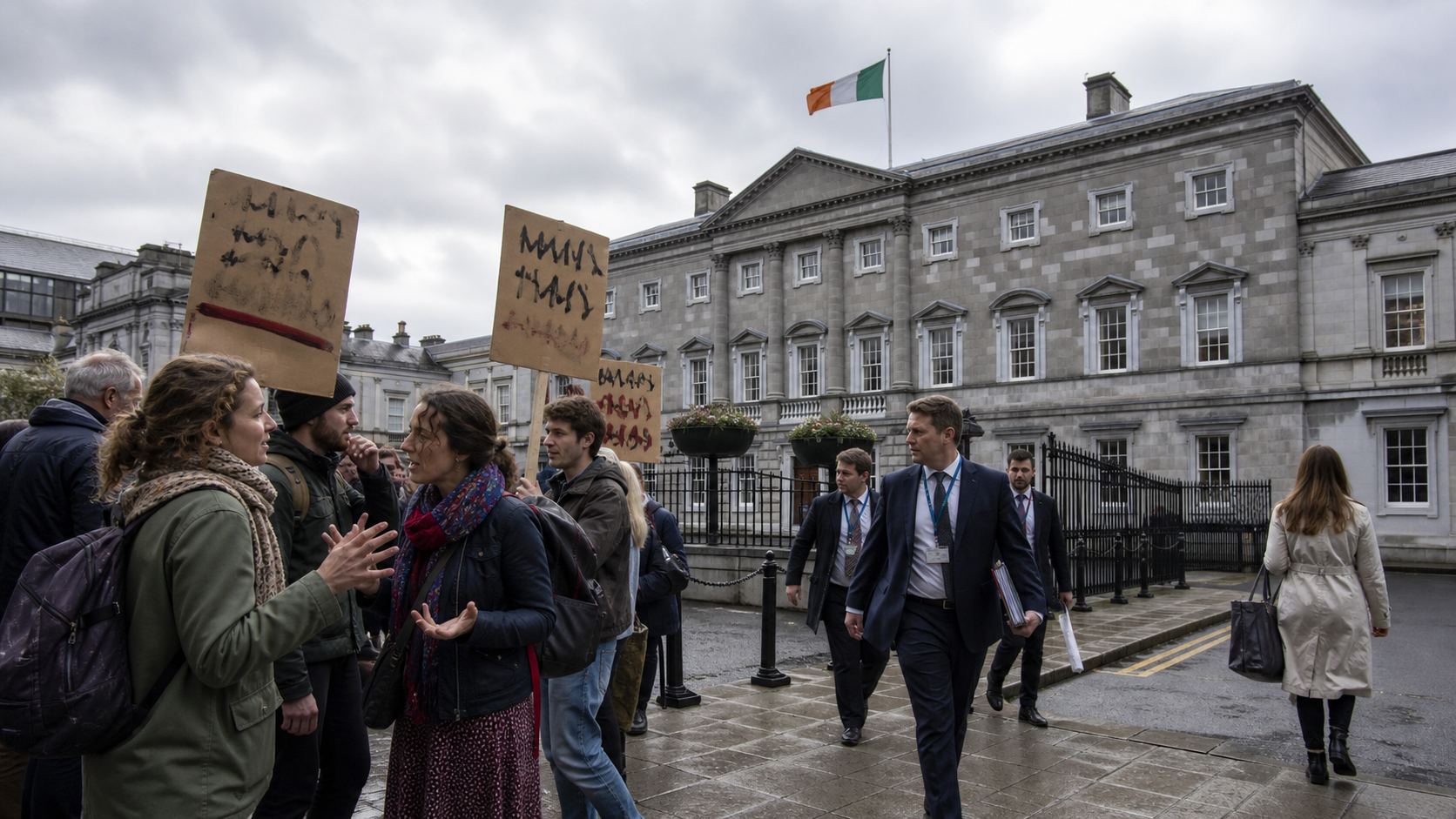
Members of the StopTheGame campaign occupied the reception area of the Irish Department of Sport on Leeson Lane in Dublin on Tuesday afternoon, demanding that government officials intervene to cancel the Republic of Ireland's upcoming UEFA Nations League fixtures against Israel. Gardaí were called to the scene in accordance with standard protocols, and the group was dispersed after occupying the premises for less than two hours. No arrests were made. The government reiterated its position that the Football Association of Ireland is an autonomous body and that the state has no role in organising or cancelling international football fixtures.
Background
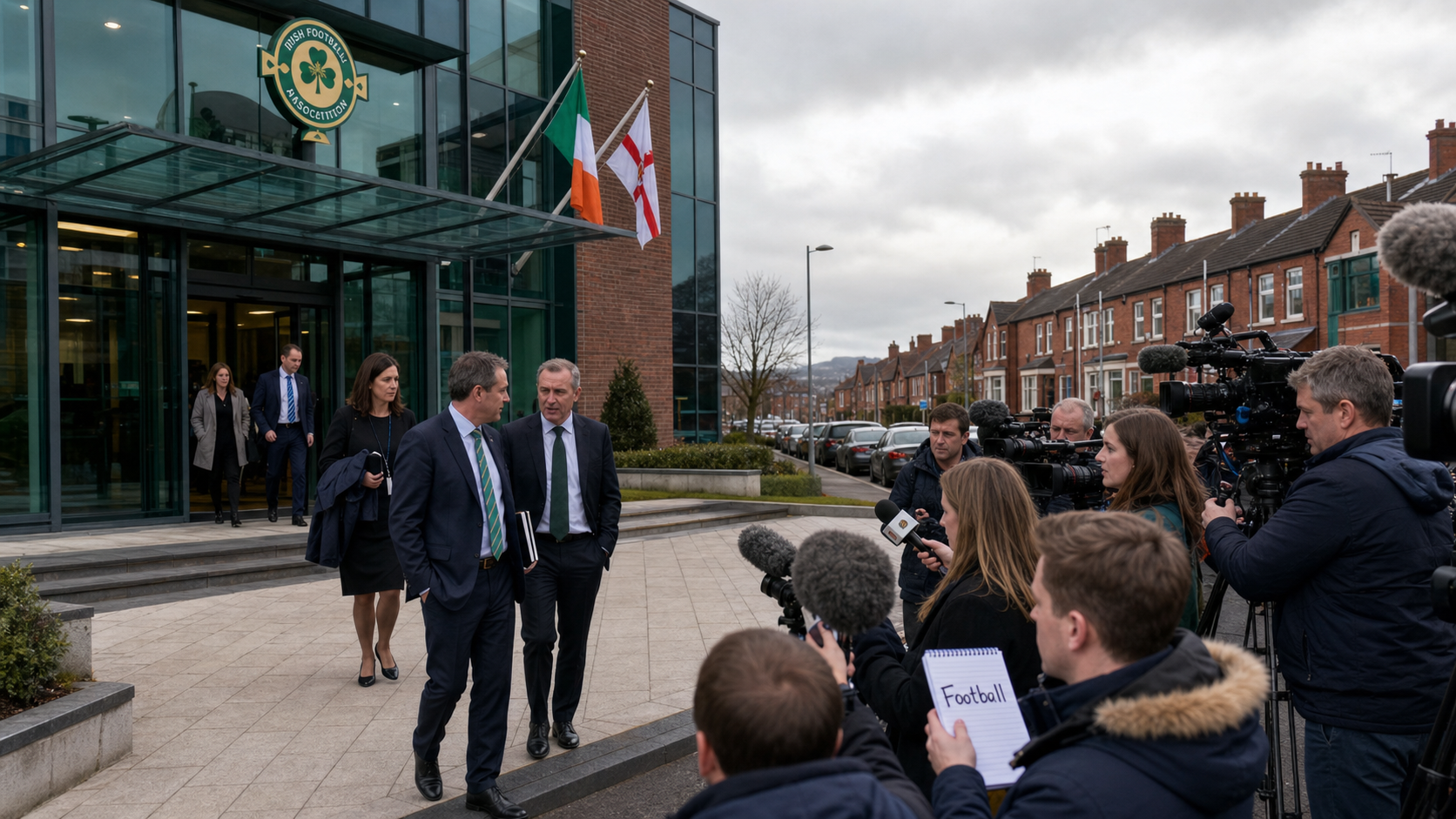
The controversy over Ireland's Nations League fixtures against Israel has been building for months, driven by the ongoing conflict in Gaza and a growing campaign within Irish civil society to use sport as a lever for political pressure. The FAI confirmed earlier this year that it faces the threat of potential disqualification from UEFA if it refuses to fulfil its Nations League obligations, a position that has been consistently maintained by the governing body despite significant public and political pressure to boycott the fixtures.
The away fixture against Israel is scheduled for September 27, 2026, in Debrecen, Hungary — Israel having been required by UEFA to play its home matches in neutral venues due to security concerns. The home fixture, originally intended for Dublin, was relocated to Bačka Topola in Serbia and will be played behind closed doors on October 4, 2026. The FAI cited "operational challenges" in explaining the decision to move the home game, a formulation that satisfied neither the protesters nor many within the football community.
The StopTheGame campaign has been active since the beginning of the year, organising protests at the Irish embassy in London, disrupting a friendly match between Ireland and Qatar in Dublin by throwing tennis balls onto the pitch, and now occupying a government department. The campaign has the support of several Dublin city councillors, including Cieran Perry, and has drawn expressions of sympathy from politicians across the Dáil, though no party has formally called for the FAI to withdraw from the fixtures.
Key Developments
Tuesday's occupation of the Department of Sport lasted less than two hours before Gardaí dispersed the group. The protesters demanded to speak with officials about the upcoming fixtures and called on the government to use its influence with the FAI to secure the cancellation of the matches. A spokesperson for the Department of Sport reiterated the government's position: the FAI is an autonomous sporting body, and the state has no role in organising or cancelling international football fixtures. The government's position is consistent with the principle of sporting autonomy that underpins the relationship between governments and sporting bodies across Europe.
Dublin city councillor Cieran Perry, who was among the protesters, described the government's response as inadequate. "The government funds sport in this country, and it has a responsibility to ensure that public money is not used to facilitate what we believe is sportswashing," he said. The StopTheGame group indicated that it intends to create a dedicated website to coordinate further actions targeting both the government and the FAI until the fixtures are cancelled.
Why It Matters
The Ireland-Israel fixtures controversy reflects a broader tension between the principle of sporting autonomy and the growing expectation that sport should be responsive to political and humanitarian concerns. Ireland has a long tradition of using sport as a vehicle for political expression — the boycott of the 1980 Moscow Olympics, the controversy over apartheid-era South Africa — and the current campaign draws on that tradition. However, the FAI's position — that withdrawal from the fixtures would result in disqualification from UEFA competitions — is not a trivial consideration. The consequences of disqualification would extend well beyond the current controversy, affecting Irish football at all levels for years to come. The government's refusal to intervene reflects a judgment that the principle of sporting autonomy, and the practical consequences of overriding it, outweigh the political pressure to act.
Local Impact
The controversy has generated significant debate within the Irish football community, with supporters, players, and officials divided on the appropriate response. The FAI has received both criticism and support for its decision to fulfil the fixtures, and the organisation's leadership has been under considerable pressure to explain its position. In Dublin, where the home fixture was originally scheduled to be played, the decision to relocate the match to Serbia has been welcomed by some as a compromise that avoids the most visible form of engagement with the controversy, while others have argued that it changes nothing of substance.
What's Next
The StopTheGame campaign has indicated that it will continue to escalate its activities in the weeks leading up to the September fixture in Hungary. Further protests are expected at FAI headquarters and at government buildings. The FAI is expected to publish a detailed statement of its position in the coming days, addressing the concerns raised by the campaign and explaining the consequences of withdrawal from the fixtures. The September 27 fixture in Debrecen will be the next major flashpoint in the controversy.