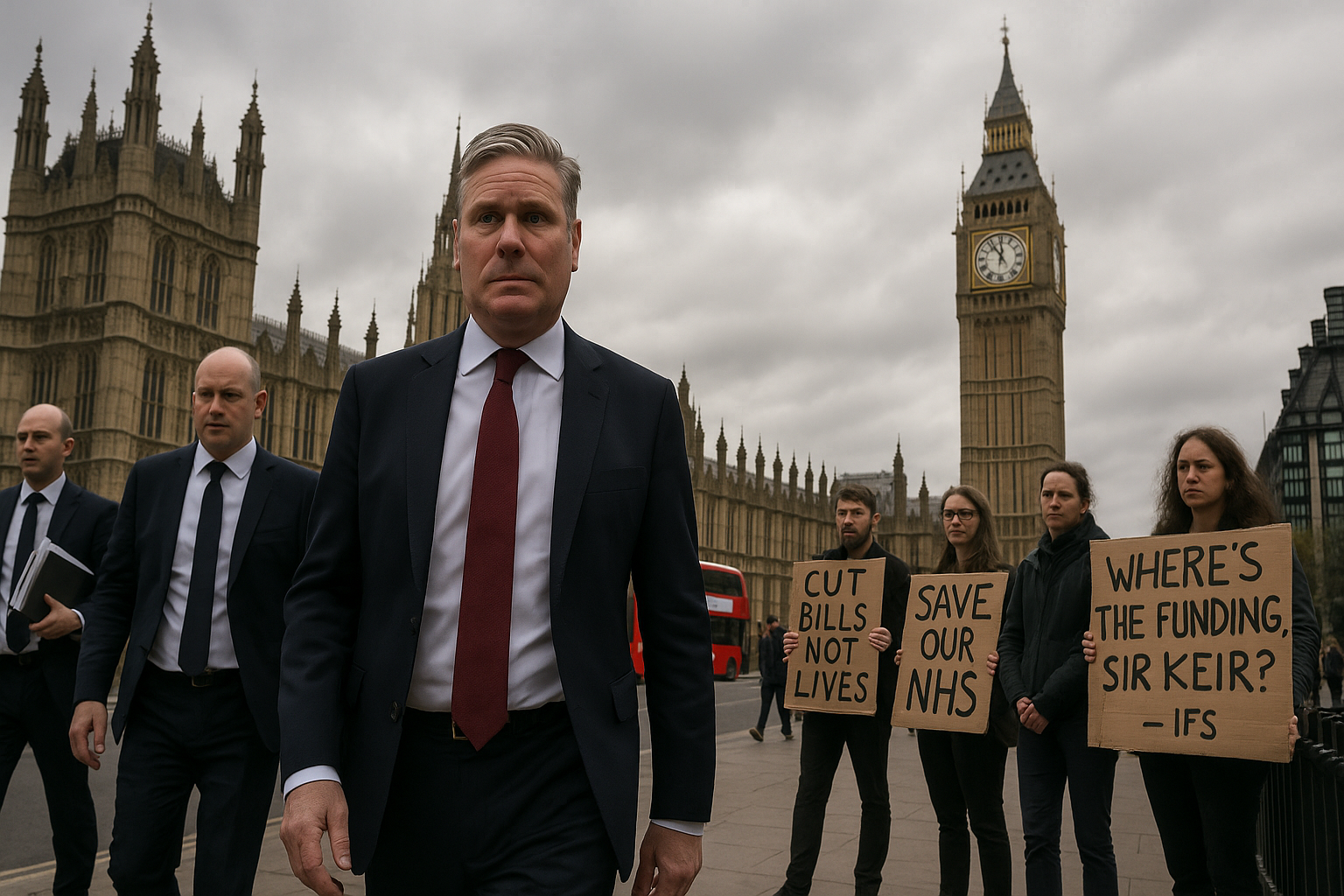
Starmer's Labour in Freefall: Leadership Crisis Deepens as Reform UK Surges Ahead in Polls
Keir Starmer's Labour government is confronting the most severe political crisis of its tenure, with approval ratings at historic lows, a sitting MP publicly demanding his resignation, and Nigel Farage's Reform UK establishing a commanding lead in the polls ahead of May's crucial local elections.Background
Labour's landslide victory in the July 2024 general election was supposed to herald a new era of stable, progressive governance after fourteen years of Conservative rule. Starmer campaigned on a platform of economic stability, NHS renewal, and a break from the chaos of the Johnson and Truss years. The scale of the mandate — Labour's largest parliamentary majority in decades — gave the new government enormous political capital and public goodwill.
That goodwill has been squandered at a pace that has alarmed even Labour's most loyal supporters. Within months of taking office, the government was embroiled in controversies over ministerial gifts, the removal of the winter fuel payment from millions of pensioners, and a series of policy reversals that left voters questioning what Labour actually stood for. By early 2026, a YouGov poll recorded the government's net approval rating at a staggering -59, with 70% of voters disapproving — figures that place Starmer among the least popular prime ministers in modern polling history.
The political backdrop has been further complicated by the rise of Reform UK under Nigel Farage, which has capitalised on Labour's perceived failures to establish itself as the dominant force in English politics. Reform's populist messaging on immigration, energy costs, and public services has resonated with voters who feel abandoned by both major parties, creating a three-way squeeze that has left Labour fighting on multiple fronts simultaneously.
Key Developments
The crisis reached a new flashpoint on 22 April 2026 when Labour MP Jonathan Brash became the first sitting government backbencher to publicly call for Starmer's resignation. Brash cited the ongoing "psychodrama" surrounding the Mandelson scandal — involving investigations into former chief of staff Morgan McSweeney and revelations about Lord Mandelson's failed security vetting — as a critical distraction from the government's core mission. The scandal has dominated Westminster coverage for weeks, crowding out any positive messaging the government has attempted to project.
The polling picture is equally grim. Labour's average share of support has fallen to 17.4%, trailing Reform UK at 29% and the Conservatives at 19%. In Wales, polling suggests Reform is neck and neck with Plaid Cymru, while London — once considered an impregnable Labour fortress — is showing "big gains for Reform on the cards." Starmer has responded by instructing his cabinet to "target 'divisive' Reform in 2026," framing the political choice as one between Labour "renewing the country" and a Reform party that he accuses of feeding on "grievance, decline and division."
Conservative leader Kemi Badenoch has also seized on Labour's weakness, describing Starmer as a "weak prime minister" leading a government with "no plan, no agenda." A Reform UK spokesman, meanwhile, has argued that the Labour government has failed to control the cost of living, leading to soaring household bills, skyrocketing taxes, and stagnant economic growth.
Why It Matters
This is not merely a mid-term dip of the kind that afflicts most governments. The scale and speed of Labour's collapse is historically unusual. For context, Tony Blair's government — which also won a landslide in 1997 — maintained approval ratings above zero for its first three years in office. Starmer's government has achieved negative net approval within eighteen months, a trajectory that mirrors the final days of John Major's Conservative government rather than a newly elected administration.
The May 2026 local and devolved elections represent a genuine existential test. If Reform UK makes the gains that polling suggests — particularly in English councils and potentially in the Welsh Senedd — the pressure for a leadership challenge will become irresistible. Unlike Scotland, where the SNP provides a distinct political identity that insulates Labour from Reform's advance, England's political geography is far more vulnerable to a populist insurgency. The Mandelson scandal has also reopened questions about the government's judgment and its relationship with the party's old guard, precisely the perception Starmer sought to escape when he became leader.
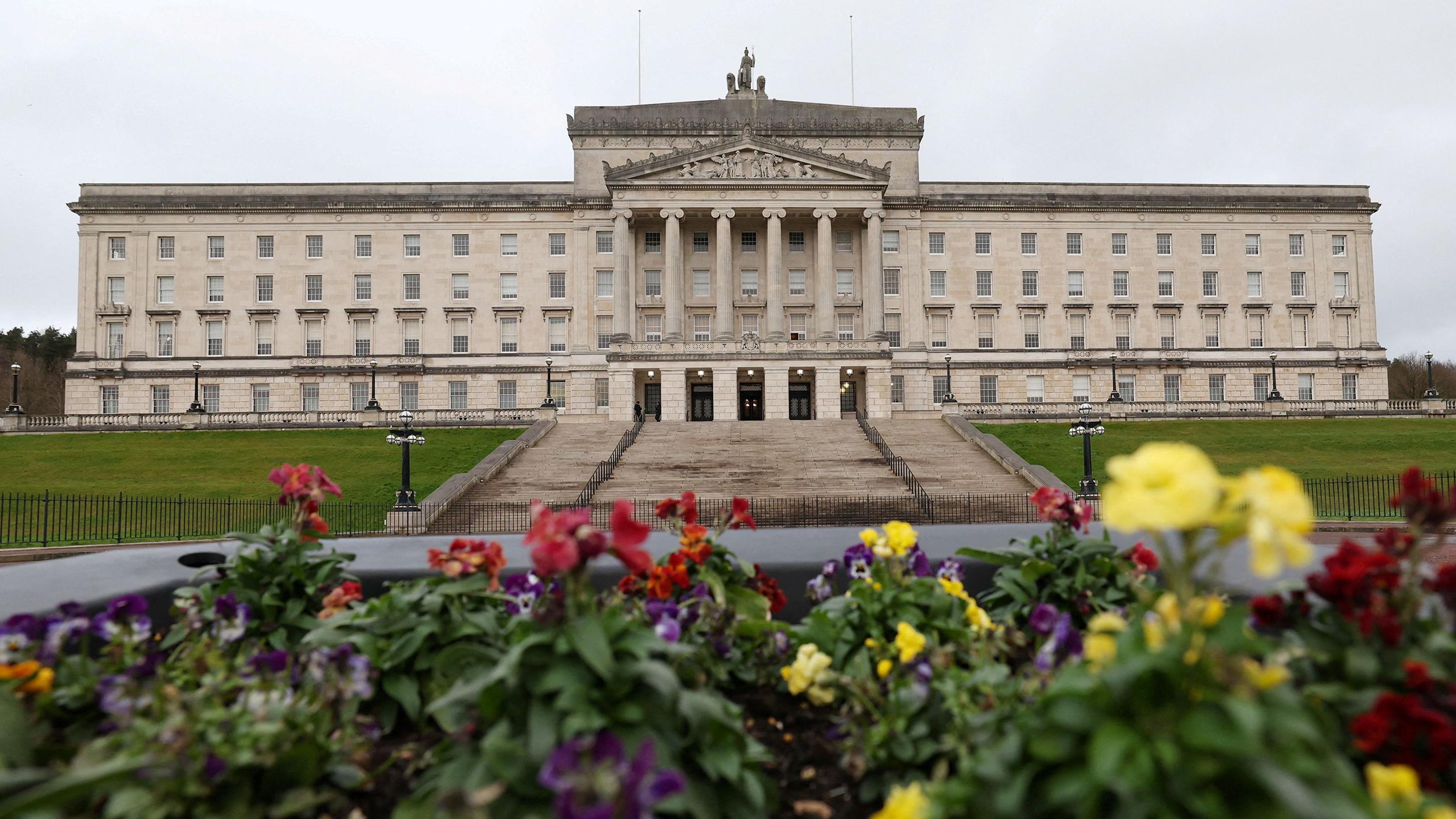
For Northern Ireland and Ireland, a weakened Starmer government creates uncertainty around the implementation of the Windsor Framework, the Troubles Legacy Bill, and the broader UK-Ireland relationship. A government consumed by internal crisis is rarely one that devotes sustained attention to the complexities of the island of Ireland.
Local Impact
Across the UK and Ireland, the political turbulence in Westminster has tangible consequences. In Northern Ireland, the uncertainty around Stormont's relationship with a potentially destabilised Westminster government adds another layer of complexity to an already fragile power-sharing arrangement. In Scotland, Labour's collapse strengthens the SNP's narrative that Westminster is ungovernable. For communities across England relying on public services — from NHS waiting lists in the North East to housing pressures in the Midlands — a government paralysed by internal crisis is one less capable of delivering the reforms it promised. In Ireland, the prospect of a weakened or replaced Labour government raises questions about continuity on shared policy priorities including the Troubles legacy process.
What's Next
The May 2026 local elections, now just days away, will be the first major electoral test of Starmer's embattled premiership. A poor performance — particularly if Reform UK makes significant gains in traditional Labour heartlands — is expected to trigger formal calls for a leadership review within the parliamentary party. The government has also committed to introducing a "substantial package of amendments" to the Troubles Legacy Bill in the next parliamentary session, a process that will require political bandwidth the government may struggle to find. Watch for the results on the night of 7 May 2026 as the defining moment for Starmer's future.
Sources: The Guardian — UK Politics Live, 22 April 2026; BBC News — Starmer targets Reform UK, 2026