Starmer's Cost of Living 'Reset' Faces Scepticism as NHS Pressures Mount
The Starmer government's much-heralded "reset" — centred on tackling the cost of living crisis and reforming the NHS — is facing mounting scepticism from economists, healthcare professionals, and the public alike, as external economic pressures and internal political turmoil undermine the administration's ability to deliver on its core promises.Background
When Labour came to power in July 2024, the cost of living crisis was already well established. Energy bills had soared following Russia's invasion of Ukraine, food inflation had hit double digits, and mortgage rates had risen sharply as the Bank of England raised interest rates to combat inflation. The NHS was emerging from a period of prolonged industrial action, with waiting lists at record highs and staff morale at a historic low. Labour's manifesto promised to address all of these challenges through a combination of green energy investment, NHS reform, and targeted support for low-income households.
The government's early months were marked by a series of policy announcements designed to signal intent: increases in the minimum wage, the abolition of the two-child benefit cap, and a £13 billion warm homes plan designed to lower energy bills through green technologies. In Scotland, Labour launched a manifesto with ambitious NHS pledges, including cutting waiting times, guaranteeing GP appointments within 48 hours, and introducing new cancer screening services, backed by a proposed £680 million investment in technology and digital improvements.
However, the implementation of these policies has proved far more difficult than the rhetoric suggested. The warm homes plan has been slow to roll out, with contractors reporting difficulties accessing funding. The NHS waiting list, while showing some improvement, remains at historically elevated levels. And the government's fiscal headroom — already tight — has been further squeezed by slower-than-expected economic growth and the costs of the ongoing energy crisis.
Key Developments
On 13 January 2026, Starmer reiterated that the cost of living was the UK's "number one issue," advocating for an "agile and active state" to deliver solutions. The statement came as new data showed that UK inflation had accelerated to 3.3% in March 2026, driven primarily by rising petrol prices linked to the conflict in the Middle East. The Organisation for Economic Co-operation and Development has warned that the UK, with its high reliance on imported gas, faces the biggest hit to economic growth among G20 nations from the current energy shock.
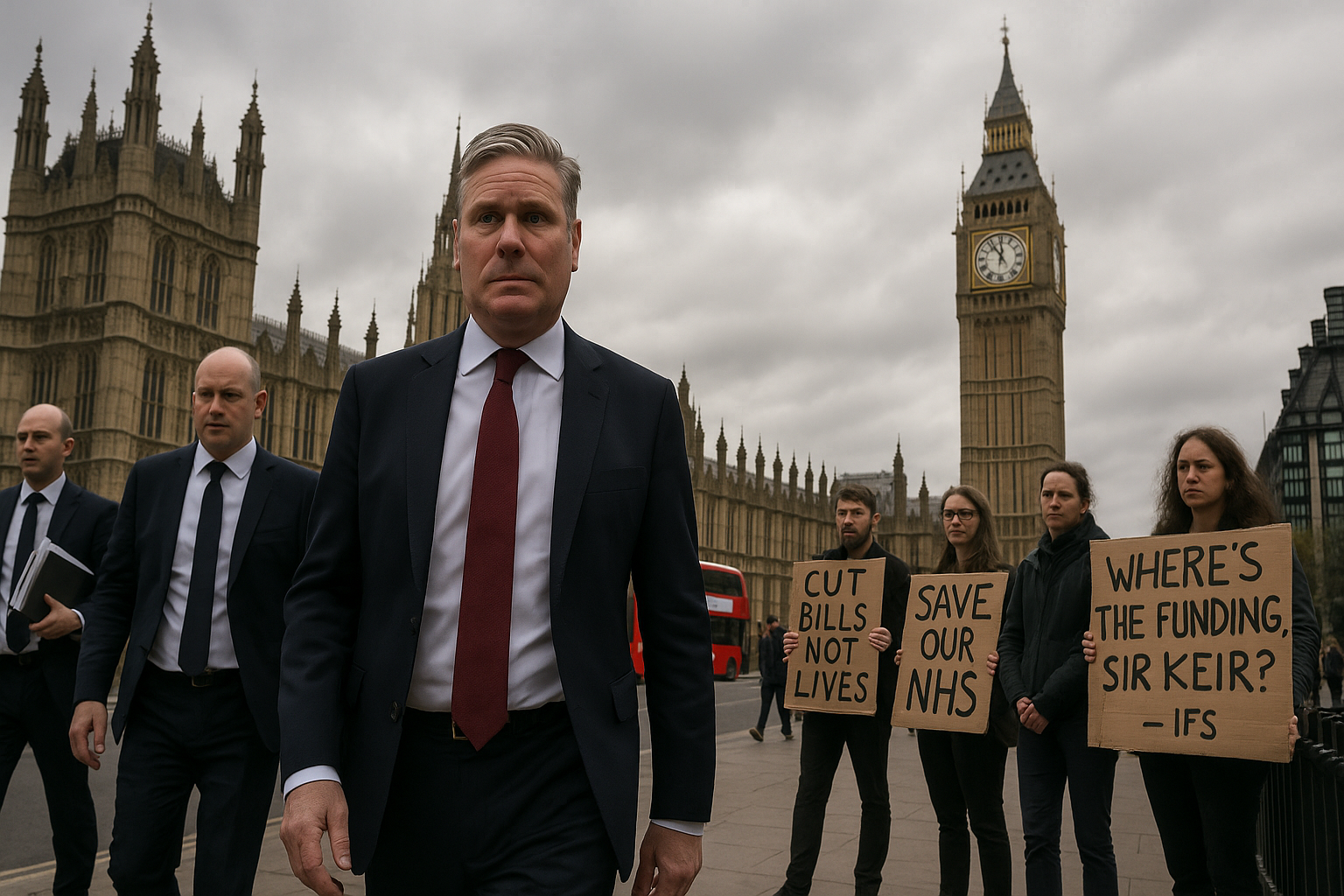
The NHS pledges have attracted particular scrutiny. The Institute for Fiscal Studies has questioned the funding mechanisms for the 48-hour GP appointment guarantee, suggesting it might necessitate cuts in other public services. GPs themselves have described the pledge as "almost impossible" to deliver without a significant increase in the number of doctors and overall capacity — a workforce challenge that cannot be resolved in the short term regardless of funding levels. Meanwhile, an NHS England chief warned in April that a planned doctors' strike was strategically timed to cause "significant disruption" over the Easter break, highlighting the ongoing tensions between the government and medical staff.
Why It Matters
The gap between Labour's promises and its delivery is not merely a political problem — it has real consequences for millions of people across the UK. For context, the UK average wait for a routine NHS appointment is now over 18 weeks, compared to the 18-week target that has been in place since 2004. In Northern Ireland, where the health service is separately administered, waiting times are even longer, with some patients waiting years for specialist appointments. The cost of living crisis, meanwhile, is hitting the most vulnerable hardest: food bank usage in the UK has reached record levels, and the Joseph Rowntree Foundation estimates that 3.8 million people are in destitution. A government that promised to change this and has not delivered faces a credibility problem that goes beyond polling numbers.
Local Impact
Across the UK and Ireland, the cost of living crisis is felt acutely in different ways. In Northern Ireland, where wages are lower than the UK average and energy costs are proportionally higher, the squeeze on household budgets is particularly severe. In the Republic of Ireland, rising retail fuel costs — driven by the same global energy dynamics — have pushed consumer confidence to its lowest level since December 2022. In Scotland and Wales, devolved governments are attempting to supplement UK-wide support with their own targeted measures, but their fiscal capacity is limited. For communities in the North of England and the Midlands, the combination of high energy costs, stagnant wages, and deteriorating public services is fuelling the political discontent that Reform UK is exploiting.
What's Next
The government's Spring Statement, expected in the coming weeks, will be closely watched for any new measures to address the cost of living crisis. The Bank of England's Monetary Policy Committee meets in May, with markets divided on whether it will cut interest rates or hold steady in the face of renewed inflationary pressure. On the NHS, the government has committed to publishing a ten-year plan for health service reform by the end of 2026 — a document that will be scrutinised intensely for the credibility of its funding assumptions.
Sources: The Guardian — Starmer cost of living statement, January 2026; BBC News — Scottish election pledges analysis, 2026