Sinn Féin Rallies at Ard Fheis as McDonald Eyes By-Election Gains
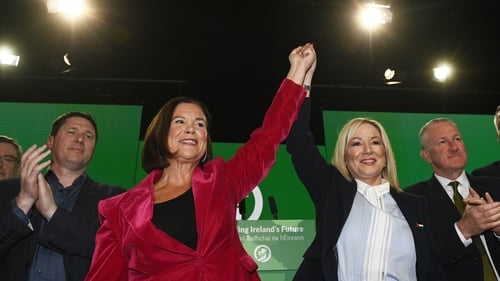
Sinn Féin held its annual Ard Fheis at the ICC Belfast on 24 and 25 April 2026, with party leader Mary Lou McDonald using the occasion to firmly dismiss leadership speculation, call for voter backing in upcoming by-elections in Dublin Central and Galway West on 22 May, and demand an emergency mini-budget to address the cost-of-living crisis. The conference, which saw delegates debate and vote on 164 motions, was designed to frame Sinn Féin as a government-in-waiting, with a primary focus on housing, cost of living, and healthcare reform.
McDonald made a definitive statement affirming her position, declaring there are "no plans to change or replace the leader of Sinn Féin" and describing the party as "very, very united" and at its strongest point since 1921. The leadership speculation had been fuelled by two incidents: the failure of McDonald's reported preferred candidate to be selected for the Dublin Central by-election, and the membership's rejection of a leadership proposal to change the annual Ard Fheis to a biennial conference. McDonald framed both outcomes as evidence of healthy internal democracy, stating "the members are the ones who set policy."
Background
Sinn Féin has been in opposition since the formation of the Fianna Fáil-Fine Gael-Green coalition government, and the party has been seeking to rebuild its electoral momentum after failing to enter government despite topping the polls in 2020. The 2024 general election saw the party perform below expectations, and the upcoming by-elections in Dublin Central and Galway West are seen as critical tests of its ability to translate its support into seats. Dublin Central was triggered by the resignation of Fine Gael TD Paschal Donohoe, while Galway West was called to fill the seat vacated by Catherine Connolly following her election as President of Ireland.
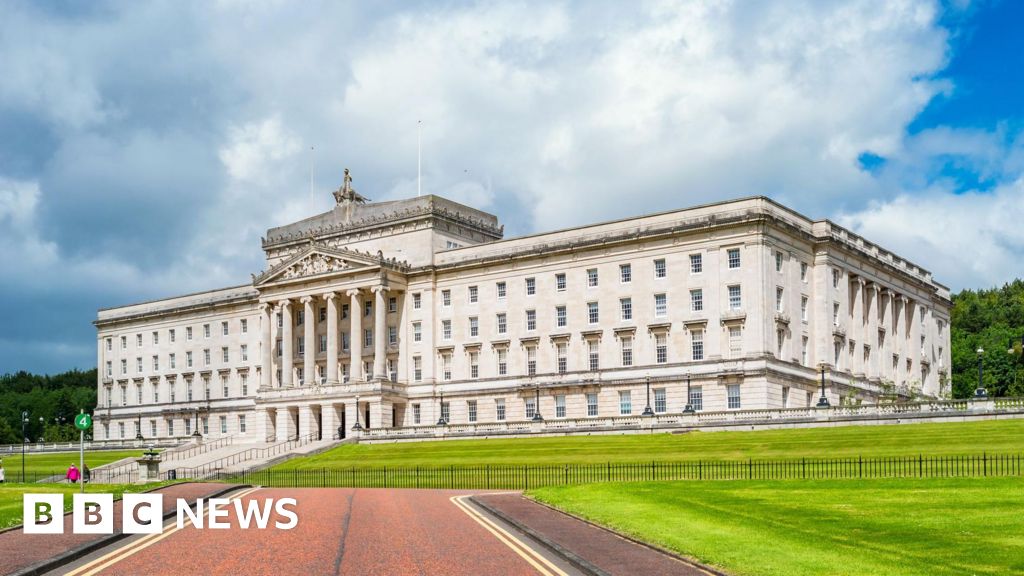
The strategic choice of Belfast as the Ard Fheis venue underscored the party's all-island identity and its position as the largest party in the Northern Ireland Assembly. The conference featured keynote addresses from Finance Spokesperson Pearse Doherty, Vice-President and Northern Ireland First Minister Michelle O'Neill, and McDonald's televised presidential address on Saturday evening. O'Neill reaffirmed her commitment to reforming the Stormont institutions to prevent future political blockages, stating she was "not fixated on titles" amid ongoing discussions about potential reforms.
Key Developments
McDonald and Doherty outlined a package of proposed emergency measures, including a €400 electricity credit for families, a substantial cut to excise duty on fuel, the complete removal of carbon tax on home heating oil and green diesel, a permanent cut to the Universal Social Charge on the first €45,000 of income, and a €500 cost-of-disability payment. The party's housing plan, "A Home of Your Own," proposes a state-led building programme delivering 300,000 homes, a three-year rent freeze, and significant reforms to home purchasing schemes.
In Dublin Central, Sinn Féin has selected Councillor Janice Boylan as its candidate — a high-stakes contest in McDonald's own constituency where the party is under pressure to secure a second seat. In Galway West, candidate Mark Lohan is a central figure in a grassroots "vote left, transfer left" pact known as Tonn na Clé (Left Wave), an alliance of left-wing parties and an independent who have agreed to encourage their voters to transfer preferences to one another. As RTÉ News reports, the Ard Fheis has set the stage for a crucial electoral test for the party.
Why It Matters
The by-elections in Dublin Central and Galway West will be closely watched as a barometer of Sinn Féin's electoral health and the public mood towards the coalition government. A strong performance — particularly in Dublin Central, where McDonald topped the poll in 2024 with 19.5% of first-preference votes — would validate the party's strategy and strengthen McDonald's leadership position. A poor result, particularly in the leader's home constituency, could intensify internal debate about the party's direction. The results will also be seen as an indicator of public sentiment towards the coalition government's handling of the cost of living and housing crises, which remain the dominant concerns for Irish voters.
Local Impact
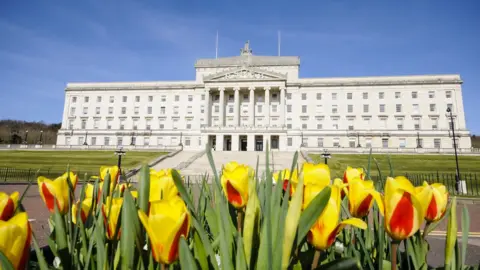
For Northern Ireland, the Ard Fheis in Belfast was a significant moment, demonstrating Sinn Féin's confidence in its position as the largest party in the Assembly and its ability to host a major all-island political event in the city. Michelle O'Neill's address, delivered from her position as First Minister, reinforced the party's dual role as a governing party in the North and an opposition party in the South — a unique position in Irish politics that gives it a distinctive platform on issues of Irish unity and cross-border cooperation. The party's call for Stormont institutional reform, aimed at preventing future political blockages of the kind that saw the Assembly collapse for extended periods, will be closely watched by unionists and the British and Irish governments. As Sinn Féin has confirmed, the party is committed to using its position in both jurisdictions to advance its policy agenda.
What's Next
Campaigning in both Dublin Central and Galway West is expected to intensify in the coming weeks ahead of the 22 May by-elections. Sinn Féin will be hoping to capitalise on public frustration with the cost of living and housing crisis to make gains, while the coalition government will be seeking to defend its record and limit the opposition's advances. The results will be a significant moment for Irish politics, with implications for the balance of power in the Dáil and for the internal dynamics of both Sinn Féin and the coalition parties. The 2027 Assembly and council elections in Northern Ireland are also on the horizon, adding further urgency to the party's need to demonstrate electoral momentum.