Sinn Féin Proposes Radical Overhaul of Stormont Institutions
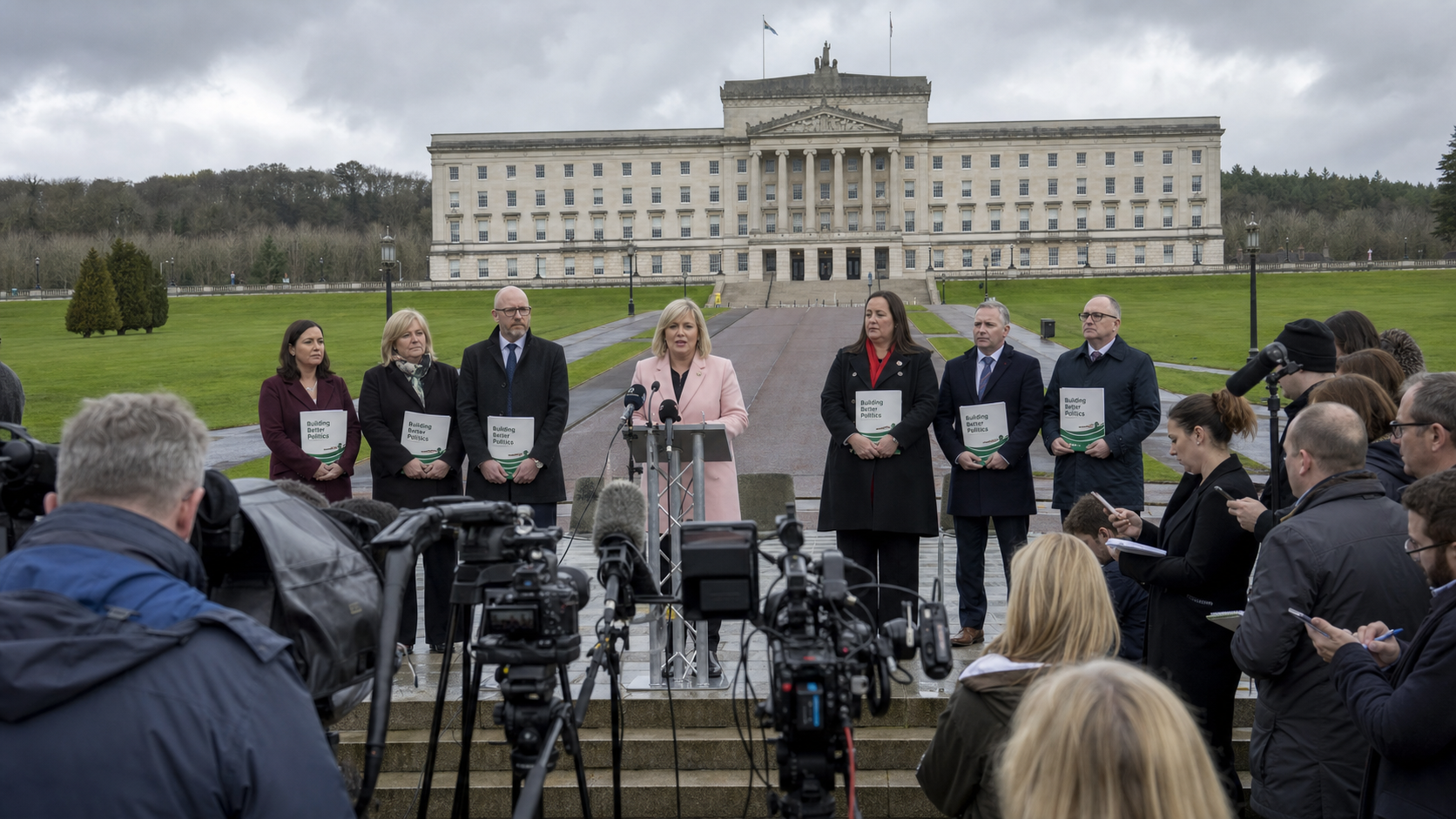
Sinn Féin has published a comprehensive reform plan for the Stormont Assembly and Executive that would abolish the petition of concern — the veto mechanism that has been used by parties to block legislation on a range of contentious issues — and introduce a series of changes designed to make Northern Ireland's devolved institutions more effective, accountable, and fit for purpose.
The document, entitled "Building Better Politics," sets out Sinn Féin's vision for a reformed Stormont that would be better equipped to address the challenges facing Northern Ireland in the coming decades. It has been welcomed by some as a serious contribution to the debate about institutional reform, while others have questioned the party's motives and the feasibility of some of its proposals.
The Petition of Concern
The petition of concern is one of the most controversial features of the Good Friday Agreement's institutional architecture. The mechanism, which allows 30 MLAs to require that a vote be passed by a cross-community majority rather than a simple majority, was originally designed to protect minority rights and prevent one community from dominating the other. However, critics argue that it has been misused by parties to block legislation on issues such as same-sex marriage and abortion rights, and that it has contributed to political gridlock at Stormont.
Sinn Féin's proposal to abolish the petition of concern would require an amendment to the Northern Ireland Act 1998, which would in turn require the agreement of both the UK and Irish governments as well as the main parties at Stormont. The DUP, which has used the petition of concern on numerous occasions, is unlikely to support its abolition, making the prospect of reform in this area challenging.
Other Proposed Reforms
Beyond the petition of concern, the Sinn Féin document proposes a range of other changes to the Stormont institutions. These include the introduction of a formal opposition at the Assembly, with resources and speaking rights for parties that choose not to participate in the Executive; the strengthening of Assembly committees to give them greater scrutiny powers over government departments; and the introduction of a statutory duty on the Executive to develop and implement a Programme for Government.
The document also calls for changes to the way in which the First Minister and Deputy First Minister are elected, proposing that they be elected by the Assembly as a whole rather than by the largest parties from each community designation. This change, which would require cross-community support, is intended to reduce the sense that the two top positions are the exclusive preserve of unionism and nationalism.
Reactions from Other Parties
The DUP has responded cautiously to the Sinn Féin proposals, with party leader Gavin Robinson saying that while he welcomed the debate about institutional reform, he had significant reservations about some of the specific proposals. "The petition of concern exists for good reasons, and we would need to be very careful about any changes that could undermine the protections it provides for the unionist community," he said.
The Alliance Party, which has long called for reform of the Stormont institutions, gave a broadly positive response to the document, saying that it contained many ideas that deserved serious consideration. However, Alliance leader Naomi Long cautioned that reform would only be meaningful if it was accompanied by a genuine commitment from all parties to make the institutions work.
The Road to Reform
The publication of the Sinn Féin document comes at a time when there is growing consensus across the political spectrum that the Stormont institutions need to be reformed if they are to be effective in the long term. The repeated collapses of the Executive — most recently in 2022 and 2024 — have highlighted the fragility of the current arrangements and the need for changes that would make the institutions more resilient.
However, the path to reform is fraught with difficulty. Any changes to the fundamental architecture of the Good Friday Agreement would require the agreement of both governments and the main parties, and the history of Stormont suggests that achieving such consensus is far from straightforward. The debate that the Sinn Féin document has sparked is nonetheless a welcome development in a political landscape that has sometimes seemed resistant to change.