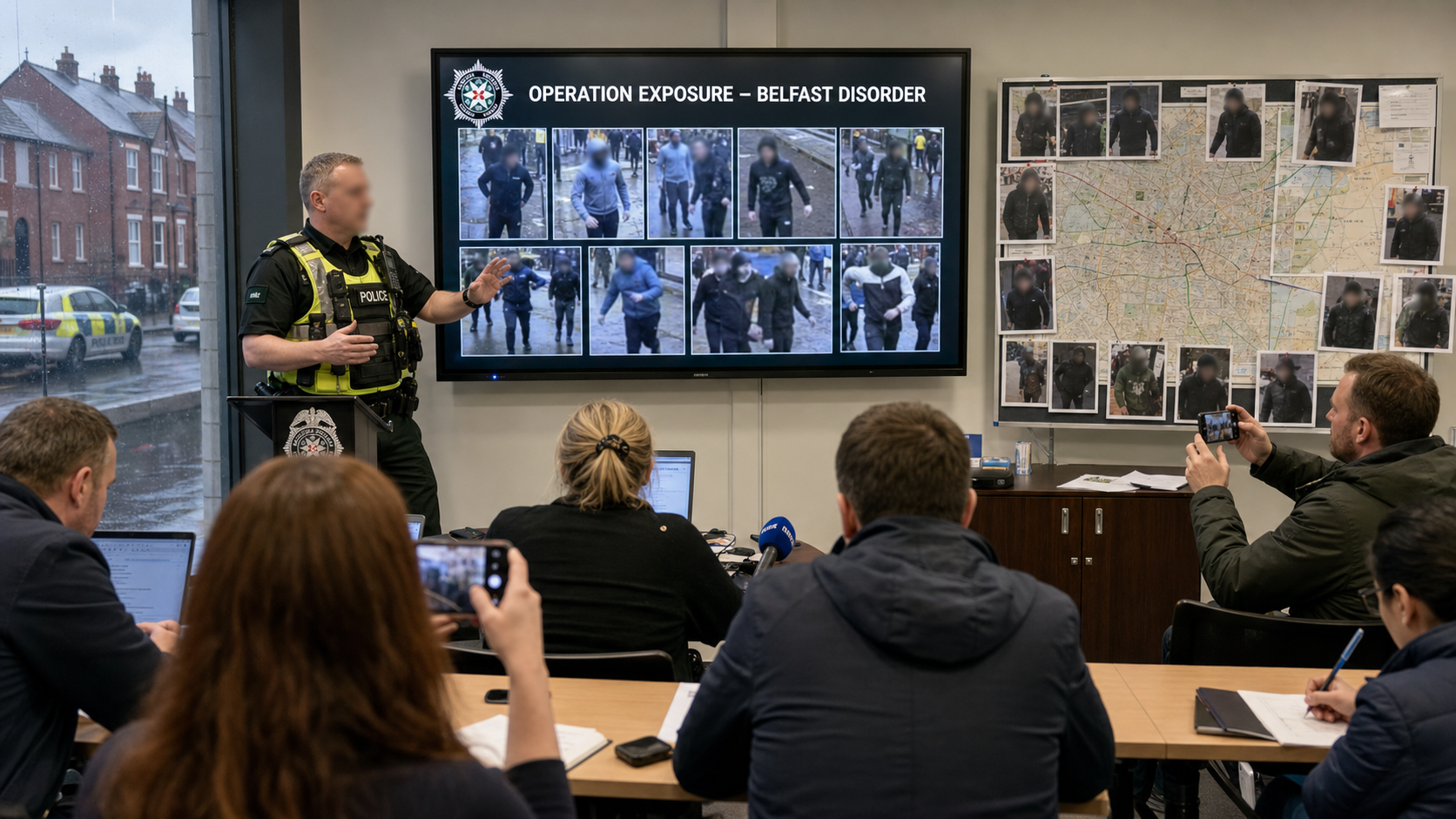
PSNI's Operation Exposure Targets Rioters as Arrest Count Reaches 31 and Charges Mount
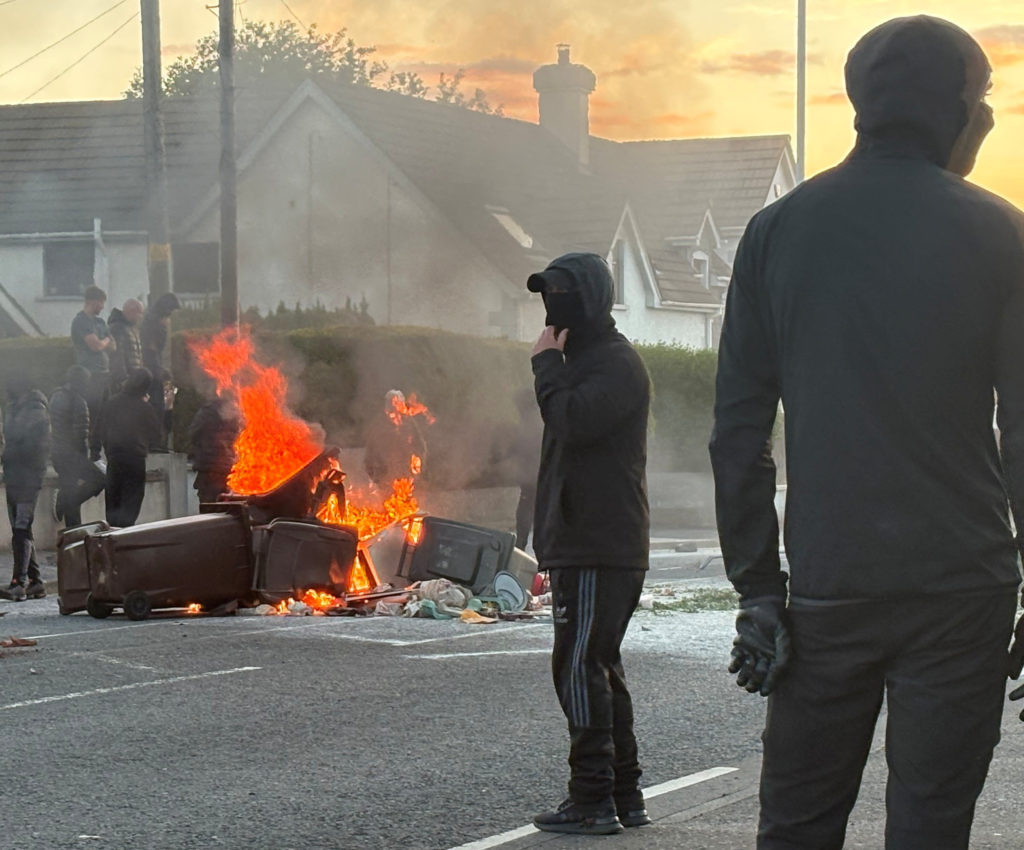
The Police Service of Northern Ireland has formally launched Operation Exposure — June 2026, a dedicated investigation into the anti-immigrant disorder that erupted across Belfast and several other towns following a knife attack in north Belfast on 8 June, with 31 arrests and 23 charges confirmed as detectives release images of suspects and appeal for public assistance in identifying those responsible for arson, attacks on police, and the intimidation of ethnic minority communities.
Background
The disorder that swept through Belfast and spread to Newtownabbey, Ballymena, and Portadown in the days following the north Belfast stabbing represented the most serious outbreak of civil unrest in Northern Ireland since the flag protests of 2012-13. The initial incident — a knife attack on a man named Stephen Ogilvie — was rapidly weaponised by far-right actors online, who used it to stoke anti-immigrant sentiment and coordinate attacks on properties associated with ethnic minority communities. Within hours of the attack, social media platforms were carrying inflammatory content, addresses of individuals from minority backgrounds, and calls for violence that spread far beyond the immediate area.
The PSNI's response in the immediate aftermath was substantial. Water cannons were deployed for the first time in years, and officers faced sustained attacks with petrol bombs, fireworks, and masonry. At least twelve officers were injured during the peak nights of disorder on 9 and 10 June. The force's Chief Constable, Jon Boutcher, described the violence as an "act of self-harm" to the communities involved — a phrase that captured both the self-defeating nature of the disorder and the damage it inflicted on Northern Ireland's reputation as a place of stability and progress.
By the weekend of 13-14 June, the large-scale disorder had significantly subsided, paving the way for a major anti-racism rally at Belfast City Hall that drew an estimated 3,000 people. But the PSNI made clear from the outset that the investigation would be thorough and long-term, and the launch of Operation Exposure signals the transition from emergency response to systematic accountability.
Key Developments
Assistant Chief Constable Ryan Henderson, who has been the PSNI's primary public voice during the investigation, confirmed that there is "no evidence" of loyalist paramilitary organisations coordinating the violence. This assessment is significant: it rules out the kind of structured, hierarchical direction that characterised some of the worst disorder of the Troubles era, but it does not diminish the seriousness of what occurred. Instead, Henderson pointed to "significant coordination" via social media platforms, with actors both inside and outside Northern Ireland sharing inflammatory content, spreading disinformation about the initial stabbing, and in some cases circulating what amounted to target lists of home addresses.
The PSNI has released a series of images of individuals they wish to identify in connection with specific criminal acts — arson attacks on homes and businesses, assaults on police officers, and the intimidation of healthcare workers travelling to and from the Royal Victoria Hospital and other facilities. The public appeal for information is a standard investigative tool, but in this context it carries additional weight: it signals that the police are committed to identifying and prosecuting individuals who may have believed that the scale of the disorder would provide them with cover.
Ofcom, the UK communications regulator, has ordered social media platforms to accelerate the removal of illegal content linked to the unrest, and the PSNI has been working with platform operators to identify accounts that played a role in coordinating the violence. The family of Stephen Ogilvie, the victim of the initial knife attack, issued a statement through the PSNI pleading for the violence to stop and making clear that they did not support the disorder being carried out in his name.
Why It Matters
Operation Exposure matters because accountability is the essential counterpart to condemnation. The joint statement from Stormont's five main parties, the anti-racism rally at City Hall, the Chief Constable's public remarks — all of these are important, but they are insufficient on their own. What deters future disorder is the credible prospect of prosecution, and the PSNI's systematic approach to identifying and charging those responsible sends a clear message that the violence will have consequences. The investigation also matters because it is generating evidence about the role of social media in coordinating the disorder — evidence that could inform future regulatory action and that is already being shared with Ofcom and platform operators. Northern Ireland has been here before, in different forms, and the lesson of history is that impunity breeds repetition.
Local Impact
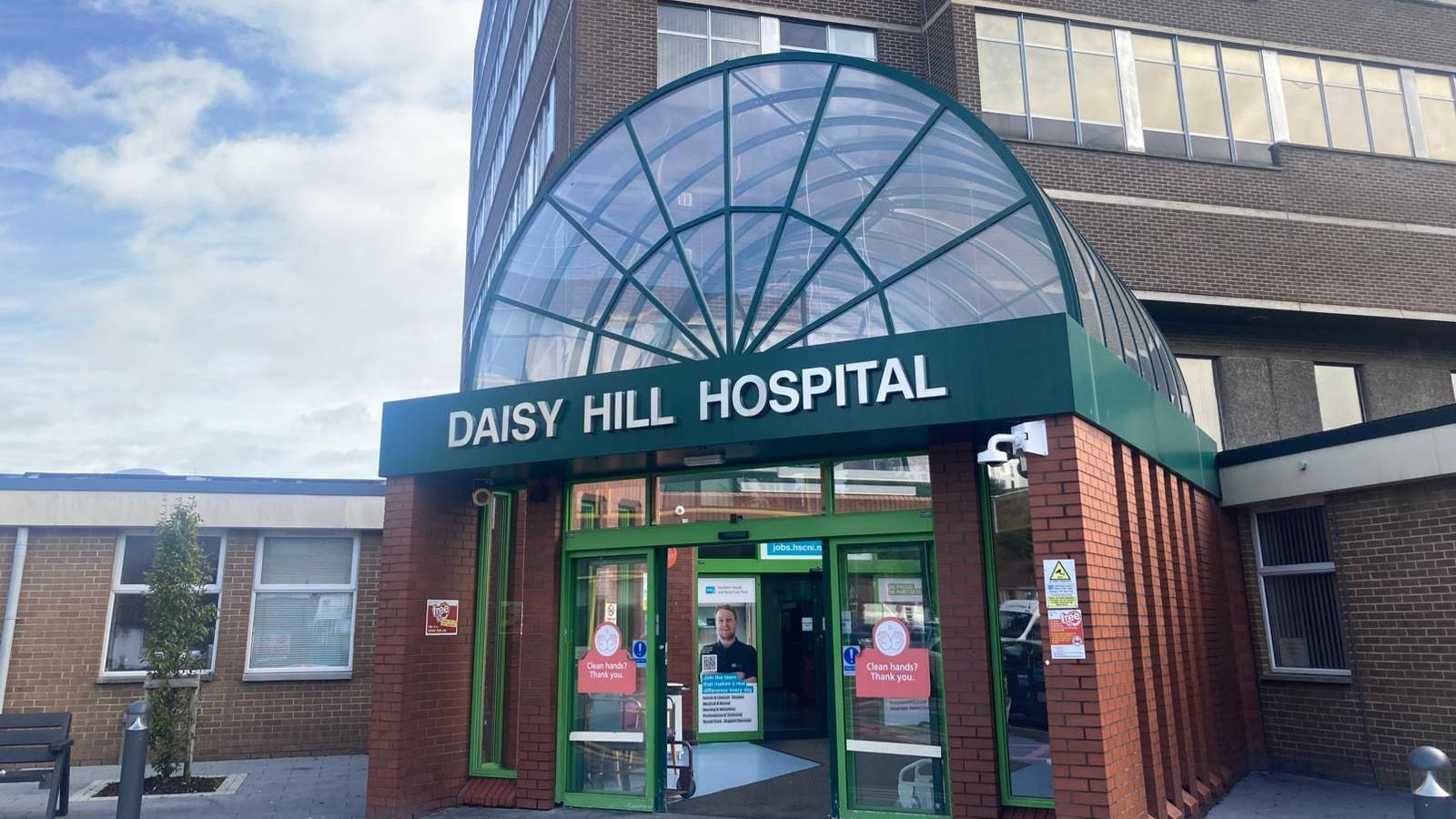
The impact of the disorder on Belfast's communities has been severe and multifaceted. In north Belfast, where the initial stabbing occurred, residents from ethnic minority backgrounds have described living in fear, with some reluctant to leave their homes even after the large-scale violence subsided. In east Belfast and Newtownabbey, properties were damaged and businesses closed temporarily. Healthcare workers from minority backgrounds reported being stopped and questioned by masked men on their way to the Royal Victoria Hospital, the Mater Hospital, and other facilities — a development that the Department of Health described as "despicable" and that the Royal College of Nursing said left its members experiencing "unimaginable" fear. The PSNI has committed to an increased visible presence in affected areas and has established dedicated community liaison contacts for residents who have concerns.
What's Next
The PSNI has indicated that Operation Exposure will be a sustained investigation, with further arrests and charges expected in the coming weeks. The force is continuing to review CCTV footage, social media content, and witness statements, and is appealing to anyone who recognises individuals in the released images to come forward. The Public Prosecution Service will determine which cases proceed to trial, and the PSNI has expressed confidence that the evidence gathered will support successful prosecutions. A review of the policing response to the disorder is also expected, examining both the tactical decisions made during the peak nights of violence and the intelligence picture that preceded the outbreak.