Sinn Féin Publishes Stormont Reform Proposals to End Party Vetoes and Prevent Future Assembly Collapses
Sinn Féin has published a formal package of proposals to reform the Stormont institutions, with the central objective of ending the effective veto that the largest unionist and nationalist parties currently hold over the formation of the Executive — a mechanism that has allowed the Assembly to be collapsed on multiple occasions over the past two decades.
Background
The Northern Ireland Assembly and Executive, established under the 1998 Good Friday Agreement, operate on a power-sharing model that requires the participation of both the largest unionist and the largest nationalist parties in the Executive. The First Minister and deputy First Minister are nominated by the largest party in each designation, and if either refuses to nominate, the Executive cannot be formed and the Assembly effectively collapses. This mechanism has been used — or threatened — as a political lever on multiple occasions since 1998.
The most significant collapses occurred in 2002, when the Assembly was suspended following the Stormontgate affair; in 2017, when Sinn Féin withdrew following the RHI scandal, triggering a three-year period without a functioning executive; and in 2022, when the DUP withdrew in protest at the Northern Ireland Protocol, leading to a further two-year hiatus. Each collapse has had significant consequences for public services, with health, education, and infrastructure decisions delayed or deferred during periods of institutional dysfunction.
The Alliance Party and the SDLP have long argued that the current system gives too much power to the two largest parties and creates perverse incentives for political brinkmanship. Both parties have advocated for reforms that would allow the institutions to function even if one or more of the largest parties refused to participate, though the precise mechanisms proposed have varied. The question of institutional reform has been a recurring theme in discussions about the future of the Good Friday Agreement architecture.
Key Developments
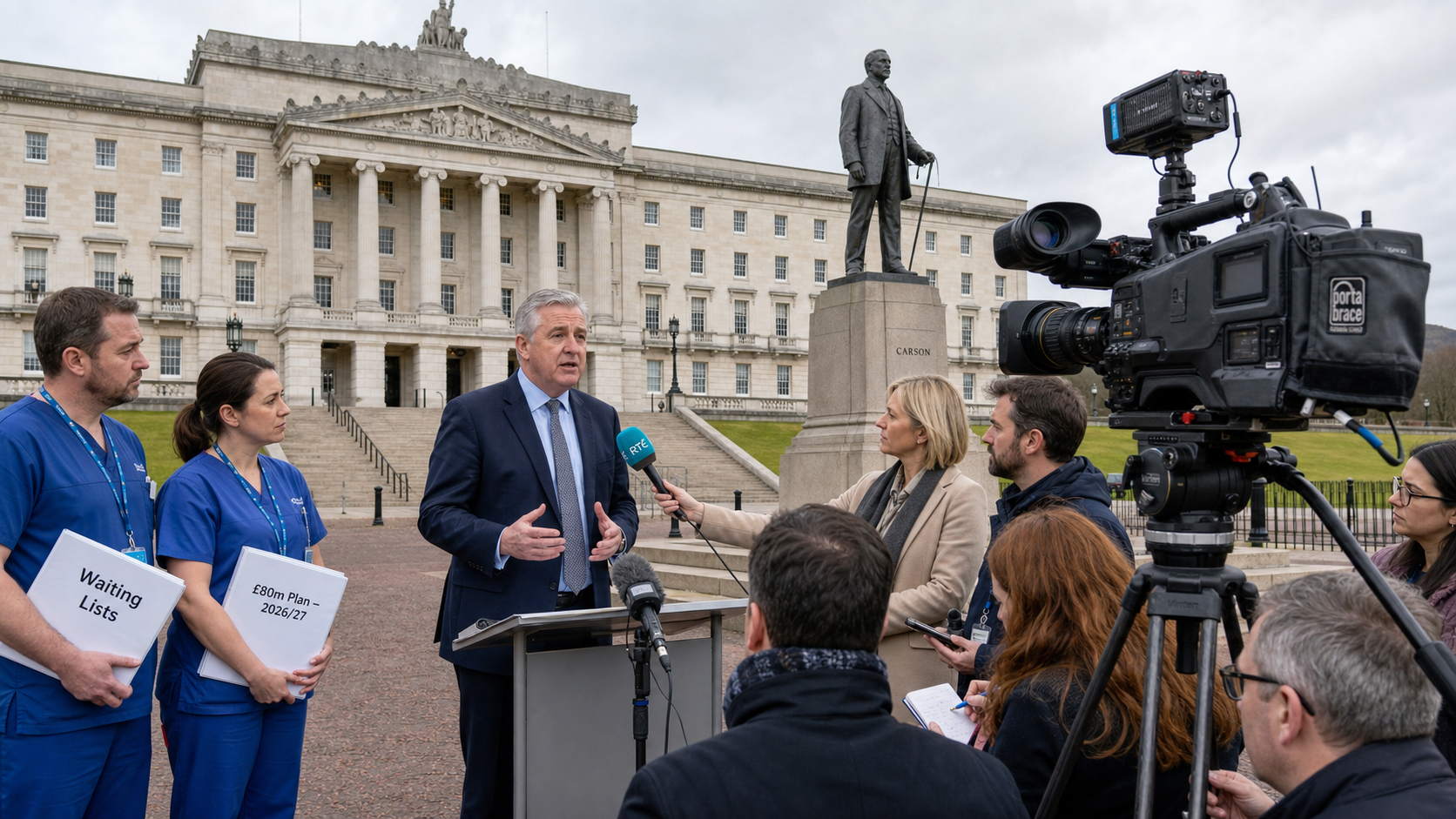
Sinn Féin's proposals, published on Sunday, centre on a specific change to the nomination process for the First Minister, deputy First Minister, and Assembly Speaker. Under the current rules, these positions can only be filled by nominees from the largest party in each designation. Sinn Féin's plan would allow other parties to step in and fill these roles if the largest parties refused to nominate within a specified timeframe, preventing the institutions from collapsing as a result of one party's decision to withdraw.
The proposals also include measures to strengthen the Assembly's committee system and to improve the transparency of Executive decision-making. Sinn Féin argues that these changes would make the institutions more resilient, more accountable, and more capable of delivering for the people of Northern Ireland regardless of the political calculations of individual parties.
The Alliance Party and the SDLP have broadly welcomed the proposals, noting that they align with positions both parties have advocated for some time. DUP leadership has expressed scepticism, with senior figures suggesting that a change in political culture — rather than just institutional rules — is what is needed to prevent future collapses. The Ulster Unionist Party has indicated it will study the proposals carefully before commenting.
Why It Matters
The publication of these proposals is significant for several reasons. First, it represents Sinn Féin — historically the party most associated with using institutional mechanisms as political leverage — now advocating for reforms that would reduce the power of all parties, including itself, to collapse the institutions. This is a notable shift in position, reflecting the party's current status as the largest party in the Assembly and its interest in maintaining stable governance.
Second, the proposals arrive at a moment when the Assembly is functioning but fragile. The current Executive, formed in February 2024 after the DUP's return, has been operating under significant strain, with disagreements over the Windsor Framework, the budget, and a range of policy issues creating ongoing tension. The memory of two years without a functioning executive — and the damage that caused to public services — is fresh in the minds of all parties.
Third, any reform of the Good Friday Agreement institutions requires the consent of both the UK and Irish governments, as well as broad cross-community support within Northern Ireland. Sinn Féin's proposals are a starting point for a conversation, not a blueprint that can be implemented unilaterally. The British and Irish governments will need to engage with the proposals, and the Parades Commission and other bodies established under the Agreement will have views on any changes to the institutional architecture.
Local Impact
For communities across Northern Ireland — in Belfast's north and west, in Derry/Londonderry, in Newry and Armagh, and in the rural areas of Fermanagh and Tyrone — the question of institutional stability is not abstract. When the Assembly collapses, it is public services that suffer. Health budgets go unallocated. Infrastructure projects stall. Education policy drifts. The people who depend most on those services — those with the least capacity to absorb the consequences of political dysfunction — pay the highest price.
The proposals have been particularly welcomed by community and voluntary sector organisations that work across the sectoral divide, many of which have experienced the direct consequences of institutional collapse in terms of funding uncertainty and policy paralysis. The Community Relations Council and the Integrated Education Fund have both indicated they will engage with the consultation process that Sinn Féin has indicated will follow the publication of the proposals.
What's Next
Sinn Féin has indicated it will seek cross-party discussions on the proposals in the coming weeks, with a view to bringing a motion to the Assembly before the summer recess. The British and Irish governments are expected to respond to the proposals through the British-Irish Intergovernmental Conference, which is scheduled to meet in September. The Assembly's Committee on the Executive Office will consider the proposals as part of its ongoing work programme on institutional reform. A public consultation is expected to be launched in the autumn.