Northern Ireland A&E Departments in Crisis as Average Waits Exceed 13 Hours at Some Hospitals
Emergency departments across Northern Ireland are operating under extreme and unsustainable pressure, with average waiting times at some hospitals now exceeding 13 hours and patients spending up to 19 hours in ambulances outside emergency departments — a situation that senior clinicians have described as completely unacceptable and a serious risk to patient safety.
Background
Northern Ireland's emergency care system has been under sustained pressure for more than a decade, driven by a combination of rising demand, workforce shortages, and a chronic lack of hospital bed capacity. The region has consistently recorded the worst A&E performance figures in the United Kingdom, with the four-hour target — under which 95% of patients should be seen, treated, and either admitted or discharged within four hours of arrival — routinely missed by a wide margin at most sites.
The five health and social care trusts — Belfast, South Eastern, Southern, Western, and Northern — each operate emergency departments at their main acute hospitals. The Royal Victoria Hospital and Belfast City Hospital in Belfast, Craigavon Area Hospital in Co. Armagh, Antrim Area Hospital in Co. Antrim, Altnagelvin Hospital in Derry/Londonderry, and Causeway Hospital in Coleraine are the primary emergency sites. Each faces its own specific pressures, but all share the common challenge of insufficient bed capacity to absorb the volume of patients requiring admission.
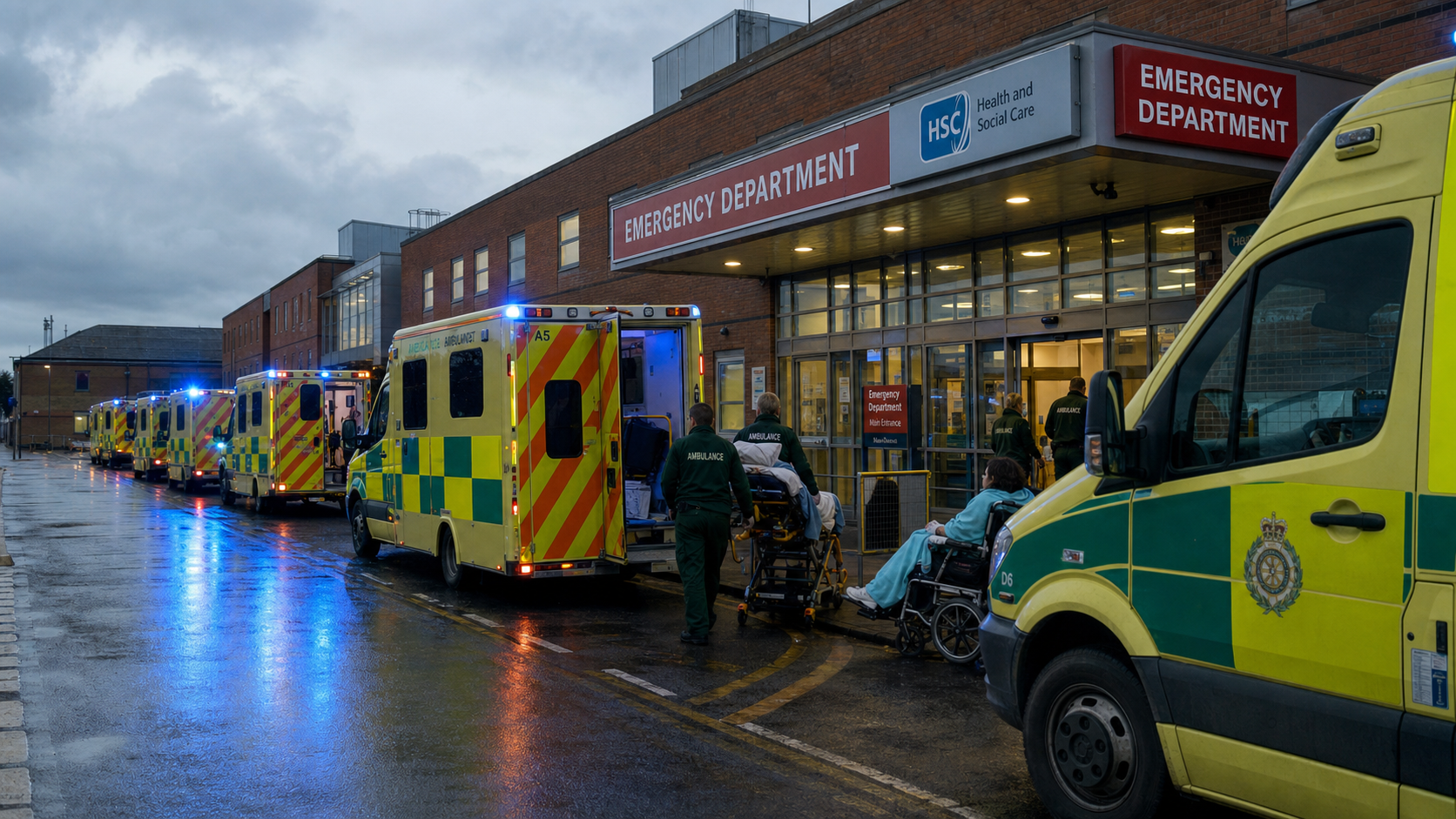
The problem of ambulance handover delays — where paramedics are unable to transfer patients to emergency department staff because no beds or trolleys are available — has become one of the most visible symptoms of the crisis. When ambulances are held outside emergency departments, they are unavailable to respond to new emergency calls, creating a cascading effect that reduces the overall capacity of the ambulance service to respond across the province.
Key Developments
New figures published this week reveal that average waiting times at Craigavon Area Hospital and Causeway Hospital have exceeded 13 hours, with some patients waiting up to 19 hours in ambulances outside the emergency department before being handed over to hospital staff. These figures represent some of the worst performance recorded at either site and have prompted urgent calls for action from clinical leaders, patient advocates, and elected representatives.
Senior GPs across Northern Ireland have raised the alarm about the impact of the crisis on patient behaviour, warning that people are becoming frightened to attend hospital even when they have genuine medical emergencies. This phenomenon — sometimes described as "A&E avoidance" — carries its own serious risks, as patients who delay seeking care for conditions such as chest pain, stroke symptoms, or serious infections may present later with more severe illness that is harder and more expensive to treat.
Health officials have described the current state of emergency care as completely unacceptable, attributing the crisis to a lack of systemic reform rather than any failure of individual staff or departments. The Northern Ireland Ambulance Service has reported that handover delays are now a daily occurrence at multiple sites, with the service's operational capacity significantly reduced as a result. The situation is particularly acute at weekends and during periods of high respiratory illness, when demand for emergency care spikes.
Why It Matters
A 13-hour wait in an emergency department is not merely an inconvenience — it is a clinical risk. Patients who wait for extended periods in emergency settings are at greater risk of deterioration, hospital-acquired infection, and adverse events. For elderly patients, who make up a disproportionate share of emergency department attendances, prolonged waits on trolleys or in ambulances can cause significant physical and psychological harm. The evidence from comparable health systems is clear: long A&E waits are associated with higher mortality rates.
The situation in Northern Ireland is significantly worse than in England, Scotland, or Wales, and it is worse than in the Republic of Ireland, where the HSE's emergency department performance — while far from perfect — has shown more consistent improvement in recent years. The divergence reflects the structural differences between the two health systems, including Northern Ireland's greater reliance on hospital-based care and its slower progress in developing community and primary care alternatives that can reduce emergency department demand.
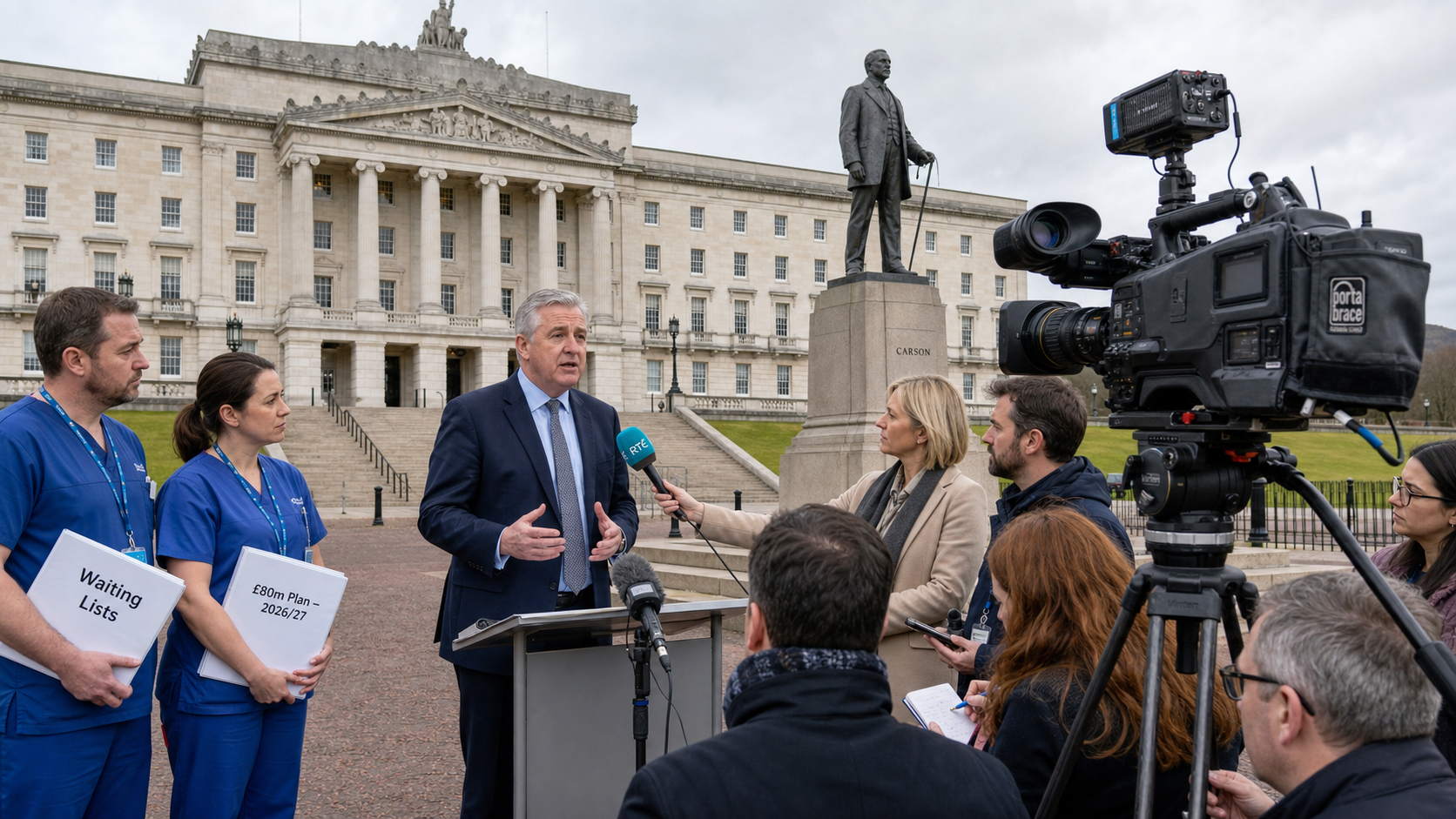
The £80 million investment announced by Health Minister Nesbitt this week is focused primarily on elective care — planned procedures and outpatient appointments — rather than emergency care. While reducing the elective backlog will ultimately reduce some emergency demand, the immediate crisis in A&E requires a different set of interventions, including increased bed capacity, enhanced community step-down services, and improved ambulance handover protocols. These are not quick fixes.
Local Impact
For patients in the Southern Health and Social Care Trust area — covering Armagh, Banbridge, Craigavon, and Newry — the situation at Craigavon Area Hospital is a source of deep concern. The hospital is the main acute site for a large and growing population across south Armagh, south Down, and the Craigavon urban area. Patients who cannot be seen at Craigavon are sometimes diverted to Daisy Hill Hospital in Newry or to Belfast, adding significant journey times for people who are already unwell.
In the Northern Trust area, the pressures at Causeway Hospital in Coleraine affect patients across north Antrim, the Causeway Coast, and the Glens of Antrim — a predominantly rural area where alternative acute services are limited. Translink's Goldline services connect Coleraine to Ballymena and Belfast, but for patients in genuine emergencies, public transport is not a viable option. The Northern Ireland Ambulance Service's response times in rural areas of the Northern Trust are among the longest in the province.
What's Next
The Department of Health is expected to publish updated A&E performance statistics for June 2026 later this week, which will provide a fuller picture of the scale of the crisis across all trust sites. Health Minister Nesbitt has indicated he will meet with trust chief executives to discuss emergency care performance before the end of July. The Stormont health committee has requested an urgent briefing from the Department of Health on the ambulance handover situation, with a hearing scheduled for the week of July 21. The British Medical Association's Northern Ireland committee has called for an emergency summit on A&E capacity to be convened before the summer recess.