Tens of Thousands March as Twelfth of July Parades Proceed Across Northern Ireland on Monday
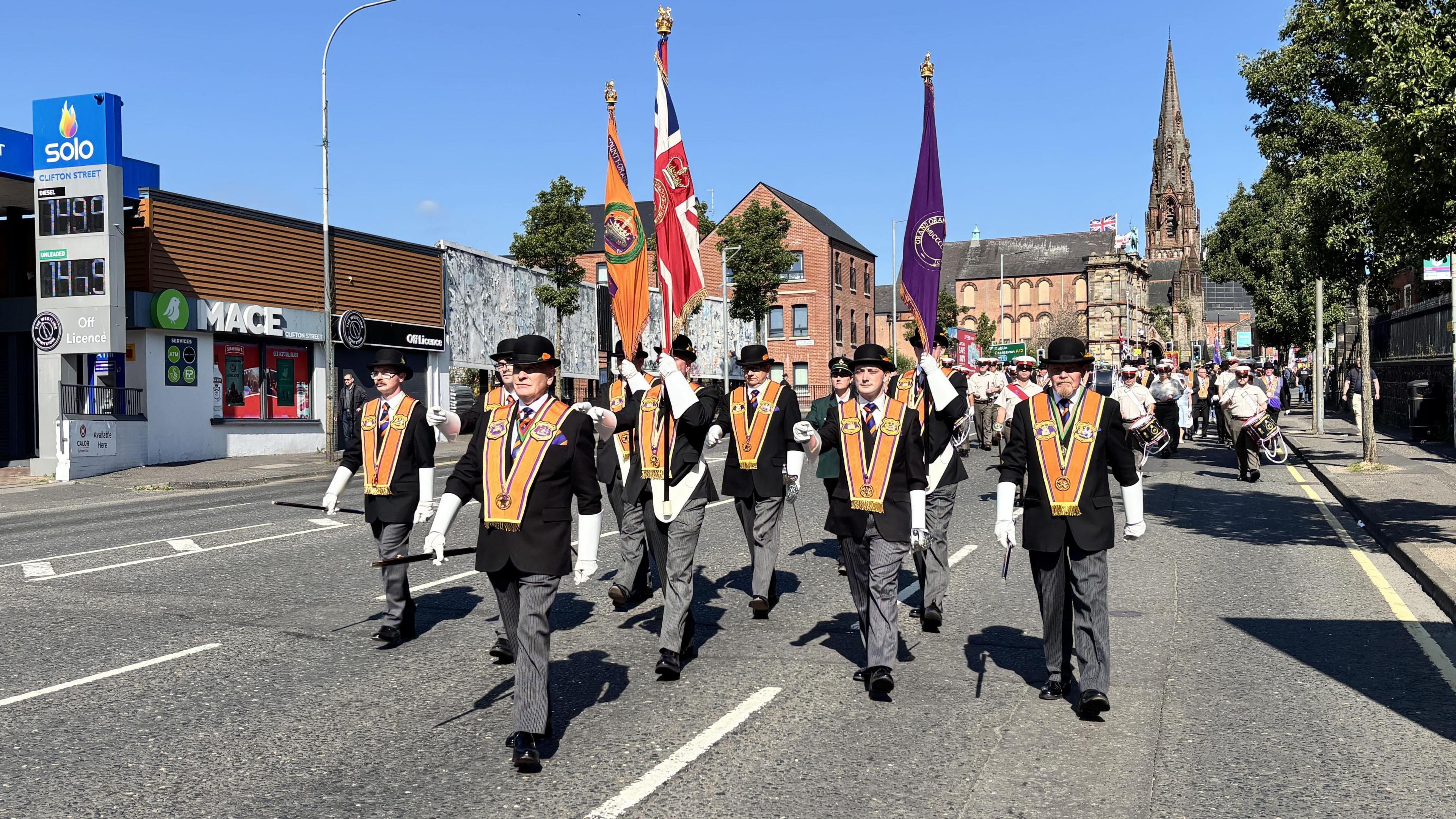
The annual Twelfth of July commemorations proceeded across Northern Ireland on Monday, July 13, with tens of thousands of Orange Order members, bandsmen, and spectators participating in 18 separate demonstrations from Belfast to Newtownhamilton — the largest single day of public assembly in the Northern Ireland calendar.
Background
The Twelfth of July marks the 336th anniversary of the Battle of the Boyne, fought on July 1, 1690 (Old Style calendar), at which the forces of King William III of Orange defeated those of the deposed King James II. The victory secured the Protestant succession to the British throne and is commemorated annually by the Orange Order, a Protestant fraternal organisation founded in Co. Armagh in 1795. The Twelfth is the centrepiece of the marching season in Northern Ireland, a period of parades and demonstrations that runs from April through August each year.
When July 12 falls on a Sunday, as it did this year, the Orange Order traditionally moves its main demonstrations to the following Monday, in keeping with the organisation's observance of the Sabbath. This practice, known as the "Boyne Sunday" arrangement, means that the 2026 Twelfth fell on July 13 — a scheduling detail that required coordination with employers, schools, and public services across Northern Ireland, where the Twelfth is a public holiday.
The parades have been a source of significant community tension in Northern Ireland, particularly in areas where Orange routes pass through or near nationalist residential areas. The Parades Commission, established under the Public Processions Act 1998, adjudicates on disputed parades and can impose conditions or restrictions on routes. In recent years, the overall level of tension associated with the marching season has reduced compared to the height of the Drumcree dispute in the 1990s, though flashpoints continue to occur in some areas.
Key Developments
Monday's demonstrations proceeded largely without significant incident, with the Police Service of Northern Ireland conducting one of its largest annual operations to manage traffic and ensure public safety across 18 venues. The Belfast parade, which is the largest single demonstration, followed a route of over six miles from the city centre to Barnett Demesne in the south of the city, where the main field demonstration took place. Lodges from across Belfast and the surrounding area participated, accompanied by dozens of marching bands playing a mixture of traditional Orange tunes and contemporary music.
Newtownhamilton in Co. Armagh hosted what is widely regarded as the largest single Orange gathering in the world, with an estimated 20,000 spectators attending the demonstration in the south Armagh town. The Newtownhamilton demonstration has a particular significance within the Orange tradition, drawing lodges from across the province and beyond. Other major venues included Rathfriland in Co. Down, Cookstown in Co. Tyrone, and Limavady in Co. Londonderry.
Grand Master of the Orange Order Harold Henning used the occasion to address political concerns regarding the post-Brexit status of Northern Ireland, reiterating the Order's opposition to arrangements that it argues treat Northern Ireland differently from the rest of the United Kingdom. The political dimension of the Twelfth speeches has been a consistent feature of recent years, reflecting the ongoing debate about the Windsor Framework and Northern Ireland's constitutional position.
Why It Matters
The Twelfth of July is the most visible expression of Ulster Protestant and unionist culture in the public sphere, and its significance extends well beyond the Orange Order's membership. For many people in Northern Ireland — particularly in working-class unionist communities in Belfast, Ballymena, Portadown, and Londonderry — the Twelfth is a family occasion, a community gathering, and a statement of cultural identity that has been passed down through generations. Understanding this is essential to understanding Northern Ireland.
The parades also serve as a barometer of community relations in the province. The fact that Monday's demonstrations proceeded without major incident is, in the current context, genuinely significant. The weeks preceding the Twelfth had been marked by serious civil unrest in Belfast following a stabbing incident, with disorder in several parts of the city. The relative calm of the Twelfth itself — maintained through a combination of community leadership, PSNI planning, and the Orange Order's own stewarding — represents a degree of social resilience that should not be taken for granted.
The political speeches at the field demonstrations are also worth noting. The Orange Order's continued focus on the Windsor Framework and Northern Ireland's constitutional status reflects a broader anxiety within unionism about the direction of travel in post-Brexit politics. These concerns are not going away, and the Twelfth provides an annual platform for their public articulation.
Local Impact
In Belfast, the Twelfth parade route passes through the city centre and along the Lisburn Road before reaching Barnett Demesne in the Malone area of south Belfast. The route generates significant economic activity for city centre businesses, with large numbers of spectators and participants spending in shops, cafés, and restaurants along the way. Translink operated additional bus and rail services to accommodate the increased passenger numbers, with services from across the greater Belfast area running to the city centre throughout the day.
In Newtownhamilton, the influx of 20,000 visitors to a small south Armagh town represents a major logistical undertaking for local services and a significant economic boost for local businesses. The demonstration draws visitors from across Northern Ireland and from the Republic, as well as from the Orange diaspora in Scotland, Canada, and further afield. For the town itself, the Twelfth is the single largest event of the year.
What's Next
The marching season continues through August, with the Royal Black Preceptory's Last Saturday demonstrations scheduled for August 29. The Parades Commission will review its determinations for the remainder of the season in light of Monday's events. The Orange Order's annual report on the 2026 marching season is expected to be published in September, with a particular focus on community relations developments and the impact of the Windsor Framework debate on the Order's political engagement.