Sinn Féin Leader Calls on Taoiseach to Override HSE Refusal to Fund Friedreich's Ataxia Drug
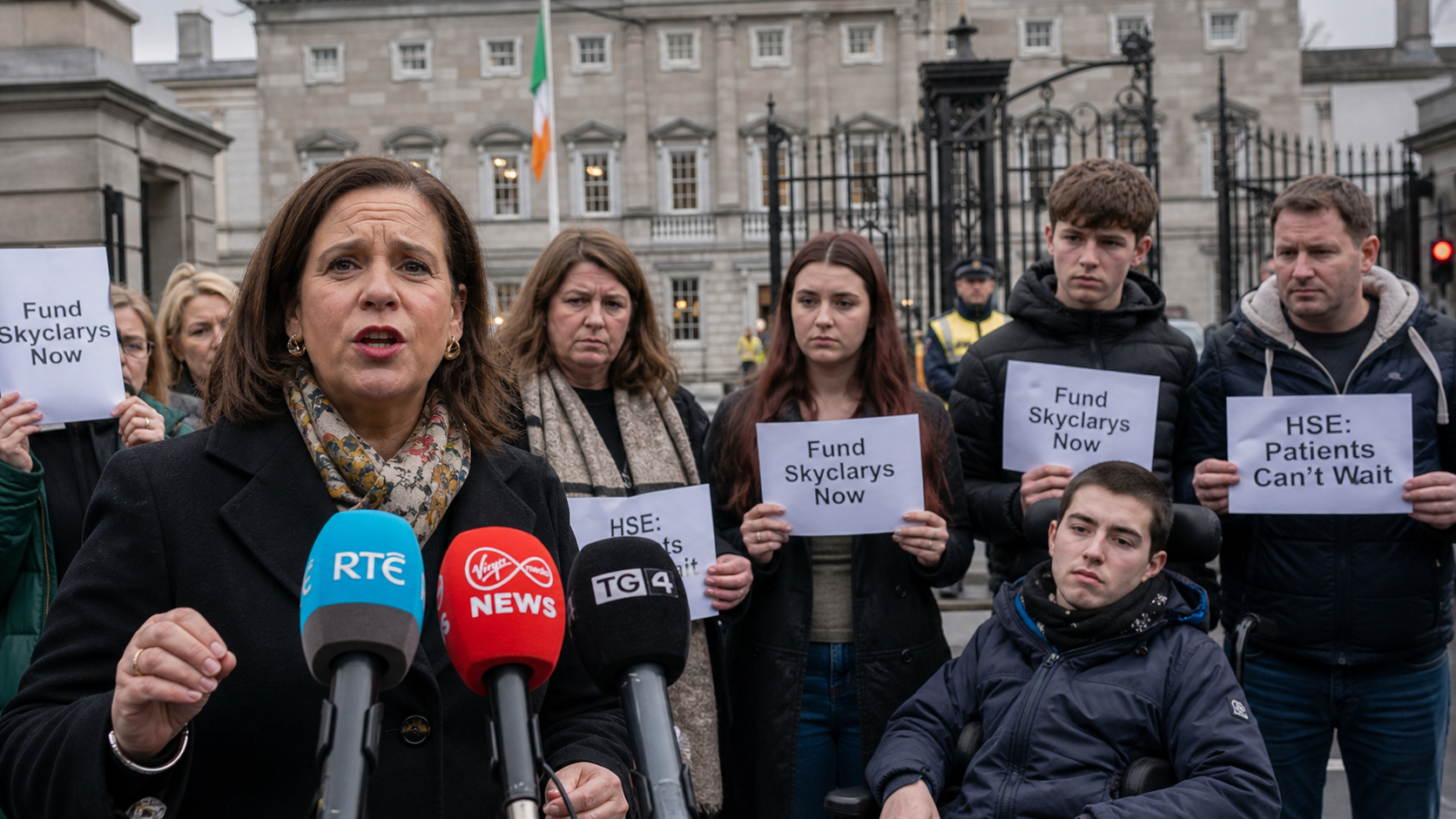
Sinn Féin leader Mary Lou McDonald has called on Taoiseach Micheál Martin to personally intervene after the HSE's National Centre for Pharmacoeconomics recommended against funding Skyclarys, the only approved treatment for Friedreich's Ataxia, leaving families of those affected to describe the decision as a death sentence and demanding an emergency government override of the advisory body's recommendation.
Background
Friedreich's Ataxia is a rare, progressive, and life-limiting neurological condition that primarily affects children and young adults. It causes progressive damage to the nervous system, leading to difficulties with coordination, balance, and speech, and is associated with serious cardiac complications that are the most common cause of death in those affected. There is no cure, and until the approval of Skyclarys — the brand name for omaveloxolone — there was no approved treatment that could slow the progression of the disease.
Skyclarys was approved by the European Medicines Agency in 2023 and has been available in several European countries since then. In Ireland, the HSE's National Centre for Pharmacoeconomics is responsible for assessing the cost-effectiveness of new medicines and making recommendations to the HSE's Drugs Group about whether they should be funded through the public health system. The centre's recommendation against funding Skyclarys was based on its assessment that the cost per quality-adjusted life year — the standard metric used in pharmacoeconomic assessments — was too high to justify public funding at the price proposed by the manufacturer.
Families of those with Friedreich's Ataxia have rejected that assessment, arguing that the standard pharmacoeconomic framework is not appropriate for rare diseases affecting small patient populations, and that the human cost of denying access to the only available treatment cannot be captured in a cost-per-QALY calculation.
Key Developments
McDonald raised the issue directly with the Taoiseach in the Dáil this week, calling on him to use his authority to direct the HSE to fund the drug regardless of the advisory body's recommendation. She cited the cases of specific patients — young people whose condition is deteriorating while the bureaucratic process continues — and argued that the government had both the power and the moral obligation to act.
Martin expressed sympathy with the families affected but stopped short of committing to a government override, indicating that the HSE process needed to be allowed to conclude before political intervention could be considered. He acknowledged the urgency of the situation and said the matter was being kept under close review.
The Irish Patients' Association and Friedreich's Ataxia Ireland have both called for an emergency meeting with the Minister for Health to discuss the pathway to access for affected patients. Several TDs from across the political spectrum have indicated they will support a cross-party motion calling for the drug to be funded.
Why It Matters
The Skyclarys case is the latest in a series of high-profile disputes about access to expensive medicines in Ireland, a country that has consistently struggled to balance the cost of innovative treatments against the principle of universal access to healthcare. Ireland's pharmacoeconomic assessment process is broadly similar to those used in other European countries, but the outcomes have sometimes diverged significantly — with Ireland refusing to fund treatments that are available in comparable health systems. The Friedreich's Ataxia case is particularly acute because the patient population is small, the disease is severe, and the treatment is the only one available. The political pressure on the government to act is significant, and the outcome of this case will set a precedent for how Ireland handles similar situations in the future.
Local Impact
For the approximately 150 people in Ireland living with Friedreich's Ataxia, the HSE's recommendation is a source of profound distress. Many are young people in their teens and twenties whose condition is progressing and for whom Skyclarys represents the only realistic prospect of slowing that progression. Their families have been vocal in their advocacy, and their stories have generated significant public sympathy. The Irish Rare Disease Alliance has highlighted the case as an example of the broader challenges facing patients with rare conditions in accessing innovative treatments through the public health system, and has called for a dedicated rare disease medicines access pathway that would apply different criteria to treatments for conditions affecting small patient populations.
What's Next
The HSE's Drugs Group will make a final decision on funding based on the NCPE's recommendation. That decision is expected within weeks. If the Drugs Group follows the NCPE's recommendation and declines to fund Skyclarys, the government will face intense pressure to intervene. The Minister for Health has indicated he is monitoring the situation closely. A cross-party Dáil motion calling for the drug to be funded is expected to be tabled in the coming days. Friedreich's Ataxia Ireland has also indicated it is exploring legal options if the administrative process fails to deliver access to the treatment.