Ryder Cup Costs Shrouded in Secrecy as State Expenditure Approaches €90 Million
The financial arrangements surrounding Ireland's hosting of the 2027 Ryder Cup at Adare Manor in County Limerick are facing renewed scrutiny, with an Irish Times opinion piece on Monday questioning whether the public will ever know the true cost of the event to the taxpayer. State expenditure on the tournament has already been reported to have reached €58 million, with additional infrastructure costs — including a temporary train service and park-and-ride facilities — expected to push the total significantly higher.
Background
The decision to bring the Ryder Cup to Ireland was announced in 2019, when the government committed €31 million in public funding to support the event. The Ryder Cup is one of the most prestigious events in world golf, attracting a global television audience of hundreds of millions and generating significant economic activity in the host region. The government's case for public investment rested on projections of an economic return of up to €160 million from visitor spending, with the Limerick region expected to be the primary beneficiary.
Adare Manor, the luxury hotel and golf resort in County Limerick that will host the event, is owned by JP McManus, the Irish businessman and philanthropist. The choice of venue was welcomed by the golf community and by Limerick's political representatives, who argued that the Ryder Cup would put the region on the global map and generate lasting benefits for the local tourism and hospitality sectors. The event is scheduled for September 2027, with daily general admission tickets priced at €499 — a record for a European-hosted Ryder Cup.
The economic case for major sporting events is always contested. Proponents point to the direct spending by visitors, the media exposure, and the long-term reputational benefits for the host region. Critics argue that the gross visitor-spend projections used to justify public investment are typically optimistic, and that the actual economic benefit — net of displacement effects and the costs of hosting — is often a fraction of the headline figure. Historical data from comparable events, including the 2014 Gleneagles Ryder Cup, suggests that actual direct new spending is often significantly lower than initial projections.
Key Developments
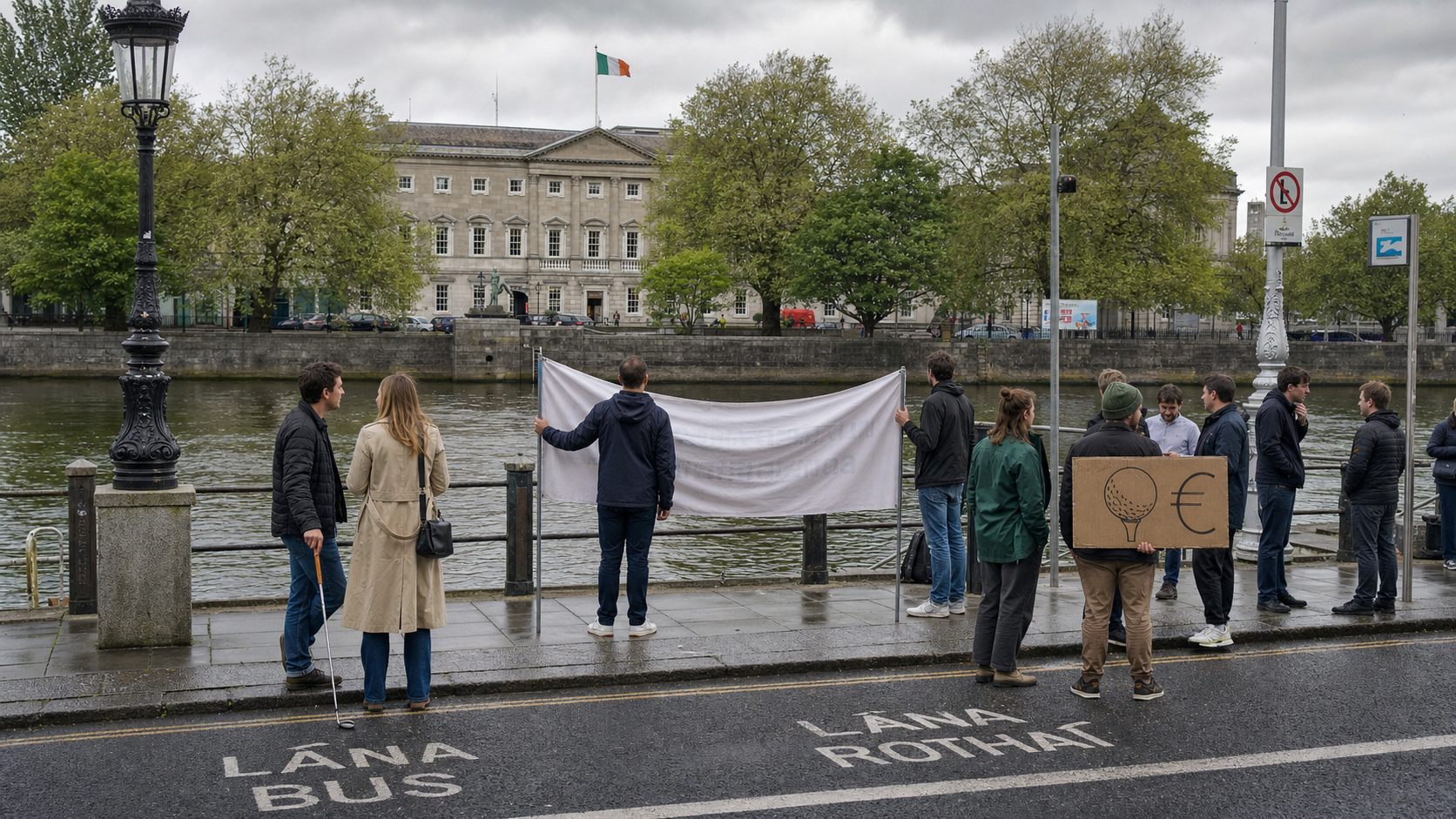
The Irish Times reported on Monday that state expenditure on the Ryder Cup has already reached €58 million — nearly double the €31 million originally approved by Cabinet in 2019. Additional costs for infrastructure, including a temporary train service to Adare and park-and-ride facilities, are expected to push the total public cost to €90 million or more. The Department of Sport has faced criticism for attempting to block the publication of an EY economic impact report on the 2027 Ryder Cup, leading to public debate about fiscal transparency and the long-term economic benefits of the tournament.
The ticket pricing has also attracted comment. At €499 per day for general admission, the Ryder Cup is significantly more expensive than comparable major sporting events in Ireland, and the priority window for Irish residents — which opened in April 2026 — sold out rapidly, leaving many Irish golf fans unable to attend. The pricing reflects the global demand for Ryder Cup tickets, but it also raises questions about the extent to which the event will be accessible to ordinary Irish people rather than primarily to wealthy international visitors.
For those who can afford the full experience, a 66,000-ton cruise ship, the Oceania Marina, has been chartered to dock at Foynes in County Limerick, offering accommodation packages ranging from approximately €17,600 for a windowless inside stateroom to €33,900 for a penthouse suite for a ten-night stay. The existence of such packages underlines the extent to which the Ryder Cup is, at its most exclusive, an event for the very wealthy.
Why It Matters
The Ryder Cup controversy matters because it raises fundamental questions about how the Irish government makes decisions about public investment in major sporting events. The original €31 million commitment was approved by Cabinet without the kind of rigorous independent economic analysis that should accompany a decision of that scale. As the costs have escalated to €58 million and beyond, the absence of transparent, independently verified economic impact data has made it impossible for the public or the Oireachtas to assess whether the investment represents value for money.
The Department of Sport's reported attempt to block publication of the EY economic impact report is particularly troubling. If the economic case for the Ryder Cup is as strong as the government claims, there should be no reason to withhold the analysis that supports it. The fact that the department sought to prevent publication suggests either that the analysis does not support the government's claims, or that there are other considerations — political or commercial — that are driving the decision-making.
This is not a question of whether the Ryder Cup will be a wonderful event — it almost certainly will be. It is a question of whether the Irish taxpayer is getting a fair deal, and whether the government is being honest about the costs and benefits of its investment.
Local Impact
For County Limerick and the wider mid-west region, the Ryder Cup represents a genuine opportunity. The event will bring tens of thousands of international visitors to a region that has historically struggled to attract major international tourism, and the media exposure — with coverage reaching hundreds of millions of viewers worldwide — will raise the profile of Limerick and Adare in a way that no conventional marketing campaign could achieve. The hospitality and tourism sectors in Limerick city and county are already preparing for the influx, with hotels, restaurants, and transport operators investing in capacity. The question is whether the economic benefits will be distributed broadly enough to justify the scale of the public investment.
What's Next
The Oireachtas Public Accounts Committee is expected to examine the Ryder Cup expenditure in the coming months, with particular focus on the escalation of costs from the original €31 million commitment and the transparency of the economic impact analysis. The Department of Sport will be asked to provide a full account of all public expenditure associated with the event, including infrastructure costs. The EY economic impact report, whose publication was reportedly blocked, may yet be released following political pressure. The Ryder Cup itself takes place in September 2027, and the true economic impact will only be assessable in the months and years that follow.