Robotic Surgery 'Pushing the Boundaries' of Irish Cancer Care as RCSI Launches National Training Curriculum
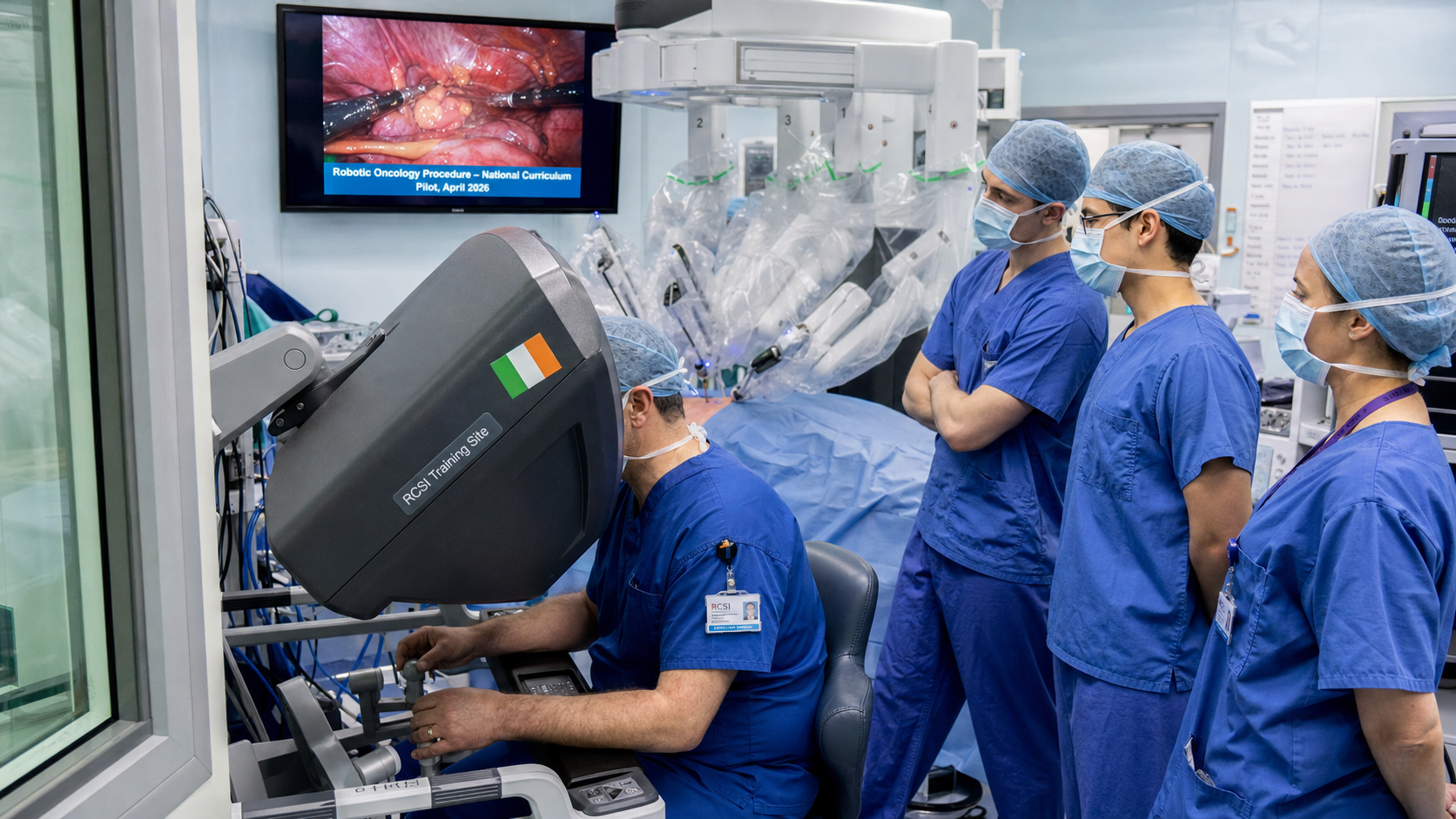
Robotic surgery is transforming cancer care across Ireland, with the Royal College of Surgeons in Ireland launching the country's first national robotic surgery curriculum in April 2026 to standardise training and ensure that the rapid adoption of the technology is supported by formal education and professional benchmarks. Hospitals in both the Republic and Northern Ireland are expanding their robotic programmes, with the technology now used for prostate, colorectal, gynaecological, and oesophageal cancer procedures.
Background
Robotic-assisted surgery — most commonly using the da Vinci Surgical System — has been transforming surgical practice globally over the past two decades, offering patients benefits including reduced blood loss, smaller incisions, less post-operative pain, and shorter hospital stays. In Ireland, the technology has been adopted more slowly than in some other European countries, but the pace of adoption has accelerated significantly in recent years as the evidence base for its benefits has grown and as the cost of the technology has fallen.
The Mater Private Network in Dublin established Ireland's first robotic surgery programme in 2010 and has been the leader in the field since then, with plans to expand applications into liver and gastric surgery. In Northern Ireland, robotic platforms are now operational at Belfast City Hospital, Altnagelvin Hospital in Derry, and Ulster Hospital in Dundonald, with recent milestones including the first robotic-assisted oesophagectomy in the region.
The RCSI's decision to launch a national robotic surgery curriculum reflects a recognition that the rapid adoption of the technology needs to be matched by formal training and credentialing to ensure patient safety. The curriculum, led by RCSI President Professor Deborah McNamara, aims to create a standardised pathway for surgeons who want to develop robotic skills, ensuring that the technology is used safely and effectively across all hospitals that adopt it.
Key Developments
The Irish Times reported this week that robotic surgery is "one of several developments pushing the boundaries of Irish cancer care," with the technology increasingly being used for complex procedures that would previously have required open surgery with longer recovery times. The benefits for cancer patients are significant: shorter hospital stays mean faster return to normal life, reduced blood loss reduces the risk of complications, and the precision of robotic instruments allows surgeons to operate in areas that are difficult to access through conventional approaches.
The RCSI's national curriculum, which was launched in April 2026, provides a structured pathway for surgeons at all stages of their careers to develop robotic skills. The curriculum includes simulation training, proctored cases, and formal assessment, and is designed to be compatible with the requirements of the Medical Council and the surgical training bodies. Professor Kevin Barry, Director of National Surgical Training Programmes at RCSI, has been leading the development of the credentialing framework.
The RCSI is also serving as a Silver Sponsor for the "Robotics, Innovation and Surgical Excellence" conference in Birmingham in September 2026, reflecting its commitment to embedding robotics, simulation, and artificial intelligence into clinical practice and surgical training at an international level.
Why It Matters
Cancer is the second leading cause of death in Ireland, with approximately 45,000 new cases diagnosed each year. Improving the quality and outcomes of cancer surgery is therefore a major public health priority, and robotic surgery has the potential to make a significant contribution to that goal. The evidence from international studies consistently shows that robotic surgery for certain cancer types — including prostate, colorectal, and gynaecological cancers — is associated with better outcomes than conventional open surgery, including lower rates of complications and better functional outcomes.
The RCSI's national curriculum is important because it ensures that the benefits of robotic surgery are available to patients across Ireland, not just in the major private hospitals that have historically led the adoption of the technology. By standardising training and credentialing, the curriculum creates a pathway for robotic surgery to be introduced safely in public hospitals, where the majority of cancer patients are treated.
Local Impact
For cancer patients in Ireland, the expansion of robotic surgery means shorter hospital stays, faster recovery, and in many cases better long-term outcomes. For patients in Northern Ireland, the availability of robotic surgery at Belfast City Hospital, Altnagelvin, and Ulster Hospital means that access to the technology is no longer limited to those who can afford private care. The HSE's National Cancer Control Programme has been working to ensure that robotic surgery is integrated into the national cancer care pathway, with a particular focus on ensuring equitable access for patients in all regions.
What's Next
The RCSI's national robotic surgery curriculum will be formally evaluated at the end of its first year, with a view to expanding the number of training centres and the range of procedures covered. The college is also exploring the potential for telesurgery — remote robotic surgery — as a way of extending access to specialist surgical expertise in areas where it is currently limited. The "Freyer 2026" meeting, which features a nationwide telesurgery demonstration, will be an important showcase for this technology.