Rise in House Fire Deaths Prompts Fire Service Warning as Over 4,100 Incidents Recorded in Irish Homes Last Year
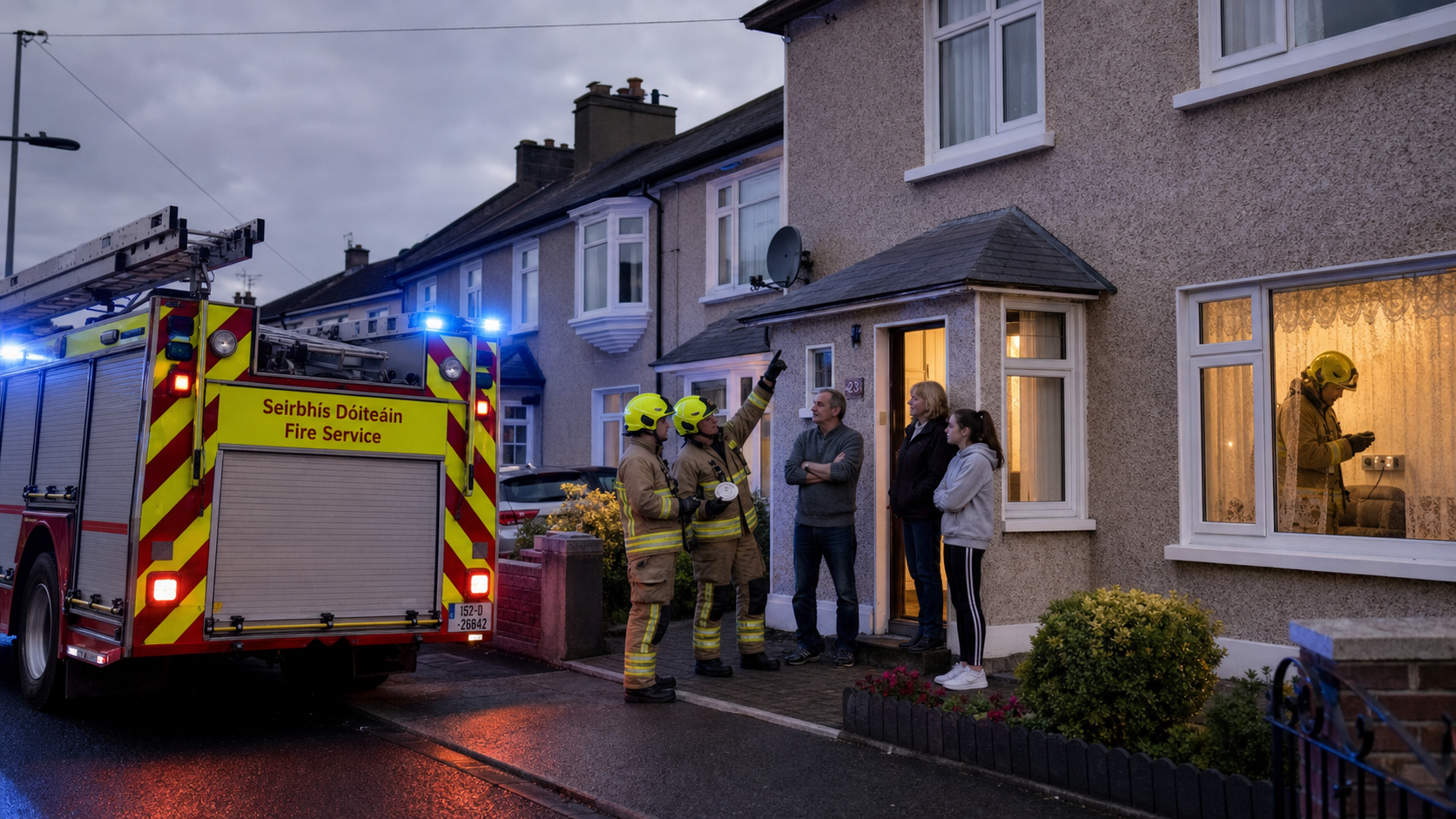
Ireland's fire services have recorded more than 4,100 incidents in residential properties over the past year, with a rise in fire-related deaths prompting a renewed public safety campaign from fire chiefs who are urging householders to check smoke alarms, avoid overloading electrical sockets, and never leave cooking unattended — with older people and those living alone identified as the most at-risk groups.
Background
House fires are one of the most preventable causes of death and serious injury in Ireland. The vast majority of fatal house fires share common characteristics: they occur at night, when occupants are asleep; they involve a delay in detection because smoke alarms are absent, faulty, or have had their batteries removed; and they spread rapidly because of the presence of synthetic materials in modern furnishings that burn faster and produce more toxic smoke than the natural materials used in older homes.
Ireland's fire services — operated by local authorities across the country, with the National Directorate for Fire and Emergency Management providing national coordination — respond to thousands of residential fire incidents each year. The majority of these incidents are relatively minor, involving small fires that are extinguished before they cause significant damage. But a significant minority result in serious injury or death, and the trend in recent years has been concerning.
The 4,100 residential fire incidents recorded over the past year represent a significant workload for fire services that are, in many parts of the country, operating with limited resources and ageing equipment. The National Directorate has been advocating for increased investment in fire service capacity for several years, and the rise in incidents adds urgency to that case.
Key Developments
The rise in fire-related deaths has prompted the National Directorate for Fire and Emergency Management to launch a renewed public safety campaign, focusing on the three most common causes of fatal house fires: cooking accidents, electrical faults, and smoking materials. The campaign, which will run across social media, radio, and community channels, emphasises the importance of working smoke alarms as the single most effective measure for reducing fire deaths.
Research conducted by the National Directorate shows that approximately 40 per cent of homes in Ireland do not have a working smoke alarm — a figure that is significantly higher than in comparable countries and that reflects a persistent gap in public awareness and compliance. The campaign is targeting this gap directly, with a particular focus on older people and those living alone, who are disproportionately represented among fire fatalities.
Fire chiefs have also highlighted the growing risk posed by lithium-ion batteries, which are used in a wide range of consumer products including e-bikes, e-scooters, and power tools. Fires involving lithium-ion batteries are particularly dangerous because they can ignite suddenly and burn at extremely high temperatures, making them difficult to extinguish with conventional fire-fighting methods. The National Directorate has issued specific guidance on the safe storage and charging of lithium-ion batteries, and it is urging consumers to follow manufacturer instructions and to avoid charging batteries overnight or when unattended.
Why It Matters
The rise in house fire deaths is a public health issue that deserves more attention than it typically receives. Unlike road deaths — which are tracked closely, reported prominently, and subject to sustained policy attention — fire deaths tend to be reported individually, without the kind of aggregate analysis that would make the scale of the problem visible. The National Directorate's decision to publish the 4,100 incident figure and to highlight the rise in deaths is an attempt to change that dynamic and to generate the kind of public and political attention that the issue warrants.
The demographic profile of fire fatalities is also significant. Older people — particularly those living alone, in older housing stock, with limited mobility — are disproportionately at risk. As Ireland's population ages, and as the number of older people living alone increases, the risk of fire-related deaths is likely to grow unless targeted interventions are put in place. The National Directorate has been advocating for a programme of home fire safety visits for older people, similar to programmes that have been implemented successfully in the United Kingdom, but funding for such a programme has not yet been secured.
The lithium-ion battery issue is a newer and growing concern. The rapid growth in the use of e-bikes and e-scooters — driven in part by government incentives for active travel — has introduced a significant new fire risk into Irish homes, and the regulatory framework for the safe use and disposal of lithium-ion batteries has not kept pace with the growth in their use.
Local Impact
In Dublin, Cork, Galway, and other urban areas, the fire service response to residential incidents is generally rapid, with response times typically within the target of ten minutes for the most serious incidents. But in rural areas — where fire stations are more widely spaced and retained firefighters may need time to travel to the station before responding — response times can be significantly longer, and the consequences of a delayed response can be severe.
The Dublin Fire Brigade, which covers the capital and parts of the surrounding county, has been particularly vocal about the need for investment in fire service capacity. The brigade has highlighted the growing demand for its services — driven by population growth, the increasing density of residential development, and the rise in incidents involving lithium-ion batteries — and has called for additional resources to maintain response times at safe levels.
What's Next
The National Directorate for Fire and Emergency Management's public safety campaign will run through September and October, with a particular focus on the period around Halloween — traditionally one of the highest-risk periods for fire incidents in Ireland. The Directorate is also engaging with the Department of Housing about the possibility of requiring smoke alarms in all rental properties as a condition of registration with the Residential Tenancies Board — a measure that would significantly increase the proportion of homes with working smoke alarms. A decision on that proposal is expected before the end of the year.