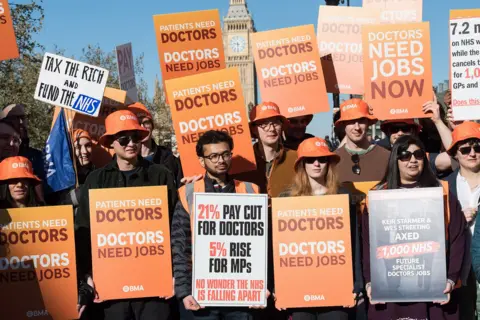
Resident Doctors Strike Enters Third Day as NHS Faces £3bn Bill and Thousands of Cancellations
England's resident doctors are into the third day of a six-day strike, with the NHS facing mounting disruption as thousands of planned treatments and appointments are cancelled and the total cost of industrial action since 2023 approaches £3.25 billion.
The walkout, which began on Tuesday 7 April and runs until Sunday 13 April, is the 15th round of strikes by resident doctors since March 2023. The British Medical Association (BMA) is demanding full pay restoration to 2008 levels — a move it calculates would require an additional 26% increase on top of current pay to compensate for years of below-inflation rises.
Background
The dispute has its roots in a decade of pay erosion that the BMA argues has left resident doctors — formerly known as junior doctors — significantly worse off in real terms than their predecessors. The union calculates that at the current rate of pay increases, full restoration would not be achieved until 2036.
The government's most recent offer included an average basic pay rise of 4.9% for the current year, which it said would make resident doctors on average 35.2% better off compared to four years ago. The offer also included a commitment to introduce up to 4,500 additional specialty training posts over three years, with 1,000 intended for April 2026. However, the government subsequently withdrew those 1,000 training posts after the BMA rejected the overall deal — a move the union described as using training opportunities as a "bargaining chip."
Key Developments
NHS England chief Sir Jim Mackey criticised the timing of the strikes over the Easter bank holiday period, stating it caused "havoc" and made it extremely difficult for hospitals to fill rotas. NHS England has urged patients not to delay seeking medical help for genuine emergencies during the walkout, and senior consultants are providing cover in emergency settings.
The Centre for Economics and Business Research estimated the latest six-day strike would cost the economy £43 million, primarily through reduced productivity and lost working days. The total cost to NHS hospitals since March 2023 is now estimated at over £3 billion, based on the cost of rescheduling operations and paying consultants to cover resident doctors.
A YouGov poll conducted in March 2026 found that 53% of the public opposed the latest round of industrial action, with 31% strongly against it, while 38% expressed support for the strikes.
Why It Matters
The resident doctors' dispute is one of the most protracted and costly industrial conflicts in NHS history. Beyond the financial toll, the human cost — in delayed diagnoses, postponed operations, and the anxiety of patients waiting for treatment — is significant. The withdrawal of 1,000 specialty training posts has also left some doctors facing unemployment and uncertainty about their career progression, adding a new dimension to the dispute.
What's Next
Both sides have expressed a willingness to negotiate but remain far apart on key issues. The BMA maintains that the strikes are "entirely avoidable" if the government presents a credible offer addressing pay restoration. Health Secretary Wes Streeting has urged the BMA to reconsider its stance. The strike is due to end on Sunday 13 April, but further action cannot be ruled out if talks do not resume.
Full details of the dispute are available at BBC News's coverage of the resident doctors' strike.