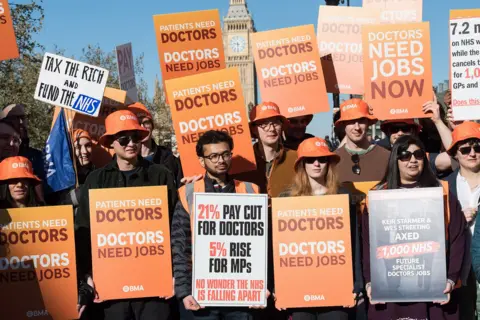
Resident Doctors Begin Week-Long Strike as NHS Faces Easter Pressure
Resident doctors across England began a week-long strike on Tuesday, walking out over pay and concerns about NHS training post cuts, adding significant pressure to a health service already stretched by Easter bank holiday demand and ongoing waiting list challenges.
The industrial action, called by the British Medical Association (BMA), runs from 7am on Tuesday 7 April until 7am on Monday 13 April, covering the Easter bank holiday period. The NHS has activated contingency plans, with other staff continuing to work and the service prioritising urgent and emergency care throughout the walkout.
Background
Resident doctors — formerly known as junior doctors — have been in dispute with the government over pay, arguing that their salaries have been eroded by up to 25 per cent in real terms since 2008. The BMA has also raised concerns about cuts to NHS training posts, which it says are undermining the pipeline of future doctors and placing unsustainable pressure on those already in the system.
The dispute comes against a backdrop of significant NHS workforce challenges. The overall NHS vacancy rate stood at 6.5 per cent in March, and the service is grappling with a total elective care waiting list of 7.25 million patients in England.
Key Developments
NHS England chief executive Amanda Pritchard said hospitals were "coping well" in the early stages of the strike, with emergency departments and urgent care services continuing to operate. Patients who have not been contacted about appointment changes have been advised to attend as planned, though longer waits are expected for less urgent procedures.
The strike has added to the pressure on NHS services over the Easter period, with GP practices and pharmacies operating on reduced hours across the bank holiday weekend. NHS 111 has been handling increased demand, and patients have been urged to use the service for urgent but non-life-threatening medical advice.
The government has indicated it is open to further talks with the BMA but has not made any new pay offer. Health Secretary Wes Streeting has previously described the dispute as one of the most difficult challenges facing the NHS, and has called on the BMA to return to the negotiating table.
Why It Matters
The strike is the latest in a series of industrial actions that have cost the NHS an estimated £3 billion in cancelled appointments and additional staffing costs since 2022. For patients, particularly those awaiting elective procedures, each round of strike action adds further delays to an already lengthy wait.
The timing of the walkout — covering Easter — has drawn particular criticism, with some patient groups arguing that striking over a bank holiday period places vulnerable people at unnecessary risk.
What's Next
The strike is due to end on Monday morning. If no resolution is reached, further industrial action is likely to be announced. The BMA has indicated it will continue to press for a pay restoration deal that reflects the real-terms losses doctors have experienced over the past decade.
For the latest NHS updates, see BBC News health coverage.

