Re-turn Scheme Hits Record 5.8 Million Containers in a Single Day as Cumulative Total Passes 3 Billion
Ireland's Deposit Return Scheme achieved a landmark double milestone on Thursday, 2 July 2026, recording its highest-ever single-day collection of 5.8 million drinks containers while simultaneously surpassing a cumulative total of 3 billion plastic bottles and aluminium cans processed since the scheme's launch in February 2024 — a result that has been hailed as one of the most successful environmental policy interventions in the state's history.
Background
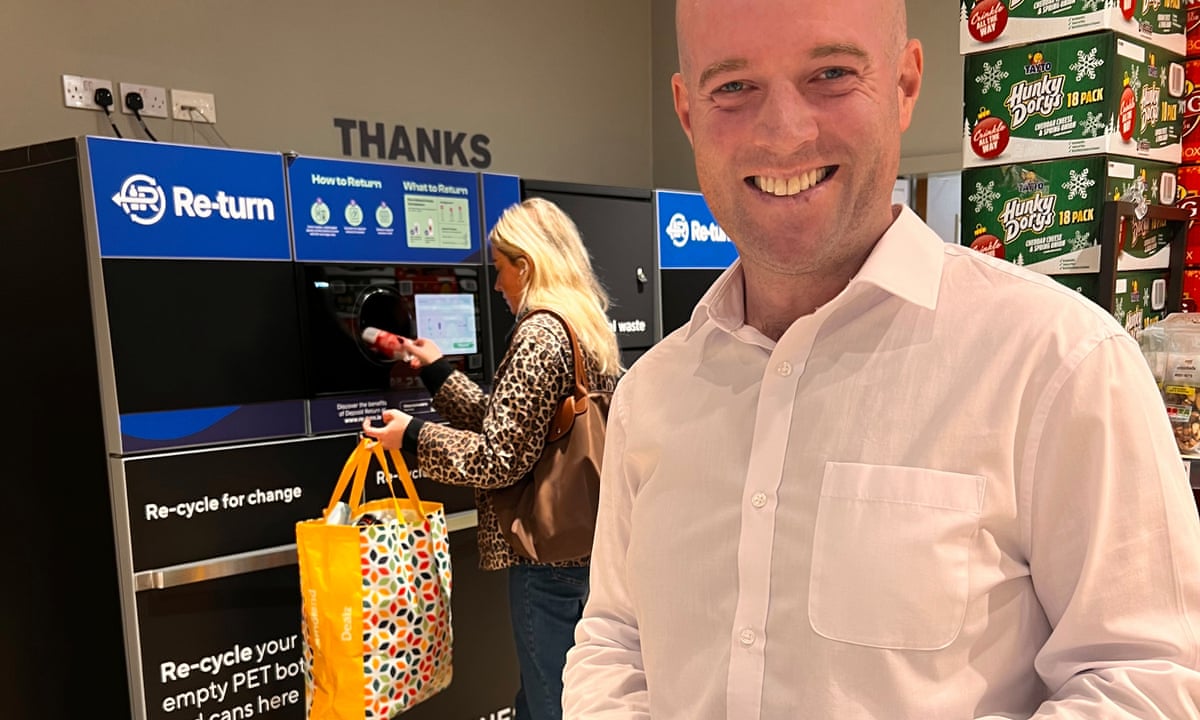
The Deposit Return Scheme, operated by Re-turn, was introduced on 1 February 2024 after years of planning and considerable public debate about its feasibility. Under the scheme, consumers pay a small deposit — typically 15 to 25 cent — when purchasing drinks in plastic bottles or aluminium cans, which is refunded when the empty container is returned to a designated reverse vending machine at participating retailers across the country.
At the time of its launch, Ireland's recycling rate for in-scope containers stood at approximately 49%, a figure that placed the country well below the European average and far short of the EU's mandated targets. The scheme was designed to dramatically increase that rate, incentivising consumers to return containers rather than dispose of them in general waste or, worse, as litter in the natural environment.
The rollout was not without its early difficulties. Some retailers struggled with the logistics of installing and maintaining reverse vending machines, and there were initial complaints about queuing times and machine reliability. However, public uptake accelerated steadily through 2024 and into 2025, with the scheme becoming a routine part of shopping behaviour for millions of households across the Republic.
Key Developments
The record single-day figure of 5.8 million containers returned on 2 July represents a remarkable demonstration of public engagement with the scheme. Re-turn confirmed the milestone in a statement, noting that the figure surpassed the previous single-day record by a significant margin. The cumulative total of 3 billion containers processed since February 2024 translates to an average of roughly 4.5 million containers returned every single day over the scheme's lifetime — a figure that would have seemed optimistic to even its most enthusiastic proponents at launch.
The recycling rate for in-scope containers has now reached approximately 91%, up from 49% prior to the scheme's introduction. That 42-percentage-point improvement places Ireland among the leading performers in Europe for deposit return schemes, comparable to the Scandinavian countries that pioneered such systems decades ago. The environmental impact is substantial: 3 billion containers diverted from landfill or incineration represents a significant reduction in plastic and aluminium waste entering the waste stream.
Re-turn chief executive Séamus Clancy described the milestone as a testament to the Irish public's willingness to embrace behavioural change when given the right incentives and infrastructure. The scheme now operates through a network of more than 2,500 reverse vending machines at retail locations nationwide, from large supermarkets to smaller convenience stores in rural communities.
Why It Matters
The Re-turn scheme's success carries significance well beyond the headline recycling figures. Ireland has historically struggled with litter and waste management, and the scheme represents a rare example of a policy intervention that has demonstrably and rapidly changed public behaviour at scale. The 91% return rate compares favourably with Germany's long-established Pfand system, which typically achieves rates of around 97% — a benchmark that Ireland is now within realistic reach of matching.
From a fiscal perspective, the scheme also generates revenue through unredeemed deposits, which are reinvested in environmental initiatives. The success of the model has prompted discussions in other EU member states about accelerating their own deposit return rollouts, and Ireland's experience is being studied as a case study in effective environmental policy design. For a country that has faced criticism over its environmental record in areas such as agricultural emissions and biodiversity loss, the Re-turn scheme offers a genuinely positive counterpoint — proof that ambitious targets, when backed by practical infrastructure and public buy-in, can be achieved ahead of schedule.
Local Impact
The scheme's reach extends to every corner of the Republic, from Donegal to Kerry and from Dublin's city centre to the smallest rural villages. In communities where access to recycling facilities has historically been limited, the reverse vending machines at local shops have provided a convenient and accessible option that did not previously exist. Retailers in areas such as Connemara, the Aran Islands, and the rural midlands have reported strong uptake, with some noting that the scheme has become a social fixture — a reason for customers to visit the shop and engage with the community. The environmental benefit is particularly visible in coastal areas, where litter surveys have recorded a measurable reduction in plastic bottle and can waste on beaches and in waterways since the scheme's introduction.
What's Next
Re-turn is expected to publish a full mid-year performance report in the coming weeks, which will include detailed breakdowns of return rates by county, container type, and retail format. The Department of the Environment is also understood to be reviewing whether the scheme's scope should be expanded to include additional container types, such as glass bottles, which are currently excluded. EU regulations require member states to achieve a 90% return rate for plastic bottles by 2029 — a target Ireland has already effectively met, three years ahead of schedule. Discussions are also ongoing about whether the deposit amount should be adjusted to further incentivise returns and whether the scheme's infrastructure can be extended to public venues such as sports grounds and festivals.