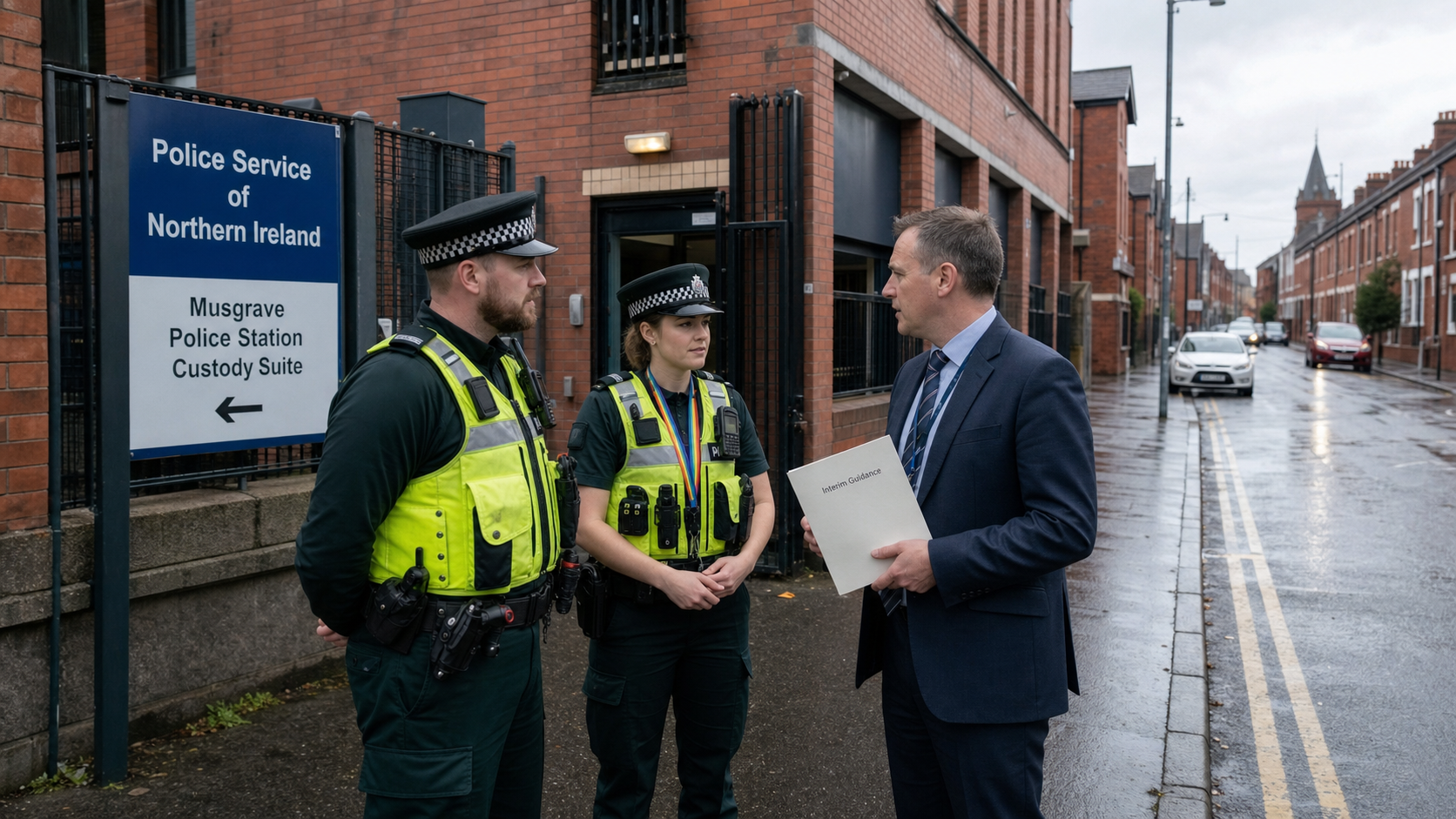
PSNI Paramilitary Crime Task Force Seizes £250,000 of Class A Drugs in Belfast City Centre Operation
The PSNI's Paramilitary Crime Task Force has struck a significant blow against organised crime in Belfast, seizing suspected Class A drugs with an estimated street value of £250,000 in a targeted operation in the city centre on 2 July 2026 — one of the largest single drug hauls recorded in the area in recent months and a demonstration of the Task Force's capacity to disrupt the supply chains of criminal networks operating across Northern Ireland.
Background
The Paramilitary Crime Task Force is a specialist policing unit established in 2016 as part of the Fresh Start Agreement, designed to tackle the criminal activities of paramilitary organisations in Northern Ireland. It operates as a joint initiative involving the PSNI, the National Crime Agency, and Her Majesty's Revenue and Customs, bringing together intelligence and operational capabilities from multiple agencies to target the most serious organised crime networks in the region.
Drug trafficking has long been a significant source of revenue for paramilitary organisations in Northern Ireland, both loyalist and republican. The proceeds from drug sales fund a range of criminal activities, including extortion, money laundering, and the acquisition of weapons. The Task Force has made the disruption of these drug supply chains a central priority, conducting hundreds of operations since its establishment and seizing tens of millions of pounds worth of controlled substances.
Belfast city centre has seen a notable increase in drug-related activity in recent years, a trend that has been linked by police and community organisations to the broader social and economic pressures facing the city. The availability of Class A drugs, including cocaine and heroin, has increased, and the associated harms — including addiction, violence, and exploitation — have placed significant pressure on health and social services in the greater Belfast area.
Key Developments
The operation on 2 July resulted in the seizure of a substantial quantity of suspected Class A drugs, with a street value estimated by the PSNI at £250,000. The drugs were discovered during a targeted search operation in the city centre, the precise location of which has not been disclosed for operational reasons. One individual was arrested at the scene and taken into custody for questioning. The PSNI confirmed that the arrested person was being questioned in connection with the seizure and that further arrests could not be ruled out as the investigation progressed.
Detective Superintendent Eamonn Corrigan of the Paramilitary Crime Task Force described the seizure as a significant disruption to the supply of Class A drugs in Belfast and said the operation was the result of sustained intelligence work over a period of weeks. He emphasised that the Task Force remains committed to targeting those who profit from the misery caused by drug addiction and that no criminal network operating in Northern Ireland should consider itself beyond the reach of law enforcement.
The seizure comes at a time when the PSNI has been under pressure over its operational capacity, with budget constraints having reduced officer numbers and limited the resources available for proactive policing. The success of this operation will be welcomed by PSNI leadership as evidence that the force retains the capability to conduct effective intelligence-led operations despite the financial pressures it faces.
Why It Matters
A £250,000 drug seizure in Belfast city centre is significant for several reasons. At the most immediate level, it removes a substantial quantity of harmful substances from the streets, reducing the supply available to dealers and, ultimately, to users. The disruption to the supply chain also imposes financial costs on the criminal networks involved, forcing them to rebuild their operations and potentially exposing them to further law enforcement attention in the process. More broadly, the operation sends a message to organised crime networks that the city centre is not a safe operating environment — a message that is particularly important at a time when Belfast is seeking to attract investment, tourism, and economic activity. The involvement of the Paramilitary Crime Task Force also underscores the continued relevance of the Fresh Start Agreement's provisions for tackling paramilitary criminality, even as the political landscape in Northern Ireland continues to evolve.
Local Impact
The operation took place in Belfast city centre, an area that encompasses the Cathedral Quarter, the retail core around Royal Avenue and Donegall Place, and the surrounding streets. These areas are frequented by shoppers, tourists, office workers, and residents of the city centre's growing residential population. The presence of drug dealing networks in these spaces has been a source of concern for businesses, community groups, and the Belfast City Council, which has invested significantly in the regeneration and promotion of the city centre as a destination. The PSNI's North Belfast and City Centre policing districts have been working with the Business Improvement District and local community organisations to address drug-related issues, and the Task Force operation will be welcomed as a concrete result of that collaborative approach. The arrested individual is expected to appear before Belfast Magistrates' Court in due course.
What's Next
The investigation into the seizure is ongoing, with the PSNI conducting further inquiries to establish the full extent of the criminal network involved and to identify any additional individuals who may face charges. Forensic analysis of the seized substances will be completed in the coming weeks to confirm their precise composition and quantity. The Paramilitary Crime Task Force has indicated that further operations targeting drug supply networks in Belfast and across Northern Ireland are planned, and it has appealed to members of the public with information about drug dealing or paramilitary criminal activity to contact the PSNI or the independent Crimestoppers service.