PSNI Launches Review After Claims Officers Told Hospital Staff to Show ID to Masked Rioters
The Police Service of Northern Ireland has initiated an urgent internal review into alarming allegations that its officers advised healthcare workers from the Mater Hospital in north Belfast to present their work identification documents to masked men who had established illegal checkpoints during a period of anti-immigration civil disorder — claims that have drawn immediate condemnation from the First Minister and the Health Minister and raised profound questions about policing priorities during public order incidents.
Background
The allegations emerged in the context of a period of civil unrest in parts of Belfast in early July 2026, linked to anti-immigration sentiment that has periodically flared across Northern Ireland and the wider United Kingdom in recent years. During this unrest, groups of masked individuals reportedly established unauthorised checkpoints at certain locations in north Belfast, stopping vehicles and pedestrians and demanding identification. The Mater Hospital, one of Belfast's major acute hospitals and a key facility for the Belfast Health and Social Care Trust, is located in the north of the city and its staff regularly travel through the affected areas.
The PSNI has faced sustained scrutiny over its handling of public order situations in recent years, particularly in the context of loyalist and republican parades, interface tensions, and more recently, disorder linked to anti-immigration protests. The force operates under significant resource constraints, with budget cuts having reduced officer numbers and limited operational capacity. These pressures have intensified the debate about how the PSNI prioritises its response to different types of public disorder.
The Mater Hospital is a Catholic-ethos institution with a long history of serving the north Belfast community. Its staff, many of whom live in or travel through areas affected by the disorder, found themselves in an extraordinarily difficult position if the allegations are accurate — being advised by the very police force responsible for their protection to comply with the demands of masked rioters rather than being escorted safely through the checkpoints.
Key Developments
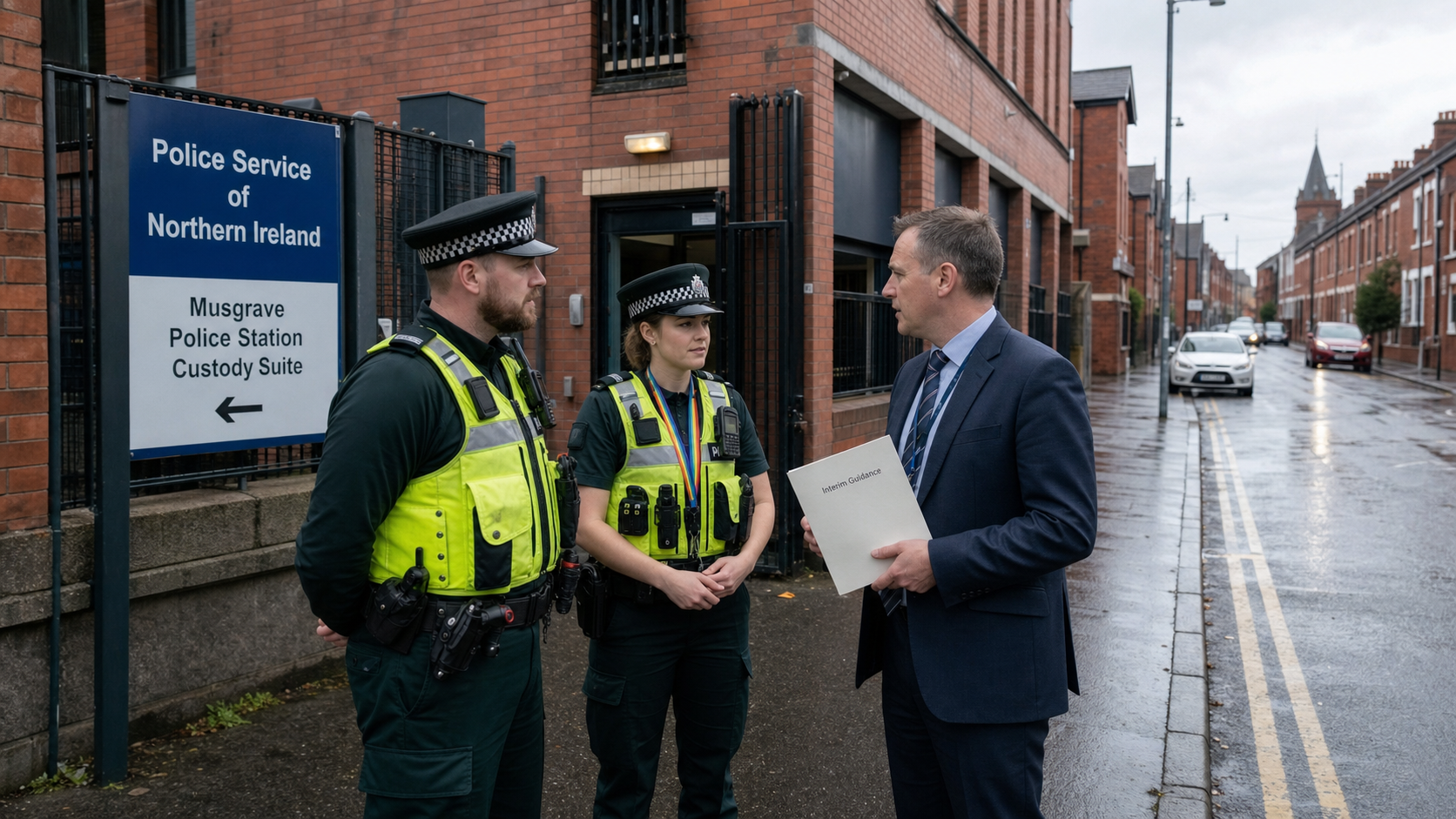
The PSNI confirmed it had launched an internal review into the allegations after they were reported by the Newsletter and other outlets. In a statement, PSNI leadership said they had not received direct reports from hospital staff about the alleged advice but were treating the claims with the utmost seriousness and had engaged with the Belfast Health and Social Care Trust to understand the full picture. The force emphasised that it does not condone the establishment of illegal checkpoints and that its officers are trained to protect the public, not to facilitate the activities of rioters.
First Minister Michelle O'Neill responded with characteristic directness, stating: "If that happened there needs to be a serious investigation." She described the allegations as deeply concerning and called for a full and transparent inquiry into what occurred. Health Minister Mike Nesbitt also expressed alarm, noting that healthcare workers have an absolute right to travel safely to and from their place of work without interference from masked individuals, and that any suggestion that police had facilitated such interference was unacceptable.
The Belfast Health and Social Care Trust confirmed it was in contact with the PSNI and was gathering information from its staff about their experiences during the period of disorder. The Trust said the safety and wellbeing of its workforce was its paramount concern and that it expected the police to provide a full account of what had occurred.
Why It Matters
This story cuts to the heart of some of the most sensitive fault lines in Northern Irish society. The suggestion that police officers may have, even inadvertently, legitimised the authority of masked rioters by advising members of the public to comply with their demands is deeply troubling from a rule-of-law perspective. It raises questions about the operational decisions made by officers on the ground during a fast-moving public order situation and about the guidance they received from senior commanders. For healthcare workers — who are already under enormous pressure from the NI health service's chronic underfunding and staffing crisis — the prospect of facing intimidation on their way to work, without the full protection of the police, is a serious welfare concern. The incident also has broader implications for community relations in north Belfast, where trust between different communities and the police remains fragile.
Local Impact
The Mater Hospital serves a large catchment area in north Belfast, including the communities of Ardoyne, New Lodge, Tiger's Bay, and the surrounding areas. Its staff come from across the city and beyond, travelling through a range of neighbourhoods to reach the hospital. The allegations have caused significant anxiety among healthcare workers in the area, with some reporting that they are reconsidering their travel routes and working arrangements in light of the disorder. The Belfast Health and Social Care Trust, which also operates the Royal Victoria Hospital, the Belfast City Hospital, and a range of community health facilities, has urged staff to report any incidents of intimidation or interference to both the Trust and the PSNI. The PSNI's Antrim Road and North Belfast policing districts are expected to increase their visible presence in the area as the review proceeds.
What's Next
The PSNI's internal review is expected to report its initial findings within a matter of weeks. If the allegations are substantiated, the matter could be referred to the Police Ombudsman for Northern Ireland for independent investigation. The Policing Board is also expected to raise the issue at its next scheduled meeting, where PSNI Chief Constable Jon Boutcher will be asked to provide a full account of the force's actions during the period of disorder. The First Minister has indicated she will pursue the matter through the Executive if a satisfactory explanation is not forthcoming. The Department of Health is also expected to issue updated guidance to health trusts on staff safety protocols during periods of civil unrest.