PSNI Budget Crisis Deepens as Force Operates 700 Officers Below Target Amid Legacy Cost Burden
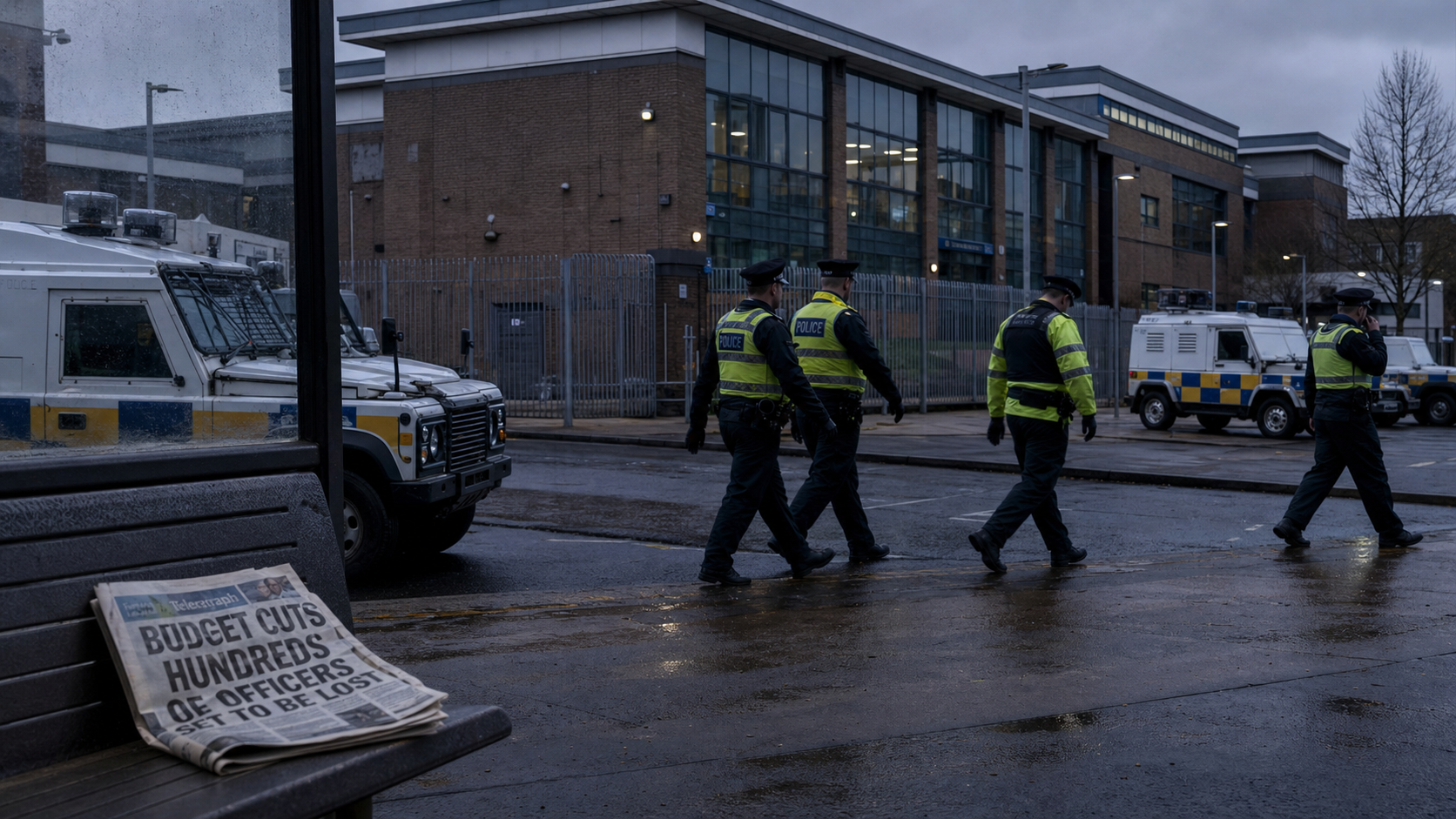
The Police Service of Northern Ireland is operating with approximately 6,300 officers — some 700 below its 2028 target of 7,000 — as a compounding budgetary crisis driven by £24 million in annual legacy-related costs, the £5.4 million bill for policing the June riots, and years of hiring freezes continues to erode the force's operational capacity at precisely the moment when Northern Ireland's security environment demands maximum resilience.
Background
The PSNI has been operating under sustained financial pressure for the better part of a decade, a consequence of UK-wide public sector austerity, the particular costs associated with Northern Ireland's legacy of conflict, and the structural challenges of policing a divided society. The force's budget has been repeatedly squeezed, forcing difficult choices between maintaining officer numbers, investing in equipment and technology, and meeting the costs of legacy investigations and inquests.
His Majesty's Inspectorate of Constabulary and Fire and Rescue Service (HMICFRS), the independent watchdog that assesses police forces across the UK, has been monitoring the PSNI's situation with growing concern. Its most recent assessment warned that long-term budget reductions and hiring freezes have severely compromised the service's capability, creating a force that is stretched thin across its operational commitments and increasingly reliant on overtime and the cancellation of rest days to maintain basic service levels.
The human cost of this pressure is visible in the force's sickness absence figures, which show elevated rates of psychological stress-related illness among officers. Policing is a demanding profession in any context; in Northern Ireland, where officers face threats from dissident republican groups as well as the ordinary pressures of community policing, the psychological burden is particularly heavy. A force that is chronically understaffed and financially constrained is one in which individual officers are required to carry more than their share of that burden.
Key Developments
The June 2026 riots placed an acute additional strain on the PSNI's already depleted resources. The policing operation for the disorder cost an estimated £5.4 million, covering overtime, mutual aid from Police Scotland, and the deployment of specialist public order units. The UK government provided a one-off emergency package of £4 million to help cover these costs, but the PSNI was required to find the remaining £1.4 million from its own budget — a sum that, in the context of an already constrained financial position, represents a significant additional pressure.
Chief Constable Jon Boutcher has been consistent and direct in his public communications about the force's financial situation. He has highlighted the "exceptional" strain placed on the budget by legacy-related costs, which he estimates at approximately £24 million annually. These costs cover the PSNI's obligations under the legacy legislation, including cooperation with the Independent Commission for Reconciliation and Information Recovery (ICRIR) and the management of legacy inquests. Boutcher has argued that these costs, which are a direct consequence of Northern Ireland's unique historical circumstances, should not be borne by the contemporary policing budget but should instead be funded separately by the UK government.
The force's officer numbers have fallen to approximately 6,300, against a target of 7,000 by 2028. At the current rate of recruitment, which is constrained by budget limitations, reaching that target within the specified timeframe appears increasingly unlikely. The shortfall means that the PSNI is routinely unable to fill all of its operational posts, leading to the cancellation of rest days, the extension of shifts, and the redeployment of officers from specialist roles to frontline duties.
Why It Matters
The PSNI's budgetary crisis matters because effective policing is foundational to the stability and functioning of Northern Ireland's society and political institutions. A police force that is chronically understaffed and financially constrained is one that is less able to respond effectively to serious disorder, less able to investigate crime thoroughly, and less able to build the community relationships that are essential to policing by consent in a divided society. The June riots demonstrated with brutal clarity what can happen when a stretched police force is confronted with large-scale disorder: appointments are cancelled, services are disrupted, and the force is left to find additional costs from a budget that was already under pressure.
The legacy cost issue is particularly significant. The £24 million annual burden represents a structural problem that will not resolve itself — indeed, it is likely to grow as legacy investigations and inquests proceed. Without a specific funding stream to cover these costs, the PSNI will continue to face the impossible choice between meeting its legacy obligations and maintaining its contemporary operational capacity.
Local Impact
The practical consequences of the PSNI's resource constraints are felt across Northern Ireland. In Belfast, response times to non-emergency calls have increased as the force prioritises its most urgent commitments. In rural areas of Tyrone, Fermanagh, and Armagh, the reduction in officer numbers has led to concerns about the adequacy of policing coverage in communities that are already geographically remote from police stations. The Policing Board, which oversees the PSNI, has raised these concerns formally with the Chief Constable and with the Department of Justice. Local policing partnerships in areas including Derry/Londonderry and Newry have reported that the reduction in officer availability has affected the force's ability to engage in the community-based work that is essential to building trust and preventing crime.
What's Next
Chief Constable Boutcher is expected to present a formal budget submission to the Stormont Executive in September, setting out the PSNI's financial requirements for the 2027-28 financial year. The submission is expected to include a specific request for a dedicated legacy funding stream. The UK government has indicated it is willing to discuss the legacy cost issue but has not committed to any specific additional funding. The HMICFRS is scheduled to conduct a further inspection of the PSNI in the autumn, with its findings expected to be published before the end of the year.