Prostate Cancer Patients 'Unprepared' for Treatment Side Effects, Irish Study Finds
A major Irish study has found that two-in-three prostate cancer patients were not fully prepared for the impact of treatment on their sexual function, with 60% reporting that the effects were worse than expected and 78% of partners saying their own sexual wellbeing was never discussed by medical teams — findings that have prompted calls for a fundamental change in how Irish men are supported through prostate cancer treatment.
Background
Prostate cancer is the second most common cancer affecting men in Ireland, with approximately 4,000 new cases diagnosed annually and a lifetime risk of one-in-six. The condition predominantly affects men over 65, though it can occur in younger men, particularly those with a family history of the disease or with specific genetic risk factors including BRCA1 and BRCA2 mutations. Treatment options include active surveillance, hormone therapy, radiotherapy, and surgery, with the choice of treatment depending on the stage and risk profile of the cancer and on the patient's individual circumstances and preferences.
While survival rates for prostate cancer have improved significantly in recent decades — with the five-year survival rate now exceeding 90% for most stages of the disease — the side effects of treatment can have a profound impact on quality of life. Sexual dysfunction, including erectile dysfunction and loss of libido, is one of the most common and distressing side effects of prostate cancer treatment, affecting the majority of men who undergo surgery or radiotherapy. Urinary incontinence and bowel problems are also common, and the psychological impact of a cancer diagnosis and its treatment can be severe.
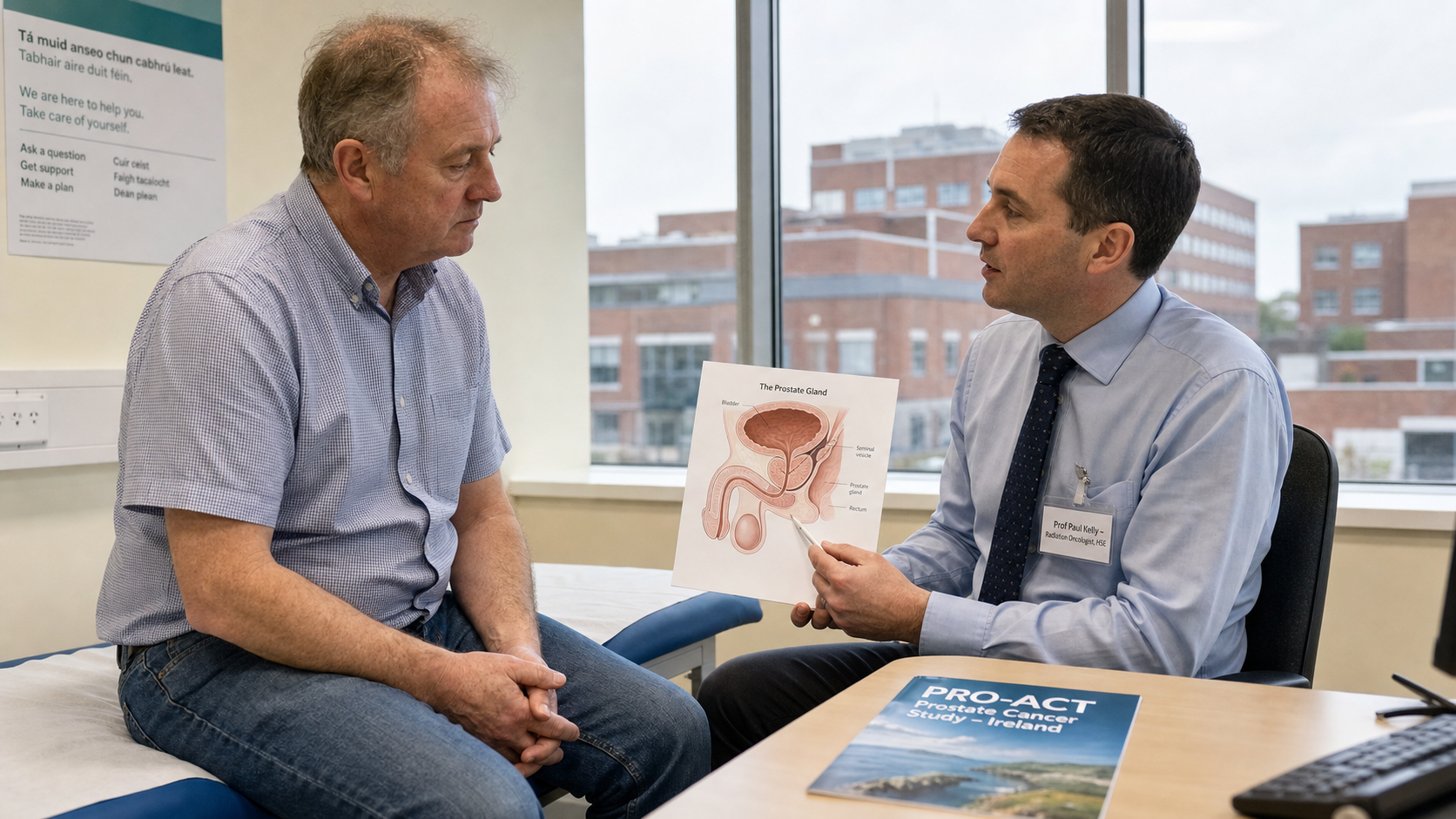
Despite the prevalence and significance of these side effects, research has consistently shown that many men are inadequately prepared for them before treatment begins. The PRO-ACT (Patient-led Research On sexual experience After Cancer Treatment) survey, led by radiation oncologist Prof. Paul Kelly and patient advocate Martin Sweeney, was designed to investigate the lived experience of prostate cancer patients and their partners in Ireland, with a particular focus on the adequacy of information and support provided around sexual health.
Key Developments
The PRO-ACT survey findings, published in August 2026, paint a concerning picture of the support available to prostate cancer patients in Ireland. Two-in-three patients reported that they were not fully prepared for the impact of treatment on their sexual function, and 60% said that the impact was worse than expected. These figures suggest a significant and systematic failure to provide adequate pre-treatment counselling and information to men facing prostate cancer treatment.
The findings regarding partners are particularly striking. Seventy-eight per cent of partners reported that their own sexual wellbeing was never discussed by medical teams, despite 65% of them being present at clinical consultations. This suggests that the impact of prostate cancer treatment on intimate relationships — which can be profound and long-lasting — is being systematically overlooked by the healthcare system. Partners play a crucial role in supporting men through cancer treatment, and their own needs and concerns deserve to be acknowledged and addressed.
The survey also identified a lack of "wraparound" support services for prostate cancer patients, specifically in areas such as physical therapy, sexual therapy, and mental health. Eighty per cent of respondents indicated that clearer or longer discussions with their medical teams would have significantly improved their preparation for treatment side effects — a finding that suggests a relatively straightforward intervention could make a meaningful difference to the experience of many patients.
Why It Matters
The PRO-ACT findings matter because they reveal a significant gap in the quality of care provided to prostate cancer patients in Ireland. Cancer treatment is not just about survival — it is about quality of life, and the failure to adequately prepare men for the sexual and other side effects of treatment represents a failure of holistic care that has real consequences for patients and their families. The Irish Cancer Society has long advocated for a more comprehensive approach to cancer care that addresses the full range of patients' needs, and the PRO-ACT findings provide compelling evidence for the need for change.
The findings also have implications for the broader approach to men's health in Ireland. Men are generally less likely than women to seek medical help, to discuss health concerns with their doctors, and to engage with support services. The prostate cancer context — in which men are dealing with a cancer diagnosis and with side effects that affect their sexual function and intimate relationships — is one in which the barriers to seeking help are particularly high. A healthcare system that fails to proactively address these issues is missing an important opportunity to improve outcomes for a significant number of Irish men.
Local Impact
Across Ireland, the PRO-ACT findings will resonate with the thousands of men who are currently living with the side effects of prostate cancer treatment and who may not have received adequate support. The Irish Cancer Society's Daffodil Centres, which provide information and support to cancer patients and their families, have reported that sexual health concerns are among the most common issues raised by prostate cancer patients, but that many men are reluctant to discuss them. The PRO-ACT findings provide a basis for a more proactive approach to addressing these concerns, and the Irish Cancer Society has indicated that it will use the findings to advocate for improved support services.
What's Next
Prof. Paul Kelly and Martin Sweeney are expected to present the PRO-ACT findings to the HSE and the Department of Health in September, with a set of recommendations for improving the support provided to prostate cancer patients and their partners. The recommendations are expected to include the development of standardised pre-treatment counselling protocols, the expansion of sexual health support services for cancer patients, and the introduction of partner-inclusive consultations as a standard element of prostate cancer care. The Irish Cancer Society has indicated that it will support the implementation of these recommendations and will continue to advocate for improved men's health services across the country.