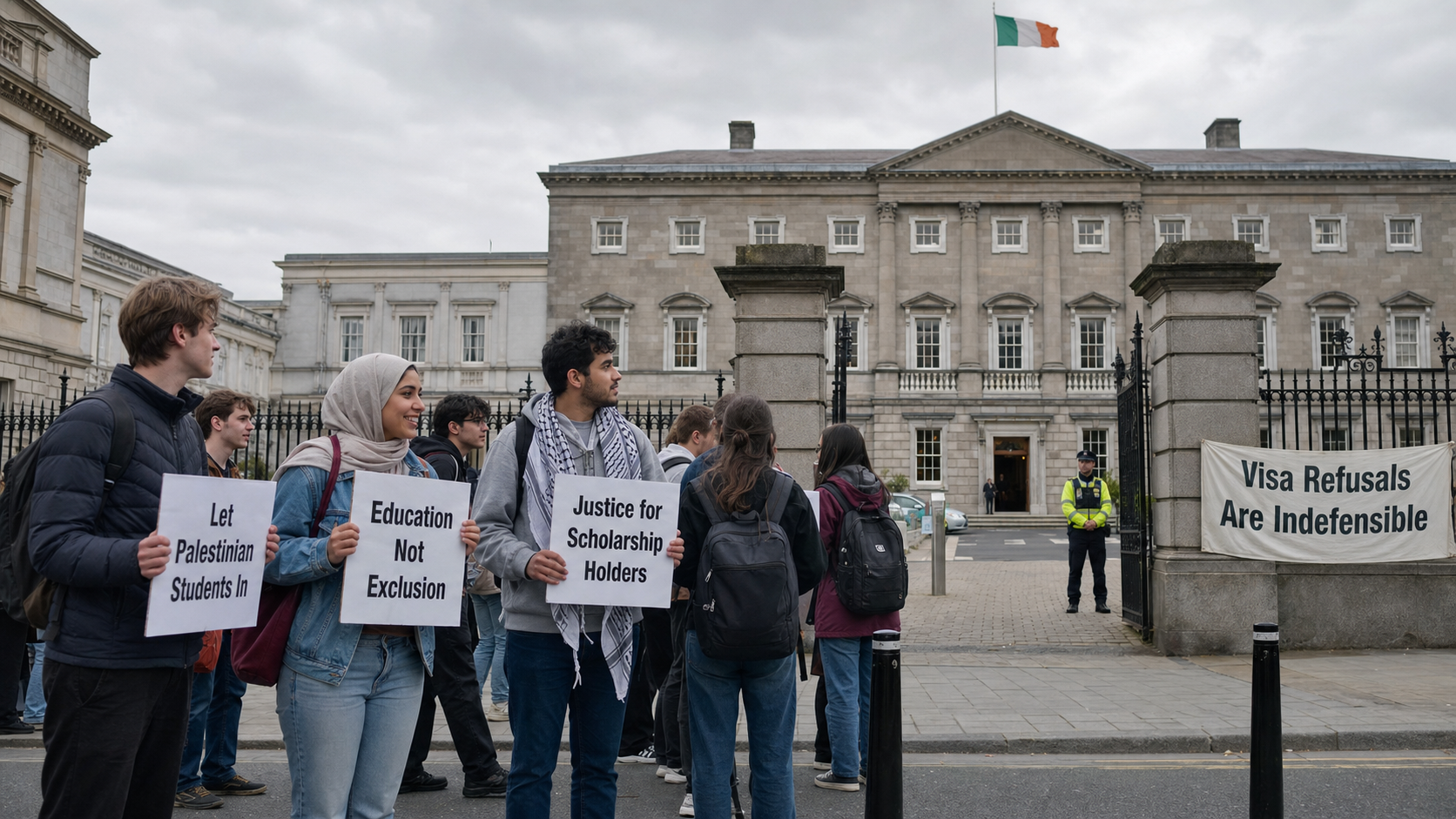
Palestinian Student Visa Refusals Condemned as 'Indefensible' by Irish University Leaders
More than half of a group of 59 Palestinian students awarded scholarships to Irish universities have been refused entry visas by the Department of Justice, with refusal letters citing requirements — including original bank statements and evidence of intent to return to Gaza — that advocates say are impossible to meet given the ongoing conflict, prompting condemnation from university presidents, opposition politicians, and human rights organisations who have described the decisions as 'indefensible'.
Background
The Irish government has been under significant pressure to demonstrate solidarity with the Palestinian people since the outbreak of the conflict in Gaza in October 2023. Ireland was among the first European countries to formally recognise the State of Palestine, and the government has repeatedly expressed its commitment to supporting Palestinian civilians affected by the conflict. The scholarship programme for Palestinian students was established as a concrete expression of that commitment, offering places at Irish universities to students whose education had been disrupted by the conflict.
The programme was welcomed by Irish universities, which moved quickly to identify places and funding for the Palestinian students. University presidents and academic staff expressed pride in their institutions' ability to offer a safe haven for students whose educational opportunities had been destroyed by the conflict, and the programme was widely praised as a meaningful and practical expression of Irish solidarity with the Palestinian people.
The visa refusals have therefore come as a profound shock to the universities, the students, and the wider Irish public. The Department of Justice's decision to refuse visas to more than half of the scholarship recipients — on grounds that advocates describe as impossible to meet in the context of an active conflict — has been seen as a fundamental contradiction of the government's stated commitment to supporting Palestinian civilians.
Key Developments
The refusal letters issued by the Department of Justice cited a range of requirements that the affected students were unable to meet, including the provision of original bank statements, evidence of sufficient financial resources, and documentation demonstrating an intention to return to Gaza after completing their studies. Advocates for the students have pointed out that these requirements are standard for visa applications in normal circumstances but are impossible to meet for people fleeing an active conflict zone where banking systems have collapsed, financial records have been destroyed, and the prospect of returning home is uncertain at best.
University presidents from Trinity College Dublin, University College Dublin, University College Cork, and NUI Galway have written jointly to the Minister for Justice demanding an urgent review of the refusals. The letter, which was also signed by the presidents of several other Irish universities, described the decisions as "indefensible" and called on the minister to exercise her discretionary powers to grant visas to all 59 scholarship recipients on humanitarian grounds.
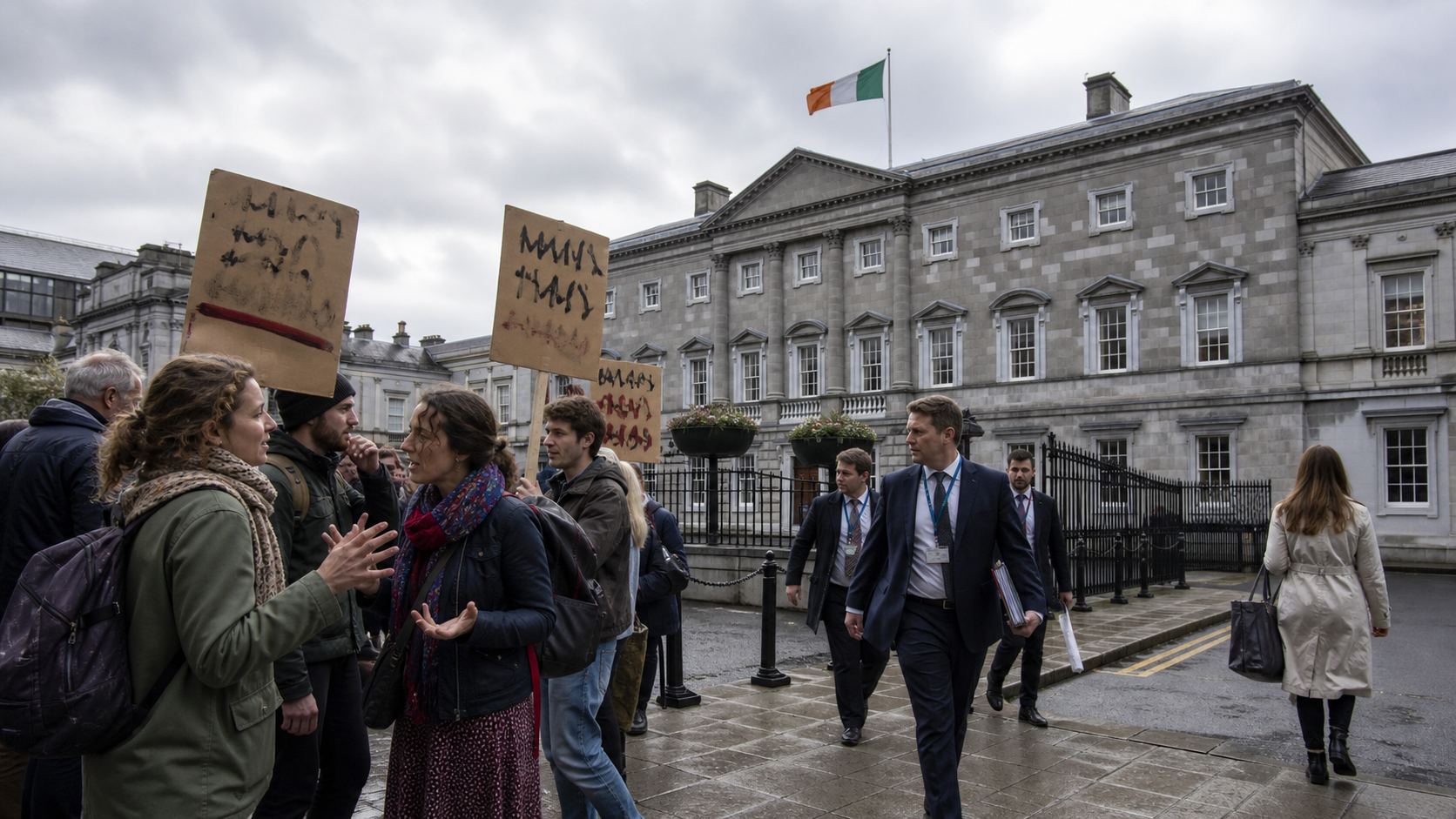
Opposition politicians from Sinn Féin, the Social Democrats, and People Before Profit have tabled parliamentary questions and called for an emergency Dáil debate on the matter. Several TDs have described the refusals as a betrayal of Ireland's stated commitment to Palestinian solidarity and have called for the Minister for Justice to personally intervene to reverse the decisions.
Why It Matters
The Palestinian student visa refusals matter because they expose a fundamental contradiction at the heart of Irish government policy on Palestine. The government has been vocal in its condemnation of the conflict and in its support for Palestinian civilians, but the visa refusals suggest that this commitment has not been translated into the practical administrative decisions that would give it real meaning. The students who have been refused visas are not abstract symbols of Palestinian suffering — they are real young people whose educational opportunities have been destroyed by the conflict and who were offered a lifeline by Irish universities, only to have that lifeline cut by the Department of Justice.
The case also raises broader questions about the adequacy of Ireland's humanitarian visa system. The requirements cited in the refusal letters are clearly inappropriate for applicants from conflict zones, and the failure to apply a more flexible and compassionate approach in these circumstances suggests a systemic problem with how the Department of Justice handles humanitarian visa applications.
Local Impact
In Irish universities across the country — from Trinity College Dublin to University College Cork, from NUI Galway to Maynooth University — the visa refusals have been met with dismay and anger. Academic staff who had prepared to welcome Palestinian students to their departments, and student unions who had organised support networks for the incoming students, have expressed their frustration at a decision that they see as both unjust and counterproductive. The Irish student community has been particularly vocal in its condemnation of the refusals, with student unions at several universities passing emergency motions calling on the government to reverse the decisions.
What's Next
The Minister for Justice is expected to respond to the university presidents' letter within the coming days, and the matter is likely to be raised in the Dáil when it is recalled on 28 August. Human rights organisations including Amnesty International Ireland and the Irish Refugee Council have indicated that they are exploring the possibility of legal challenges to the refusal decisions. The universities have indicated that they will maintain the scholarship places for the affected students and will continue to advocate for a reversal of the visa decisions.