Pakistan Hosts Four-Way Peace Talks as Iran Maintains Internet Blackout
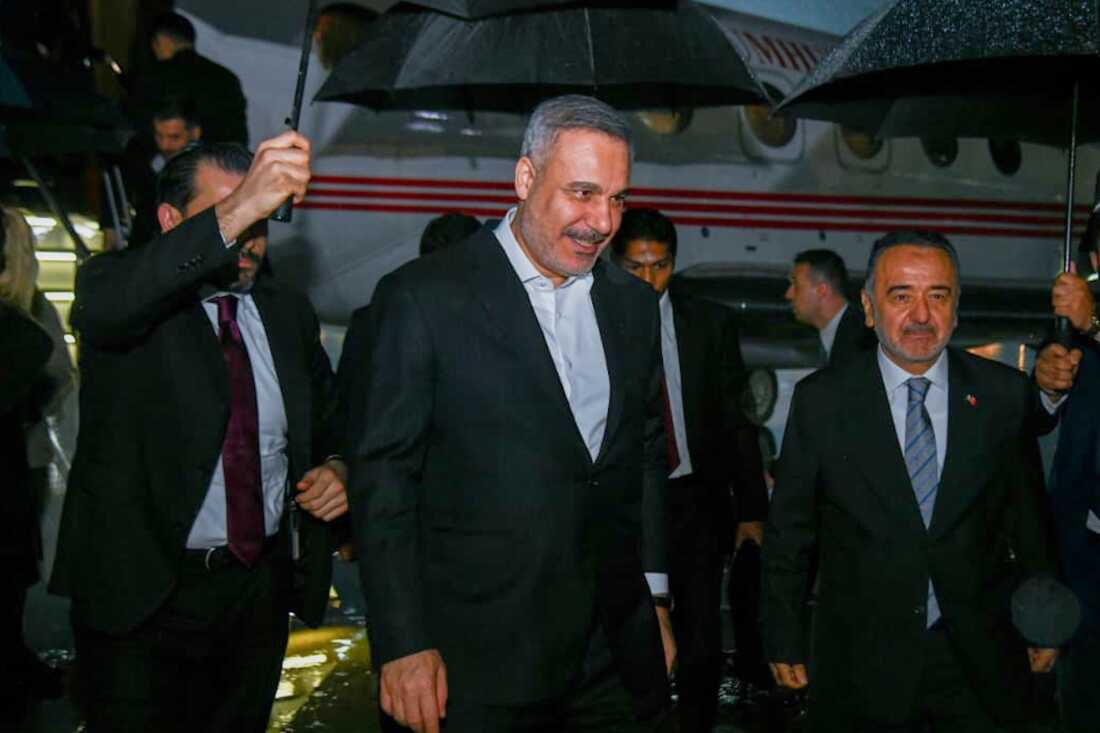
Islamabad — Pakistan is hosting critical diplomatic talks aimed at de-escalating the Iran-Israel conflict, bringing together the foreign ministers of Saudi Arabia, Turkey, and Egypt in Islamabad as Iran continues a month-long near-total internet blackout that has isolated its population from the outside world and drawn fierce condemnation from human rights organisations.
Background
The conflict between Iran and a US-Israeli allied force, which erupted in late February 2026 following strikes on Iranian nuclear facilities, has rapidly escalated into one of the most dangerous geopolitical crises in decades. Pakistan, despite holding a mutual defence pact with Saudi Arabia, swiftly condemned the initial US-led strikes on Iran — a position that gave Islamabad rare credibility with Tehran and positioned it as a potential neutral broker in a conflict where most regional powers have taken sides.
Pakistan's Foreign Minister Ishaq Dar and Army Chief Asim Munir have engaged in intensive shuttle diplomacy between Washington and Tehran throughout March, with Pakistan reportedly delivering a 15-point peace plan from the White House to Iranian leadership. The effort represents one of the most significant diplomatic initiatives undertaken by Pakistan in recent memory, and has drawn cautious praise from international observers who see Islamabad as one of the few capitals capable of maintaining open channels with both sides.
Iran's decision to close the Strait of Hormuz to "unfriendly nations" on 4 March 2026 — enforced by threats to attack any vessel attempting passage — triggered a global fuel crisis and a sharp spike in oil prices, adding enormous economic pressure to the diplomatic equation. The United States responded with a military campaign to reopen the strait, creating a volatile standoff that has kept global markets on edge.
Key Developments
The four-nation meeting in Islamabad on 30 March 2026, bringing together Egypt, Pakistan, Saudi Arabia, and Turkey, has been described by analysts as the embryo of a new regional diplomatic alignment — a bloc of Muslim-majority nations seeking to assert collective influence over a conflict that threatens to engulf the wider Middle East. In a sign of tentative diplomatic movement, Iran agreed to allow 20 ships sailing under the Pakistani flag to transit the Strait of Hormuz, a gesture framed by Iranian UN Ambassador Ali Bahreini as reflecting "Iran's continued commitment to supporting humanitarian efforts."
Saudi Arabia has reiterated its long-standing condition for normalising relations with Israel: the establishment of a credible path toward a Palestinian state — a position that complicates President Trump's push to bring Riyadh into the Abraham Accords as part of any post-conflict settlement. Pakistani defence analyst and retired Lieutenant General Muhammad Saeed offered cautious optimism: "Let's hope that there is some communication the Saudis bring for conveying to Iran certain conditions that if Iran agrees to, maybe the Saudis will start playing a very proactive role for mediation."
Why It Matters
The Islamabad talks represent a potentially pivotal moment in a conflict that has already reshaped the geopolitical landscape of the Middle East. The emergence of a four-nation bloc — Egypt, Pakistan, Saudi Arabia, and Turkey — as a collective diplomatic force signals a shift away from the binary US-Iran framing that has dominated coverage of the crisis. If this grouping can sustain coherent pressure on both Washington and Tehran, it may represent the most viable pathway to a negotiated settlement. The internet blackout inside Iran, meanwhile, carries its own profound significance: with connectivity reduced to as low as 1% of normal levels, the Iranian population has been effectively cut off from information about the conflict's progress, its human cost, and the diplomatic efforts underway on their behalf. Human Rights Watch has condemned the blackout as a violation of fundamental rights that escalates risks to civilians.
Local Impact
For the UK and Ireland, the Iran crisis carries direct economic and security implications. The Strait of Hormuz closure has contributed to rising fuel prices across Britain and Northern Ireland, with petrol and heating oil costs climbing sharply since early March. Belfast households, already under pressure from the cost-of-living crisis, are among those feeling the impact most acutely. The UK government has been engaged in diplomatic consultations with its allies about the conflict's trajectory, and Westminster faces growing pressure from opposition parties to take a more active role in supporting the Islamabad peace process. Pope Leo XIV's remarks — widely interpreted as a critique of the Trump administration's approach — have resonated strongly in Ireland, where the Catholic Church's moral authority on questions of war and peace remains significant.
What's Next
The diplomatic momentum from Islamabad will be tested in the coming days as all parties assess whether the four-nation framework can translate into concrete progress. Pakistan's shuttle diplomacy has already yielded one tangible result — a temporary two-week ceasefire agreed on 8 April 2026 — but the underlying issues, including Iran's nuclear programme and the status of the Strait of Hormuz, remain unresolved. The House of Commons Library has published a detailed briefing on the US-Iran ceasefire and nuclear talks, reflecting the depth of Westminster's engagement with the crisis. Whether the Islamabad process can build on the ceasefire to achieve a durable settlement remains the defining diplomatic question of the moment.
Sources: Al Jazeera | The Guardian | Human Rights Watch | CNN