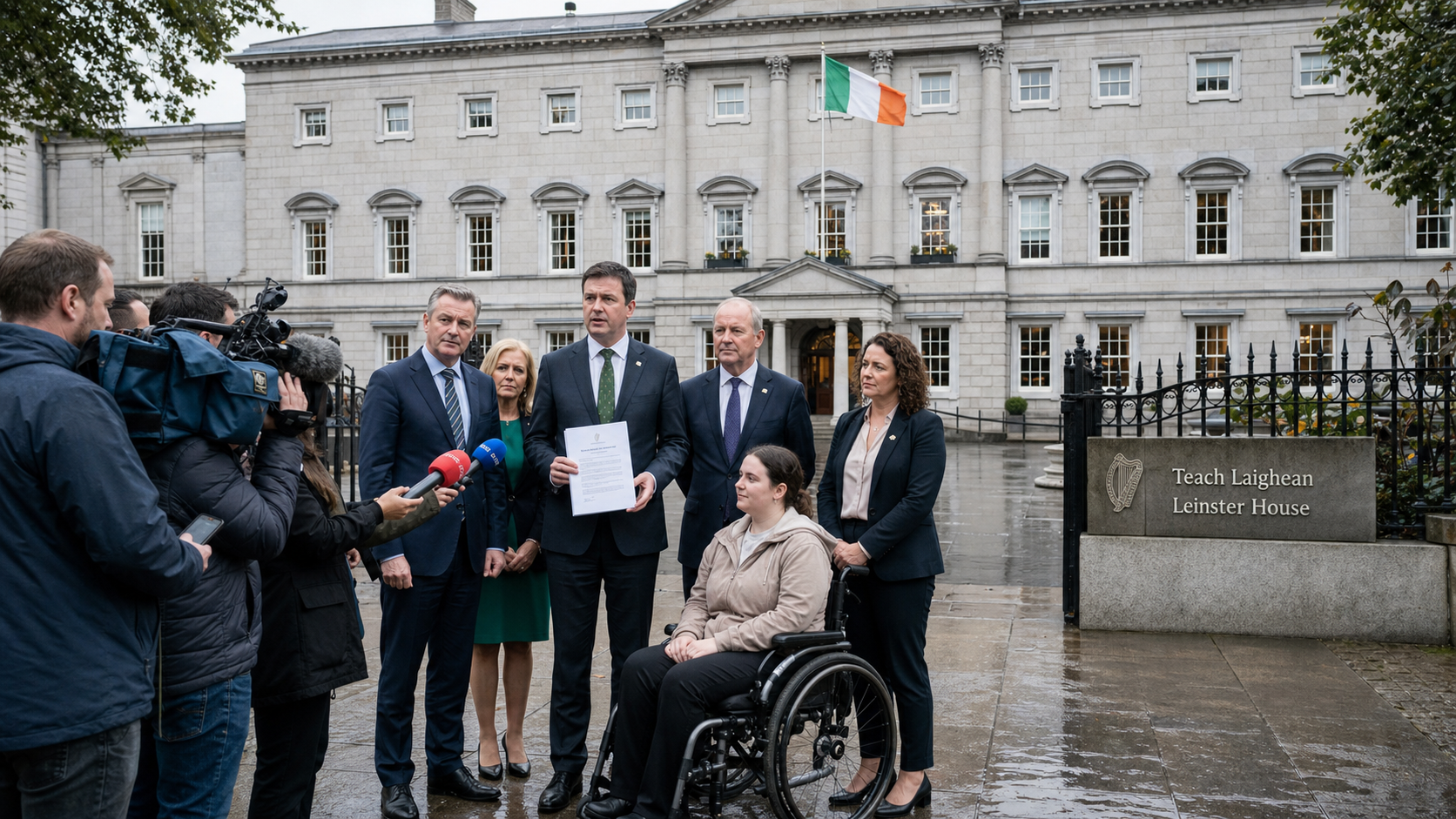
Over 60 Fianna Fáil Politicians Urge Government to Overrule HSE on Friedreich's Ataxia Drug Skyclarys
More than 60 Fianna Fáil politicians — including TDs, senators, and MEPs — have written to Taoiseach Micheál Martin urging the government to overrule the HSE Drugs Group's recommendation against funding Skyclarys, the only approved treatment for Friedreich's Ataxia, in what has become one of the most politically charged healthcare funding disputes of the current Dáil term.
Background
Friedreich's Ataxia is a rare, progressive, and life-limiting neurological condition that affects approximately 150 people in Ireland. The condition, which is caused by a genetic mutation that disrupts the production of a protein essential for nerve cell function, typically begins in childhood or adolescence and causes progressive damage to the nervous system, leading to difficulties with coordination, balance, and speech, and ultimately to heart disease that is the most common cause of death. There is no cure, and until the approval of Skyclarys — the brand name for omaveloxolone — there was no approved treatment that could slow the progression of the disease.
Skyclarys was approved by the European Medicines Agency in 2023 and has been available in several EU member states since then. The drug does not cure Friedreich's Ataxia, but clinical trials have demonstrated that it can slow the progression of neurological decline, preserving function and quality of life for patients who take it. For the families of those affected, it represents the first genuine therapeutic hope in a condition that has historically offered none.
The HSE Drugs Group, which advises on the reimbursement of medicines under the General Medical Services scheme, recommended against funding Skyclarys in its most recent assessment, citing uncertainties over the drug's long-term efficacy and concerns about its price — which, at approximately €300,000 per patient per year, is among the most expensive medicines ever considered for reimbursement in Ireland. The final reimbursement decision rests with the HSE's leadership, which is expected to make a determination before the end of August.
Key Developments
The political response to the Drugs Group's recommendation has been swift and cross-party. Sinn Féin leader Mary Lou McDonald was among the first to call on the Taoiseach to intervene, describing the recommendation as "a death sentence" for those affected and arguing that the government has both the power and the moral obligation to override the HSE's advisory body in cases of this gravity. The Fianna Fáil letter, which was coordinated by a group of backbench TDs with constituents affected by the condition, represents an unusual public display of pressure from within the government's own ranks.
The letter argues that the government should use its powers under the Health Act to direct the HSE to fund Skyclarys on compassionate grounds, pending a full health technology assessment that takes account of the drug's impact on quality of life as well as its clinical efficacy. It also calls for the government to engage directly with the drug's manufacturer, Biogen, to negotiate a price reduction that would make reimbursement more financially sustainable.
Families of those affected have been vocal in their opposition to the Drugs Group's recommendation. Several have spoken publicly about the impact of the condition on their loved ones and the hope that Skyclarys has offered, and a number have travelled to Brussels to lobby MEPs and European Commission officials about the need for a coordinated EU approach to the pricing of rare disease treatments.
Why It Matters
The Skyclarys case is the latest in a series of high-profile disputes over the funding of expensive rare disease treatments in Ireland, a pattern that reflects a fundamental tension in the healthcare system between the principle of equal access to effective treatments and the fiscal constraints that limit what the HSE can afford to fund. Ireland has one of the highest per capita rates of rare disease in Europe, and the number of expensive treatments seeking reimbursement is growing rapidly as the pharmaceutical industry develops more targeted therapies for conditions that were previously untreatable.
The political pressure on the government is significant. With a general election due within two years, the optics of refusing to fund a life-changing treatment for a small group of patients with a devastating condition are extremely poor, and the cross-party nature of the pressure — with Fianna Fáil backbenchers joining Sinn Féin in calling for intervention — suggests that the government's room for manoeuvre is limited.
Local Impact
The approximately 150 people in Ireland living with Friedreich's Ataxia are spread across the country, with clusters in Dublin, Cork, and Galway. Many are young people who were diagnosed in their teens and who are now in their twenties and thirties, at a stage of life when the progressive nature of the condition is beginning to have a significant impact on their ability to work, study, and live independently. For these individuals and their families, the HSE's recommendation is not an abstract policy question but a decision that will directly determine the trajectory of their lives.
What's Next
The HSE's leadership is expected to make a final reimbursement decision on Skyclarys before the end of August 2026. If the decision is to refuse reimbursement, the government will face immediate pressure to intervene, and the Taoiseach has indicated that he is "monitoring the situation closely." A Dáil debate on the issue is expected in September, and several opposition parties have indicated that they will table motions calling on the government to fund the drug if the HSE's final decision is negative.