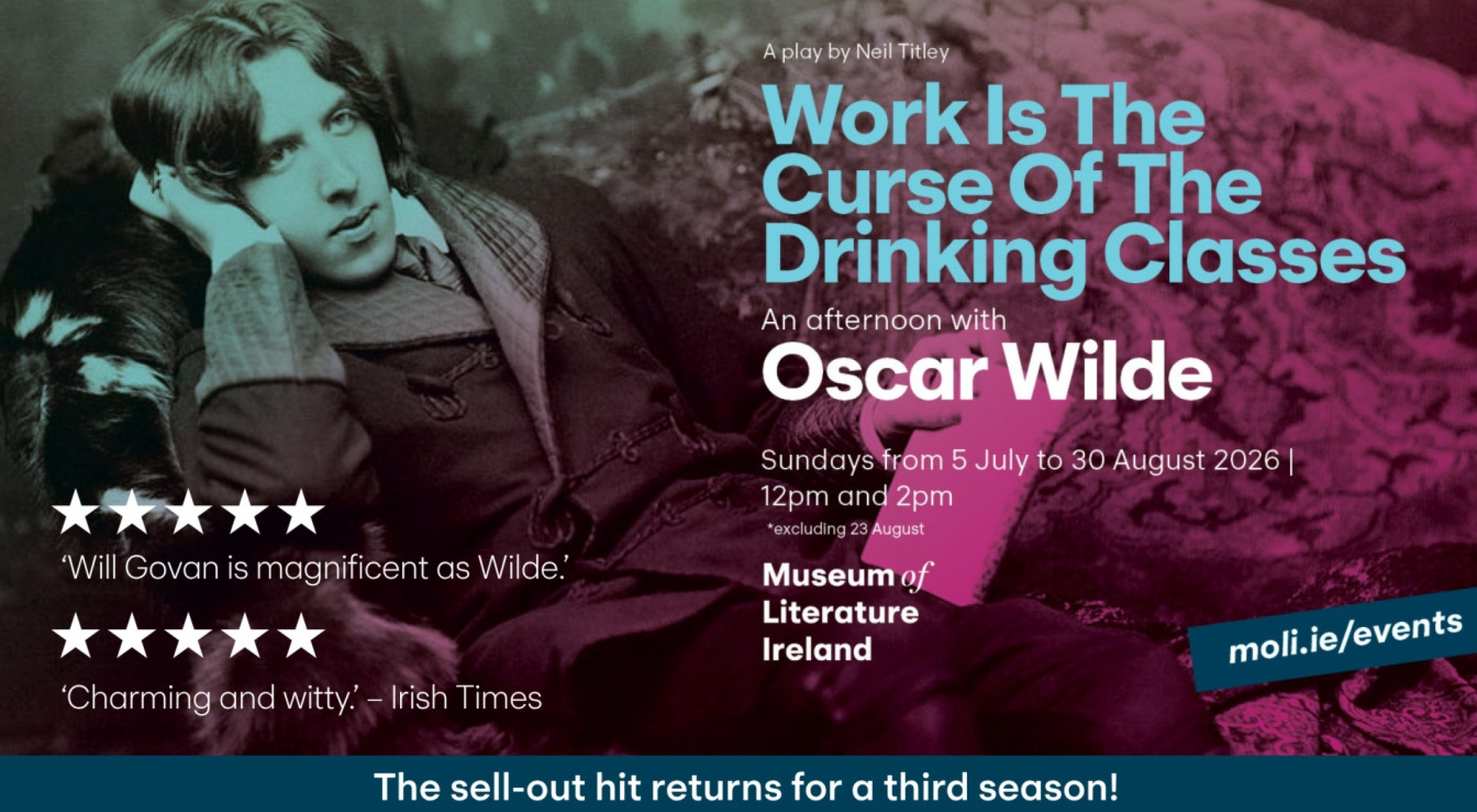
Oscar Wilde and William Blake Exhibitions Draw Crowds to Dublin's Museum of Literature and National Gallery
Two major exhibitions are drawing significant crowds to Dublin's premier cultural institutions this summer, with the Museum of Literature Ireland presenting a richly layered exploration of Oscar Wilde's life and legacy under the title 'Work is the Curse of the Drinking Classes', while the National Gallery of Ireland offers audiences an immersive encounter with the visionary art and poetry of William Blake in 'The Age of Romantic Fantasy' — together providing a summer of exceptional cultural depth in the heart of the capital.
Background
Oscar Wilde is one of the most celebrated figures in the history of Irish and world literature, a writer whose wit, style, and tragic personal story have made him an enduring cultural icon more than a century after his death. Born in Dublin in 1854, Wilde was educated at Trinity College Dublin and at Oxford before establishing himself as one of the most brilliant and provocative literary figures of the Victorian era. His plays — including The Importance of Being Earnest, An Ideal Husband, and Lady Windermere's Fan — remain among the most performed works in the English-language theatrical repertoire, while his novel The Picture of Dorian Gray and his poetry continue to attract new readers with each generation.
The Museum of Literature Ireland, known as MoLI, is housed in Newman House on St Stephen's Green, one of Dublin's most beautiful Georgian buildings and a location with deep connections to Irish literary history. The museum opened in 2019 and has established itself as one of Dublin's most innovative and engaging cultural institutions, using a combination of original manuscripts, artefacts, and immersive digital experiences to bring Irish literary history to life for visitors of all ages and backgrounds.
The National Gallery of Ireland, located on Merrion Square, is one of Ireland's most important cultural institutions, housing a collection of more than 17,000 works of art spanning five centuries of European and Irish painting, sculpture, and decorative arts. The gallery has a long tradition of presenting major international exhibitions alongside its permanent collection, and its summer programme is one of the highlights of Dublin's cultural calendar.
Key Developments
The MoLI exhibition on Oscar Wilde takes its title from one of the writer's most celebrated aphorisms — a characteristically paradoxical inversion of the Victorian work ethic that encapsulates Wilde's genius for subverting conventional wisdom with a perfectly turned phrase. The exhibition explores Wilde's life and work through a range of original materials, including manuscripts, letters, first editions, and personal artefacts, as well as through a programme of events and performances that bring his words and ideas to life for contemporary audiences. The exhibition has been particularly praised for its treatment of Wilde's sexuality and his persecution under Victorian obscenity laws, presenting this aspect of his story with sensitivity and historical rigour.
The National Gallery's William Blake exhibition offers a different but equally compelling cultural experience. Blake, the English poet, painter, and printmaker who lived from 1757 to 1827, was one of the most original and visionary figures of the Romantic era, creating a body of work that defies easy categorisation and continues to inspire artists, writers, and thinkers across a range of disciplines. The exhibition brings together a selection of Blake's most celebrated works, including his illuminated books and his large-scale colour prints, providing Irish audiences with a rare opportunity to encounter the full range of his extraordinary creative vision.
In Limerick, the Hunt Museum is presenting 'Our, Óir, Ore: Four Millennia of Limerick Silver and Gold', an exhibition that explores the city's rich tradition of metalworking and craftsmanship through a selection of objects spanning four thousand years of history. The exhibition has been warmly received as a celebration of Limerick's cultural heritage and a reminder of the city's long and distinguished artistic tradition.
Why It Matters
The summer exhibition programmes at MoLI, the National Gallery, and the Hunt Museum matter because they demonstrate the depth and diversity of Ireland's cultural offer and the quality of its cultural institutions. At a time when competition for visitors' attention is intense and the cultural sector is navigating significant financial pressures, the ability of these institutions to present world-class exhibitions that attract large audiences is a testament to the quality of their curatorial teams and the strength of their collections and partnerships. The exhibitions also matter for the broader cultural economy of Dublin and Limerick, generating visitor numbers and revenue that support the sustainability of the institutions and contribute to the economic vitality of the surrounding areas. For Irish audiences, the exhibitions provide opportunities for cultural enrichment and engagement with the great figures of Irish and world literary and artistic history that are not available in any other context.
Local Impact
The MoLI exhibition on Oscar Wilde has been particularly popular with international visitors, many of whom include a visit to the museum as part of a broader literary pilgrimage to Dublin — a city that is celebrated worldwide for its literary heritage and that attracts visitors from across the globe who come to walk in the footsteps of Joyce, Beckett, Wilde, and the other great figures of Irish literature. The museum's location on St Stephen's Green places it at the heart of Dublin's cultural geography, and the exhibition has contributed to the vitality of the surrounding area, with visitors also exploring the nearby Iveagh Gardens, the National Concert Hall, and the range of restaurants and cafés in the area. The National Gallery's Blake exhibition has attracted a strong domestic audience, with schools and community groups from across Dublin and the surrounding counties visiting the gallery as part of their cultural education programmes. In Limerick, the Hunt Museum's exhibition has been welcomed as a celebration of the city's cultural heritage and a boost to the city's growing reputation as a cultural destination.
What's Next
The MoLI Oscar Wilde exhibition is expected to run through the summer and into the autumn, with a programme of associated events — including talks, performances, and workshops — scheduled throughout the exhibition period. The National Gallery's William Blake exhibition is similarly expected to run for several months, with a catalogue and a programme of educational events planned to accompany the show. The Hunt Museum's Limerick silver and gold exhibition will continue through the summer, with a series of public talks and demonstrations planned to complement the main exhibition. All three institutions are expected to announce their autumn and winter programmes in the coming weeks, with further major exhibitions and events planned for the remainder of 2026.