Northern Ireland's Largest Companies See Combined Profits Fall £316 Million as Ulster Business Top 100 Published
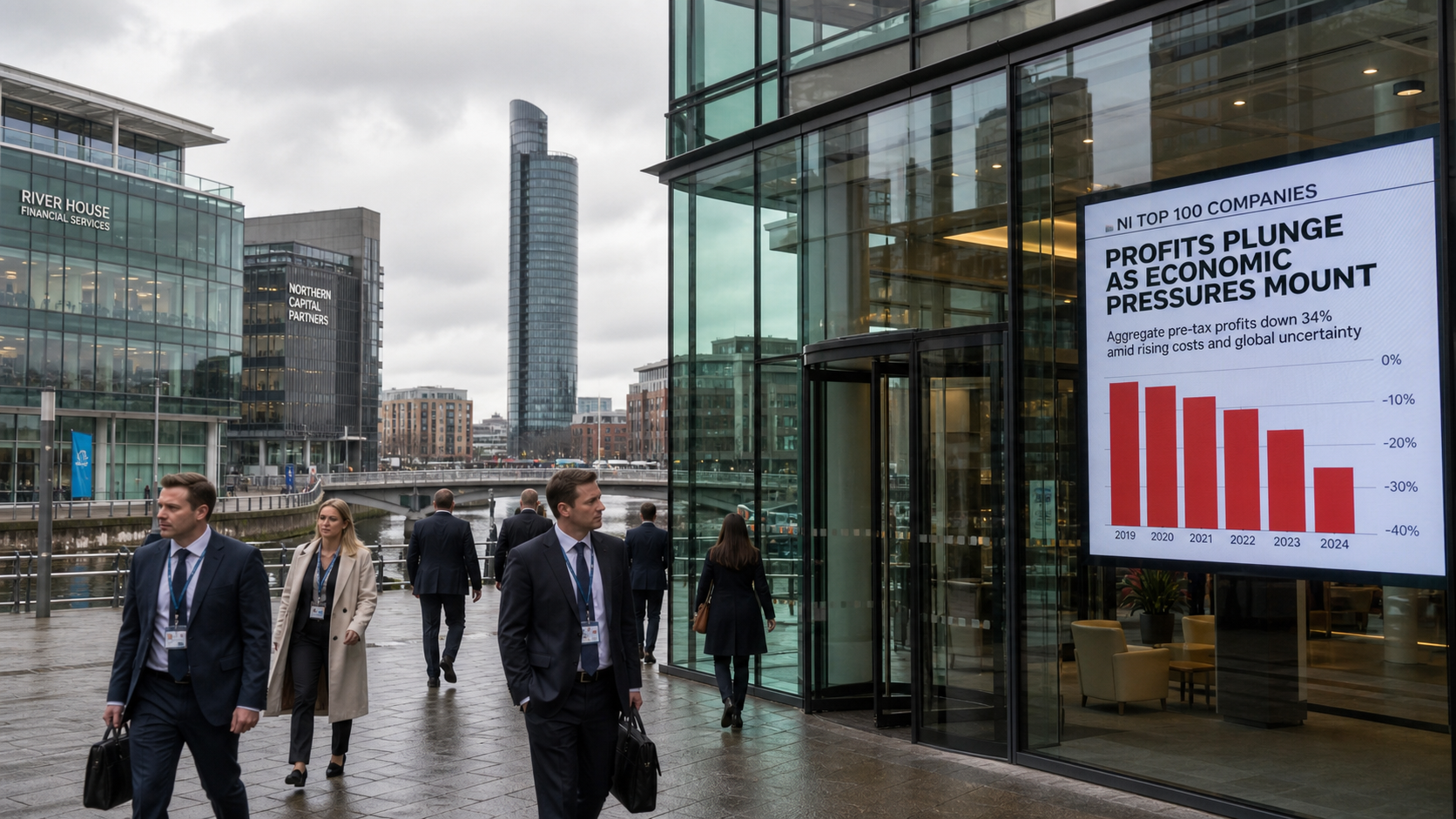
The combined pre-tax profits of Northern Ireland's 100 largest companies fell by £315.7 million — a decline of 17.5% — in the latest Ulster Business Top 100 list, published on Tuesday, with aggregate turnover remaining essentially flat at £34.97 billion for only the second time since the analysis began. The figures paint a picture of a business community under significant margin pressure, navigating a challenging environment of rising costs, geopolitical uncertainty, and subdued consumer demand, though the performance of individual companies within the Top 100 was far from uniformly negative.
Background
The Ulster Business Top 100 is the definitive annual ranking of Northern Ireland's largest companies by turnover, providing a comprehensive snapshot of the health and composition of the region's corporate sector. The list has been published for many years and serves as an important barometer of Northern Ireland's economic performance, tracking the fortunes of the region's largest employers and most significant businesses across a range of sectors.
Northern Ireland's economy has faced a series of significant challenges in recent years, including the disruptions caused by Brexit and the Northern Ireland Protocol, the inflationary pressures of the post-pandemic period, and the impact of rising energy costs driven by the conflict in the Middle East. These macro-economic headwinds have affected businesses across all sectors, and the Top 100 results reflect the cumulative impact of these pressures on the region's largest companies.
The 2026 list was compiled from the most recently available company accounts, which in most cases cover the financial year ending in 2025. The results therefore reflect the trading conditions of 2025 rather than the current year, though the trends they reveal are likely to have continued into 2026.
Key Developments
The headline figures from the 2026 Top 100 are stark: combined pre-tax profits fell from £1.8 billion to £1.484 billion, a reduction of £315.7 million or 17.5%. Aggregate turnover was £34.966 billion, essentially flat compared to the previous year's £34.969 billion — a stagnation that analysts described as reflecting only the second time since the analysis began that turnover has failed to grow.
Pilgrim's Europe, formerly known as Moy Park, retained the top spot on the list with a turnover of £1.96 billion. Other major companies crossing the £1 billion turnover threshold included the Henderson Group, LCC, Almac Group, Graham Group, and Barnetts. The entry threshold for the Top 100 reached its highest level to date, with the final position held by a company with a turnover of £113.8 million — a sign that the overall scale of Northern Ireland's corporate sector continues to grow even as individual company margins come under pressure.
Despite the overall decline in profits, 53 companies in the Top 100 managed to improve their pre-tax profits, with 13 of those doing so even while experiencing a fall in turnover. This suggests that a significant number of Northern Ireland's largest businesses have been successful in managing their costs and improving their operational efficiency in a difficult environment.
Why It Matters
The Top 100 results are a significant indicator of the health of Northern Ireland's economy and of the challenges facing its business community. A 17.5% decline in combined profits is a substantial deterioration that will have implications for investment, employment, and the tax revenues available to fund public services. Companies that are under margin pressure are less likely to invest in new capacity, new technology, or new jobs, and more likely to focus on cost reduction and efficiency improvement.
The flat turnover figure is also concerning. In a period of significant inflation, flat nominal turnover implies a real decline in the volume of economic activity, suggesting that Northern Ireland's largest companies are not growing their businesses in real terms. This is a warning sign for the region's long-term economic trajectory.
The results also highlight the vulnerability of Northern Ireland's economy to external shocks. The region's largest companies operate in global markets and are exposed to the full range of macro-economic pressures — currency movements, energy prices, supply chain disruptions, and geopolitical uncertainty — that have characterised the global economy in recent years. Building greater resilience into the regional economy is a long-term challenge that requires sustained policy attention.
Local Impact
The impact of the Top 100 results is felt across Northern Ireland's economy, from the major employers in Belfast's Titanic Quarter and the Harbour Estate to the agri-food processors in Tyrone and Armagh and the professional services firms in Derry/Londonderry. Companies that are under profit pressure are more likely to defer investment decisions, to scrutinise their workforce costs, and to seek efficiencies that may affect employment levels. The results therefore have implications not just for shareholders but for the tens of thousands of workers employed by the Top 100 companies.
What's Next
The 2027 Ulster Business Top 100 will provide the next comprehensive snapshot of Northern Ireland's corporate sector performance. In the interim, Invest Northern Ireland and the Department for the Economy will be monitoring the trading conditions facing the region's businesses and considering what support measures may be appropriate. The results are also likely to feature in discussions at Stormont about the economic strategy for Northern Ireland and the investment needed to support business growth and job creation.