Aer Lingus Restructuring: What the 500-Job Cut Plan Means for Ireland's Aviation Future
Aer Lingus's plan to eliminate 500 positions — including 70 pilots, 140 cabin crew, and 290 head office staff — and reduce flight capacity by 6% as part of a restructuring programme driven by its parent company IAG's margin targets raises fundamental questions about the future direction of Ireland's national carrier and its role in the country's economic infrastructure.
Background
Aer Lingus occupies a unique position in the Irish economy. As the country's national carrier, it provides connectivity that is essential for a small, open economy on the western periphery of Europe. Its transatlantic routes — connecting Dublin, Shannon, and Belfast to New York, Boston, Chicago, Los Angeles, and other North American cities — are particularly important for Irish tourism, business travel, and the diaspora connections that are central to Ireland's economic and cultural identity. The airline's role as a gateway to Ireland is not merely commercial; it is strategic.
The airline was acquired by the International Airlines Group in 2015, a transaction that provided financial stability and access to IAG's network and resources but also introduced a new set of corporate governance dynamics. IAG, which also owns British Airways, Iberia, and Vueling, manages its subsidiaries with a focus on financial performance and return on investment. The expectation that Aer Lingus will achieve operating margins of 12% to 15% — comparable to the targets set for other IAG subsidiaries — reflects the group's approach to portfolio management, but it creates tensions with the airline's role as a national carrier with obligations that go beyond pure financial performance.
The first quarter of 2026 was a difficult one for Aer Lingus, with a reported loss of €103 million driven by a combination of factors including increased transatlantic competition, rising fuel costs, and the impact of industrial action in 2024 on customer confidence. The airline's current operating margin of approximately 11% falls short of IAG's target range, and the restructuring programme is presented as a necessary response to that shortfall.
Key Developments
The restructuring plan announced in July 2026 involves a 6% reduction in flight capacity, including the discontinuation of routes to Las Vegas, Minneapolis-St. Paul, and Split, and the conversion of services to Seattle, Frankfurt, Hamburg, and Malta to seasonal, summer-only operations. The fleet will be reduced by two A330 and four A320 aircraft by the summer of 2027. These changes will reduce the airline's cost base but will also reduce its connectivity offering, particularly on transatlantic routes where competition from US carriers has been intensifying.
The workforce reduction — 500 positions across pilots, cabin crew, and head office — is the most contentious element of the plan. IALPA has argued that the airline remains profitable and that the redundancy programme is driven by a desire for excess profits rather than genuine financial necessity. The union has also raised concerns about the airline's practice of linking pilots' terms and conditions to fleet investment decisions, a linkage that IALPA regards as inappropriate and coercive.
The involvement of the IAG European Works Council, which has sought to pause the consultation process, adds a European dimension to what might otherwise be a straightforward Irish industrial relations dispute. The EWC's intervention reflects the transnational nature of IAG's operations and the growing importance of European-level worker representation in the governance of multinational companies.
Why It Matters
The Aer Lingus restructuring matters for Ireland's economy and connectivity in ways that go beyond the immediate impact on the 500 workers facing redundancy. The reduction in transatlantic capacity is particularly concerning for Irish tourism, which has been one of the strongest performing sectors of the economy in recent years. Transatlantic visitors spend significantly more per trip than European visitors, and the loss of direct routes to North American cities would make Ireland a less attractive destination for the high-value American tourist market.
The restructuring also raises questions about the long-term relationship between Aer Lingus and the Irish state. The airline was privatised in 2006 and acquired by IAG in 2015, and the Irish government has no direct stake in the company. However, the government has a strong interest in the airline's continued operation as a national carrier, and the current dispute may prompt a broader conversation about whether the state should have a more active role in ensuring that Aer Lingus's strategic interests are aligned with Ireland's national interests.
Local Impact
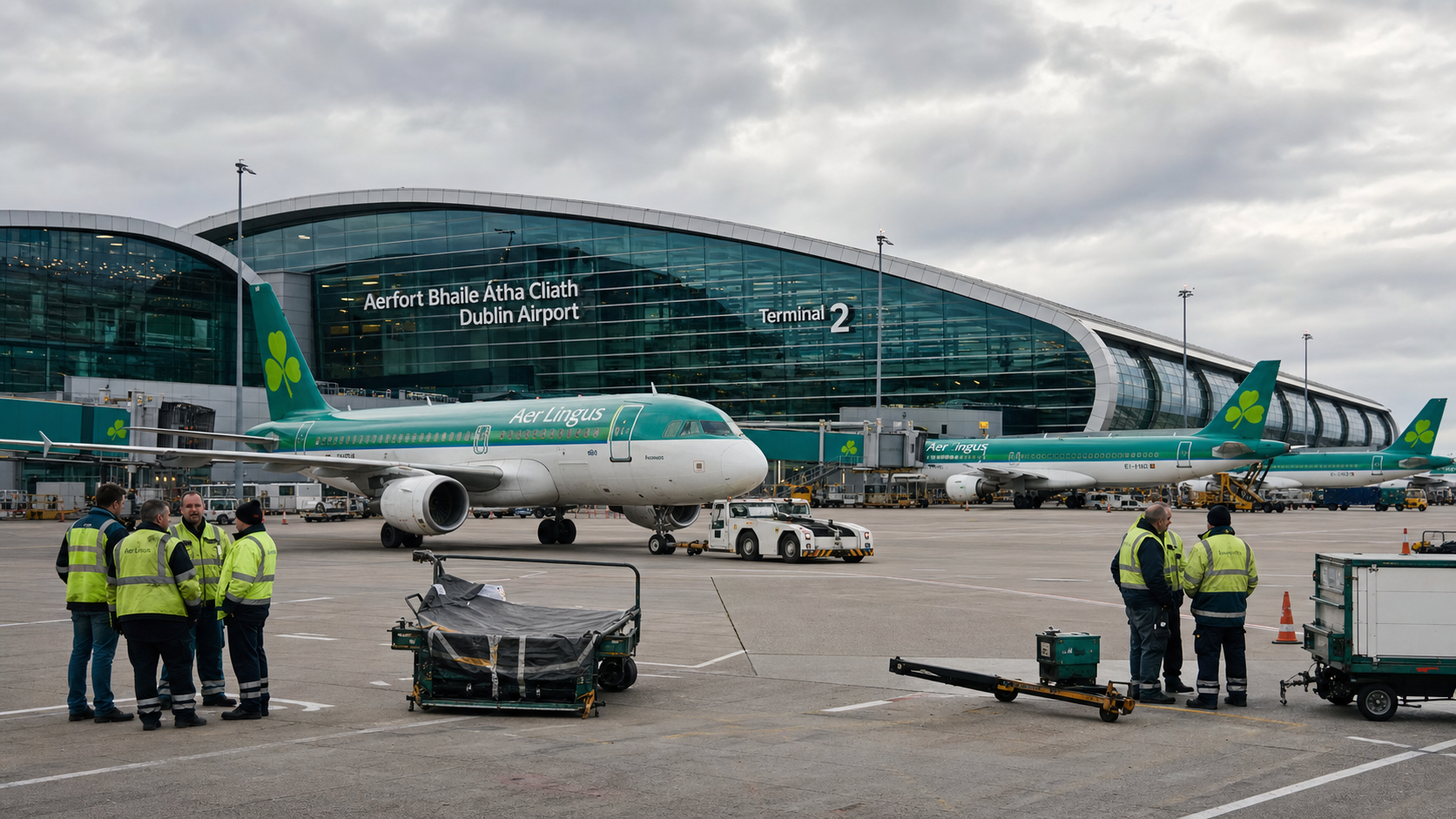
For the workers facing redundancy — pilots, cabin crew, and head office staff — the restructuring represents a significant personal and financial disruption. Dublin Airport, which is the hub for Aer Lingus operations, is a major employer in the Fingal area of north Dublin, and any significant reduction in the airline's workforce will be felt in the local economy. The broader aviation ecosystem at Dublin Airport — including ground handling, catering, retail, and maintenance — is also affected by changes in Aer Lingus's scale of operations, and the ripple effects of the restructuring will extend well beyond the 500 positions directly targeted.
What's Next
With direct talks between Aer Lingus and IALPA having ended abruptly, the dispute is likely to be referred to the Workplace Relations Commission for conciliation. The government has been monitoring the situation closely and may seek to facilitate a resolution through the industrial relations machinery of the state. The timeline for a resolution is uncertain, but the airline will be keen to avoid a repeat of the 2024 disruption, which caused significant reputational and financial damage. The outcome of the dispute will have implications not just for Aer Lingus but for the broader question of how Ireland manages the tension between the commercial imperatives of multinational ownership and the strategic importance of national connectivity.