Northern Ireland Waiting List Targets Missed as Health System Faces Structural Funding Crisis
Northern Ireland's Department of Health has acknowledged that its 2026 waiting list targets — which aimed to ensure no patient waits longer than a year for outpatient or inpatient treatment — cannot be met, as the health system faces a structural funding crisis that has seen waiting lists grow by more than 200 per cent since 2014. The failure has been attributed to a chronic gap between demand and funding, with only £136.5 million of an estimated £909 million requirement provided for the elective care plan that was supposed to address the backlog.
Background
Northern Ireland's health and social care system has been in a state of sustained crisis for more than a decade, with waiting lists for elective care growing at a rate that has consistently outpaced the system's capacity to address them. The problem is structural: the demand for healthcare services has grown significantly as the population ages and as the burden of chronic disease increases, while the funding available to the health service has not kept pace with that demand. The result is a system that is perpetually under pressure, in which patients wait months or years for treatments that could significantly improve their quality of life.
The scale of the problem is extraordinary. Between March 2014 and March 2023, waiting lists for initial outpatient appointments grew by 216 per cent, while inpatient treatment lists increased by 147 per cent. These figures represent not just a statistical failure but a human one: hundreds of thousands of people in Northern Ireland are waiting in pain, anxiety, and uncertainty for treatments that they need and that the health service is unable to provide in a timely manner.
The Department of Health's 2017 elective care plan set a target of ensuring that no patient would wait longer than a year for outpatient or inpatient treatment by 2026. That target was always ambitious, but it was achievable — if the funding required to deliver it had been provided. The Northern Ireland Audit Office has calculated that the plan required approximately £909 million in additional funding over its lifetime. Only £136.5 million was provided, leaving a gap of more than £770 million that made the achievement of the targets impossible.
Key Developments
The Department of Health has formally acknowledged that the 2026 waiting list targets cannot be met, a concession that has been welcomed by patient advocates and opposition politicians as an honest assessment of the situation, even as they have condemned the failure to provide the funding that would have made the targets achievable. The acknowledgement comes as the latest quarterly waiting list statistics show that the number of patients waiting more than a year for treatment remains at historically high levels across all five Health and Social Care Trusts.
The Belfast, South Eastern, Southern, Western, and Northern Trusts are all reporting significant pressures on their elective care capacity, with particular backlogs in orthopaedics, ophthalmology, and dermatology — specialties where the demand for treatment has grown significantly in recent years. The "My Waiting Times NI" portal, which provides patients with information on average waiting times by Trust and clinical specialty, has been updated to reflect the current position, but the data makes for sobering reading.
The Department has outlined a series of measures that are being taken to address the backlog, including the development of regional waiting lists for certain procedures such as cataracts and varicose veins, and the establishment of dedicated day-procedure centres that can process high volumes of routine cases more efficiently. These measures have the potential to make a meaningful difference, but they are not sufficient to address the scale of the backlog without a significant increase in funding.
The Stormont Executive has been asked to provide additional funding for the health service as part of the 2026-27 budget process, but the Executive's own financial position is severely constrained, and the prospects for a significant increase in health funding in the short term are limited. The British Medical Association's Northern Ireland committee has described the situation as a "crisis of political will" and has called for a fundamental review of the funding model for health and social care in Northern Ireland.
Why It Matters
The failure to meet Northern Ireland's waiting list targets matters because it represents a failure of the political system to prioritise the health and wellbeing of the people it is supposed to serve. The funding gap that has made the targets unachievable was not an accident — it was the result of deliberate decisions by successive governments to allocate insufficient resources to the health service. Those decisions have consequences: people are suffering, and in some cases dying, while waiting for treatments that could have saved or significantly improved their lives. The structural nature of the problem means that it cannot be solved by short-term measures or one-off injections of funding. It requires a fundamental rethinking of how health and social care in Northern Ireland is funded and organised, and that rethinking requires political courage and commitment that has so far been lacking.
Local Impact
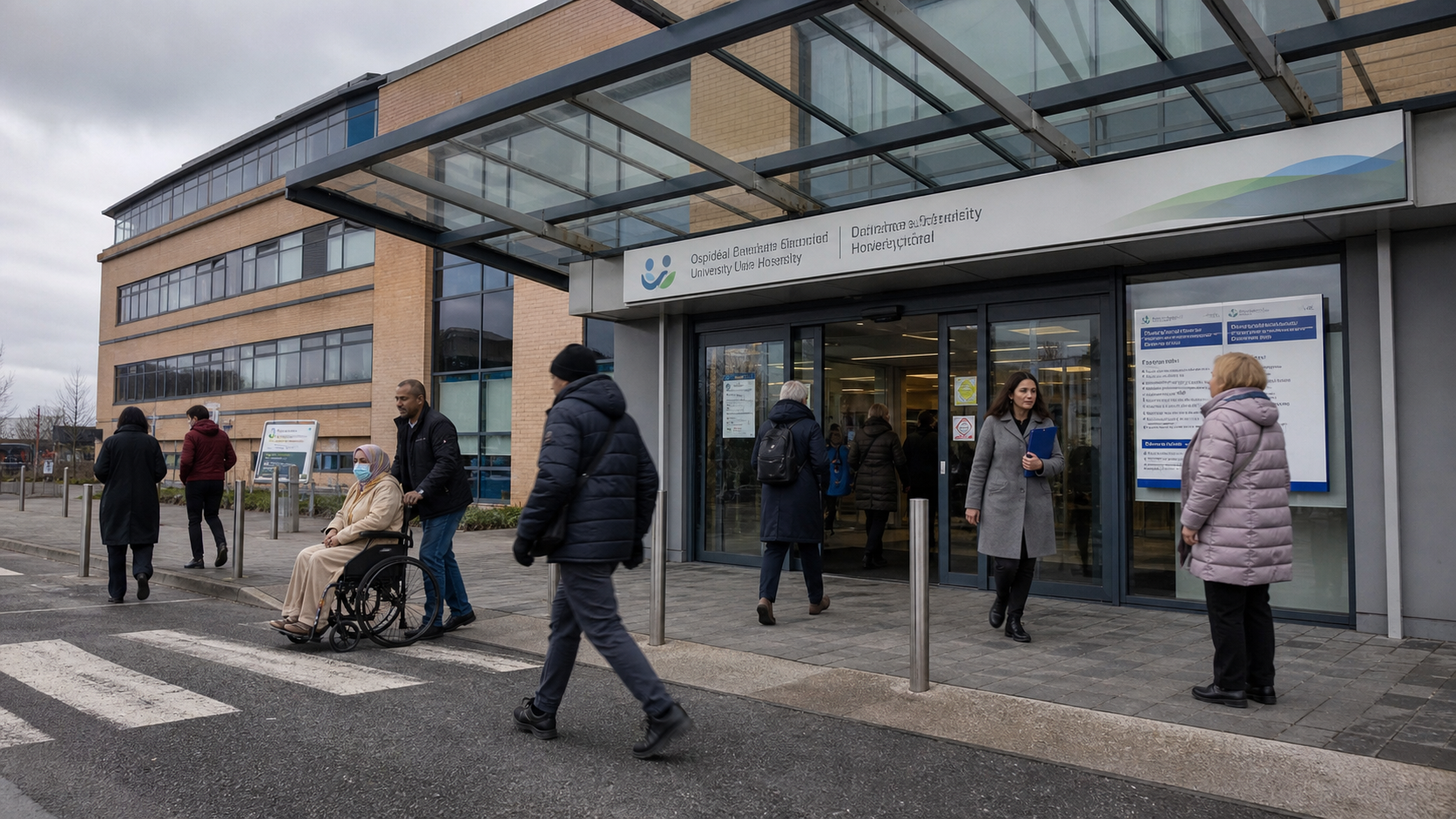
The impact of Northern Ireland's waiting list crisis is felt in every community across the six counties. In Belfast, patients at the Royal Victoria Hospital, the Belfast City Hospital, and the Mater Hospital are waiting months or years for appointments and procedures. In Derry, the Altnagelvin Area Hospital is under sustained pressure, with waiting times for some specialties among the longest in the province. In the Southern Trust area, covering Armagh, Newry, and Banbridge, the Daisy Hill Hospital and Craigavon Area Hospital are both reporting significant backlogs. The Western Trust, which serves Fermanagh and Tyrone, faces particular challenges due to the rural nature of much of its catchment area and the difficulty of attracting and retaining specialist medical staff. The Northern Trust, covering Antrim and Ballymena, is also under pressure, with the Antrim Area Hospital one of the busiest emergency departments in Northern Ireland.
What's Next
The Department of Health is expected to publish a revised elective care plan before the end of 2026, which will set out a new set of targets and a new funding ask for the Stormont Executive. The plan is expected to be more realistic about what can be achieved with the funding that is likely to be available, while also making the case for the additional investment that would be required to make a more significant impact on the backlog. The Stormont Executive's budget for 2027-28 will be a critical test of whether the political will exists to prioritise health funding in a meaningful way. Patient advocacy groups have indicated that they will maintain pressure on the Executive and the Department of Health throughout the budget process.