Northern Ireland Executive Declares Finances at 'Breaking Point' as Stormont Demands Emergency Talks with Starmer
The Northern Ireland Executive has issued its starkest warning yet about the state of the region's public finances, formally requesting an emergency meeting with Prime Minister Sir Keir Starmer and declaring that the budget allocated by Westminster is so inadequate that it threatens to cause "devastating" damage to public services relied upon by hundreds of thousands of people across Northern Ireland.Background
Northern Ireland's public finances have been under sustained pressure for several years, a situation rooted in a combination of structural underfunding, the legacy costs of the Troubles, and the particular vulnerabilities of a devolved administration that lacks the full fiscal levers available to the Westminster government. The region's block grant — the primary mechanism through which Stormont receives funding from the UK Treasury — has been a persistent source of tension between Belfast and London, with successive executives arguing that the Barnett formula does not adequately reflect Northern Ireland's needs.
The situation has been dramatically worsened by the ongoing Middle East conflict, which has driven global energy prices to levels not seen since the 2022 gas crisis. Northern Ireland is uniquely exposed to this shock: unlike the rest of the UK, where most households are connected to the gas grid and benefit from the energy price cap, approximately 62.5% of Northern Ireland homes rely on home heating oil for warmth. That oil is not covered by the price cap, leaving households entirely exposed to global commodity markets. Between late February and mid-March 2026, the average cost of 900 litres of heating oil surged from £536.72 to £1,037.48 — a near-doubling in weeks.
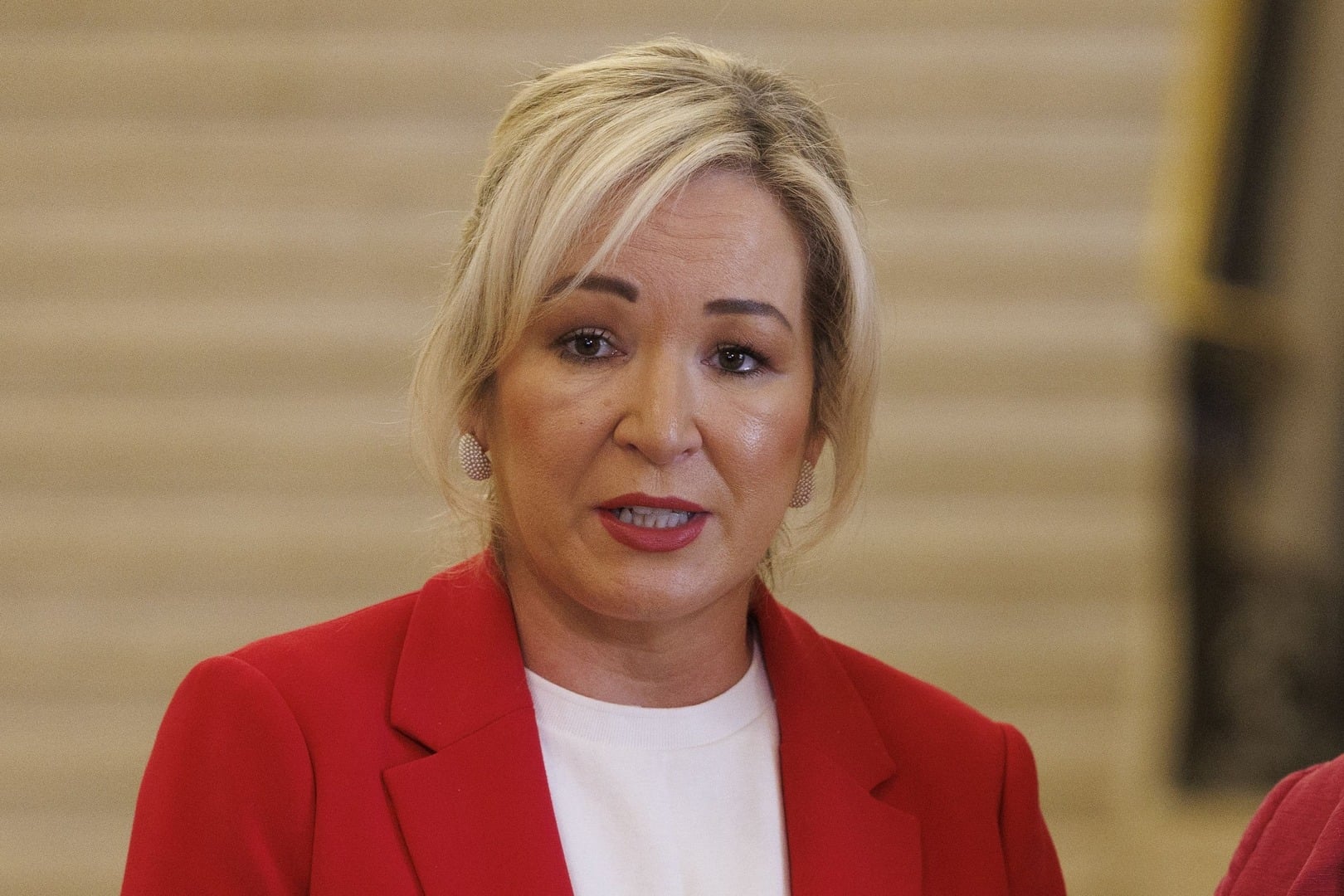
The political backdrop is equally complex. The power-sharing Executive, restored after a prolonged period of collapse, is now led by First Minister Michelle O'Neill of Sinn Féin and deputy First Minister Emma Little-Pengelly of the DUP. Both leaders have set aside their constitutional differences to present a united front on the financial crisis — a rare moment of cross-community consensus that underscores the severity of the situation.
Key Developments
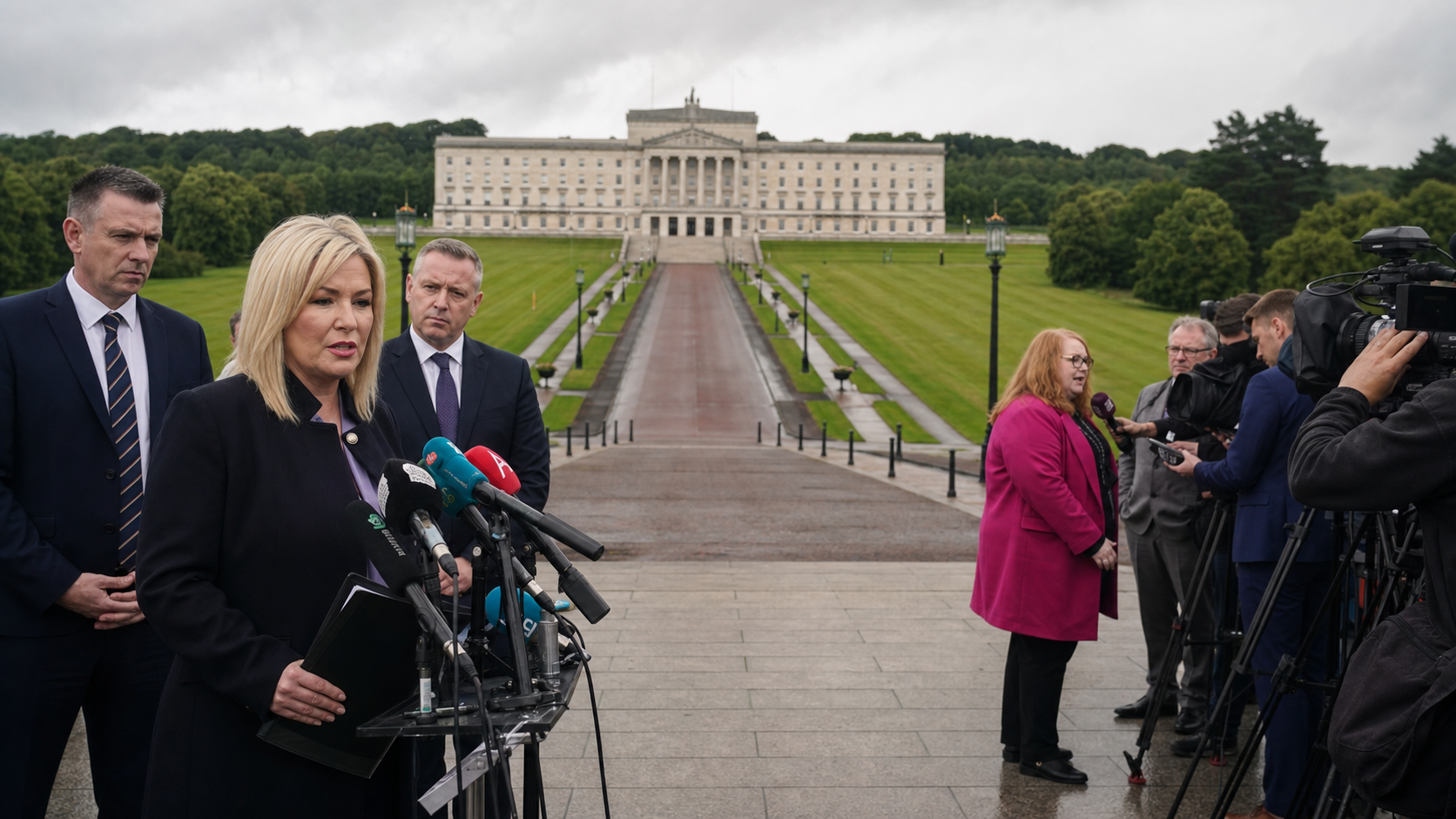
In a formal letter to Downing Street, First Minister O'Neill and deputy First Minister Little-Pengelly requested an urgent meeting with the Prime Minister, describing the Executive's financial position as "stark." Deputy First Minister Little-Pengelly stated: "Our financial situation is stark. It is a direct result of the inadequate budget that has been allocated to the Executive by the British government. This cannot wait. People cannot wait. This financial situation, if it is not addressed, is going to have a devastating impact on our public services and the people that rely on them."
The crisis has been compounded by a separate but related failure: £81 million allocated by the UK government specifically to help Northern Ireland households with energy bills has not been distributed. DUP leader Gavin Robinson, who raised the issue directly with Prime Minister Starmer during his visit to Northern Ireland in March, described the situation as baffling. "It's been sitting there waiting to be dispensed," Robinson said, adding that Starmer was "as aghast as I was" to learn of the delay. The Department for the Economy has since confirmed that new primary legislation is required to implement the scheme, potentially pushing its operation into late 2026 or even 2027.
Communities Minister Gordon Lyons has announced a £100 voucher scheme for over 300,000 low-income households to assist with heating oil costs, funded jointly by UK government money and Executive funds. However, critics argue this is a sticking plaster on a structural wound.
Why It Matters
The financial crisis facing Stormont is not simply a budgetary dispute between Belfast and London — it is a test of whether devolution can function under genuine economic stress. Northern Ireland's public services are already stretched: waiting lists for elective procedures are the longest in the UK, the education system is chronically underfunded, and infrastructure investment has lagged behind the rest of the country for decades. A further squeeze on the block grant, at a time when energy costs are consuming a disproportionate share of household incomes, risks triggering a cascade of service failures that will fall hardest on the most vulnerable.
This is also the third time in five years that the Northern Ireland Executive has had to make emergency representations to Westminster about its finances — a pattern that suggests the underlying funding model is broken, not merely strained. Unlike Scotland, which has greater fiscal autonomy through its devolved tax powers, Northern Ireland has almost no independent revenue-raising capacity. That structural dependency makes the region uniquely vulnerable to decisions made in Whitehall, and uniquely powerless to respond when those decisions prove inadequate.
Local Impact
The consequences of this financial crisis are already being felt in communities across Northern Ireland. In Belfast, the Belfast Health and Social Care Trust has warned of further delays to planned procedures. Translink, which operates bus and rail services across the region, has flagged that capital investment plans may need to be deferred. In rural areas — where heating oil dependency is highest and public transport alternatives are fewest — the combination of soaring energy costs and potential cuts to social care budgets is creating a perfect storm for the most isolated residents. The Fountain area of Derry, already dealing with community disorder, is among the areas where social services are under the greatest strain.
What's Next
The Executive is awaiting a response from Downing Street to its request for an emergency meeting. The next scheduled UK Budget statement is not until the autumn, but the Executive has made clear it cannot wait that long. Readers should watch for: any announcement of an emergency supplementary estimate for Northern Ireland; the outcome of the legislation required to release the £81 million energy fund; and whether the King's Speech on 13 May includes any specific provisions for Northern Ireland's financial position.
Sources: The Irish Times — NI Executive requests urgent meeting; BBC News — Starmer NI visit and investment package