King's Speech to Unveil Radical NHS Overhaul Including Abolition of NHS England
The most ambitious restructuring of the National Health Service since its foundation is set to be announced in the King's Speech on 13 May 2026, with proposals that include abolishing NHS England entirely, introducing a single centralised patient record, and dismantling key patient safety bodies in a sweeping legislative programme that will reshape healthcare across the United Kingdom.Background
NHS England was established in 2013 under the Health and Social Care Act as an arm's-length body responsible for overseeing the commissioning of health services in England. The body was created to insulate clinical decision-making from day-to-day political interference, but critics have long argued that it created an additional layer of bureaucracy between ministers and frontline services, making accountability murky and reform difficult to implement at pace.
The Labour government, which came to power in 2024 under Sir Keir Starmer, inherited an NHS under severe strain — record waiting lists, a workforce crisis, and a capital estate in desperate need of investment. Health Secretary Wes Streeting has been explicit that structural reform is a prerequisite for meaningful improvement, arguing that the current architecture of the health system is not fit for purpose. The government's 10-year health plan, published earlier this year, set out a vision for shifting care from hospitals into communities, from analogue to digital, and from treatment to prevention.
The abolition of NHS England would bring commissioning functions back under direct ministerial control, a move that has divided opinion within the health sector. Supporters argue it will improve accountability and speed up decision-making; opponents warn it risks politicising clinical decisions and creating instability at a time when the NHS can least afford it. The proposal has been in preparation for several months, with parliamentary briefings from the House of Lords Library confirming the legislative intent ahead of the State Opening.
Key Developments
According to parliamentary research published by the House of Lords Library on 6 May 2026, the King's Speech is expected to include legislation to formally abolish NHS England and transfer its functions directly to the Department of Health and Social Care. This would represent a fundamental change in how England's health service is governed, ending the arm's-length model that has been in place for over a decade.
The legislative programme is also expected to introduce a single patient record system — a long-sought ambition that would consolidate all of a patient's medical history into one accessible digital record. The system would be accessible to both clinicians and patients, addressing the persistent problem of fragmented records that has contributed to clinical errors and inefficiencies across the NHS.
On patient safety, the proposals are equally far-reaching. Healthwatch England and its network of over 150 local Healthwatch bodies — which collect and report patient feedback — are slated for abolition. The Health Services Safety Investigations Body would have its functions transferred to the Care Quality Commission, while the Patient Safety Commissioner's responsibilities would move to the Medicines and Healthcare products Regulatory Agency. The government argues this consolidation will simplify an overcrowded regulatory landscape; patient advocates have expressed concern that it risks weakening independent scrutiny of the NHS.
The King's Speech is also expected to include a Mental Health Act modernisation bill and measures to restrict junk food advertising to children and raise the legal age for tobacco purchase.
Why It Matters
This is the most significant legislative intervention in the NHS since the 2012 Health and Social Care Act — and arguably since the NHS's creation in 1948. The abolition of NHS England is not a technocratic adjustment; it is a fundamental reorientation of power within the health system, bringing commissioning back under direct democratic control for the first time in over a decade. Whether that proves to be a strength or a vulnerability will depend entirely on the quality of ministerial decision-making in the years ahead.
The single patient record is long overdue. The NHS has been attempting to digitise patient records for two decades, with the National Programme for IT — abandoned in 2011 after spending £10 billion — serving as a cautionary tale. The difference this time is that the technology infrastructure is far more mature, and the political will appears genuine. If implemented successfully, it could transform care coordination and reduce the estimated 11,000 deaths per year attributed to poor information sharing between NHS services.
The patient safety changes are more contentious. Healthwatch has been an imperfect but important independent voice for patients. Its abolition, without a clear replacement mechanism for independent patient advocacy, risks creating a gap in accountability that could take years to fill. For context, Scotland has maintained a more integrated patient safety model without the same proliferation of bodies — and its outcomes data, while not uniformly better, suggests the architecture matters less than the culture within it.
Local Impact
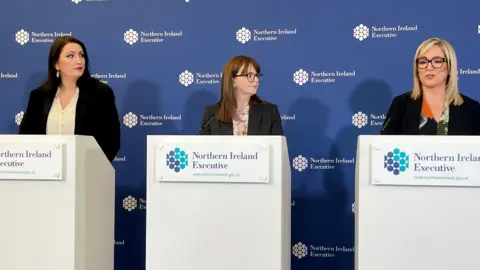
For patients and NHS staff across Northern Ireland, these reforms are primarily an England-specific matter — health is devolved, and the Northern Ireland Executive controls its own health service through the Department of Health and the five Health and Social Care Trusts. However, the abolition of NHS England and the introduction of a single patient record will set a precedent and create pressure on Stormont to consider equivalent reforms. The Belfast Health and Social Care Trust, which serves the largest population of any trust in Northern Ireland, has been piloting digital record systems, and a successful England-wide rollout could accelerate similar ambitions here. In the Republic of Ireland, the HSE has its own digital health strategy, and cross-border patient data sharing — already a sensitive issue — will require careful negotiation as England's system evolves.
What's Next
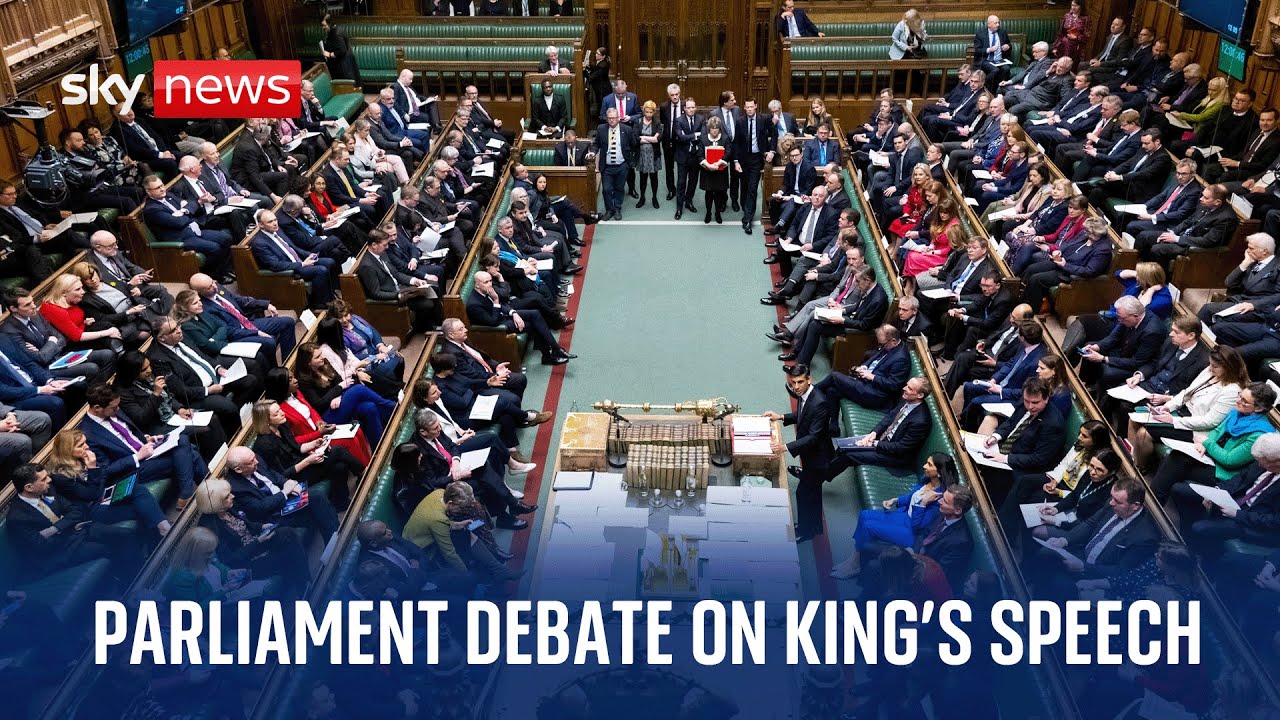
The King's Speech takes place on Wednesday, 13 May 2026, at the State Opening of Parliament. Following the speech, both the House of Commons and the House of Lords will debate its contents over several days, with a dedicated day for health, housing, and transport in the Lords. Individual bills will then be introduced and progress through the standard parliamentary stages. The NHS England abolition legislation is expected to be among the first bills introduced, given its complexity and the need for a lengthy implementation period. Readers should watch for the government's response to the inevitable legal and operational challenges of transferring NHS England's functions — a process that, even with political will, is likely to take at least two years to complete.
Sources: House of Lords Library — King's Speech 2026: Health; UK Parliament — State Opening 2026