NI Waiting Lists Remain Among UK's Longest as Encompass System Begins to Reshape Data Reporting
Northern Ireland's hospital waiting lists remain among the longest in the United Kingdom, with more than 542,000 patients waiting for a first consultant-led outpatient appointment as of the most recent official data, and 55.6% of them — more than 301,000 people — waiting longer than 52 weeks. The Department of Health has conceded that its target of eliminating waits of more than 52 weeks by March 2026 was unachievable, as the Encompass digital health system begins to reshape how waiting time data is collected and reported across the five health and social care trusts.
Background
Northern Ireland's waiting list crisis is not a new phenomenon. The region has had the longest waiting lists in the United Kingdom for more than a decade, a consequence of chronic underfunding relative to need, a shortage of consultants and other specialist staff, and a health system that has struggled to implement the kind of structural reforms that might address the underlying causes of the backlog.
The problem predates the Covid-19 pandemic, though the pandemic significantly worsened it. The suspension of elective procedures during the pandemic's acute phases, combined with the subsequent surge in demand as patients who had deferred care returned to the system, created a backlog that the health trusts have been struggling to address ever since. The Department of Health's target of eliminating waits of more than 52 weeks by March 2026 was widely regarded as aspirational rather than achievable, and the department's concession that it has not been met is not a surprise to those who have been monitoring the situation closely.
The five health and social care trusts — Belfast, South Eastern, Southern, Western, and Northern — have different waiting list profiles, reflecting differences in population, geography, and the availability of specialist services. The Belfast Trust, which provides the most complex tertiary care, has some of the longest waits in the system, while the Western Trust — which serves the Derry/Londonderry and Fermanagh areas — has faced particular challenges due to its geographic isolation and its difficulty in recruiting and retaining specialist staff.
Key Developments
The most recent official waiting time statistics, based on data from September 2025, show that 542,451 patients were waiting for a first consultant-led outpatient appointment, with 55.6% — 301,753 people — waiting longer than 52 weeks. ENT and gynaecology specialisms had the largest outpatient waiting lists. For inpatient and day case admissions, 91,645 patients were waiting, with 41.6% — 38,166 people — waiting more than 52 weeks. Orthopaedics and gastroenterology were the most affected specialisms.
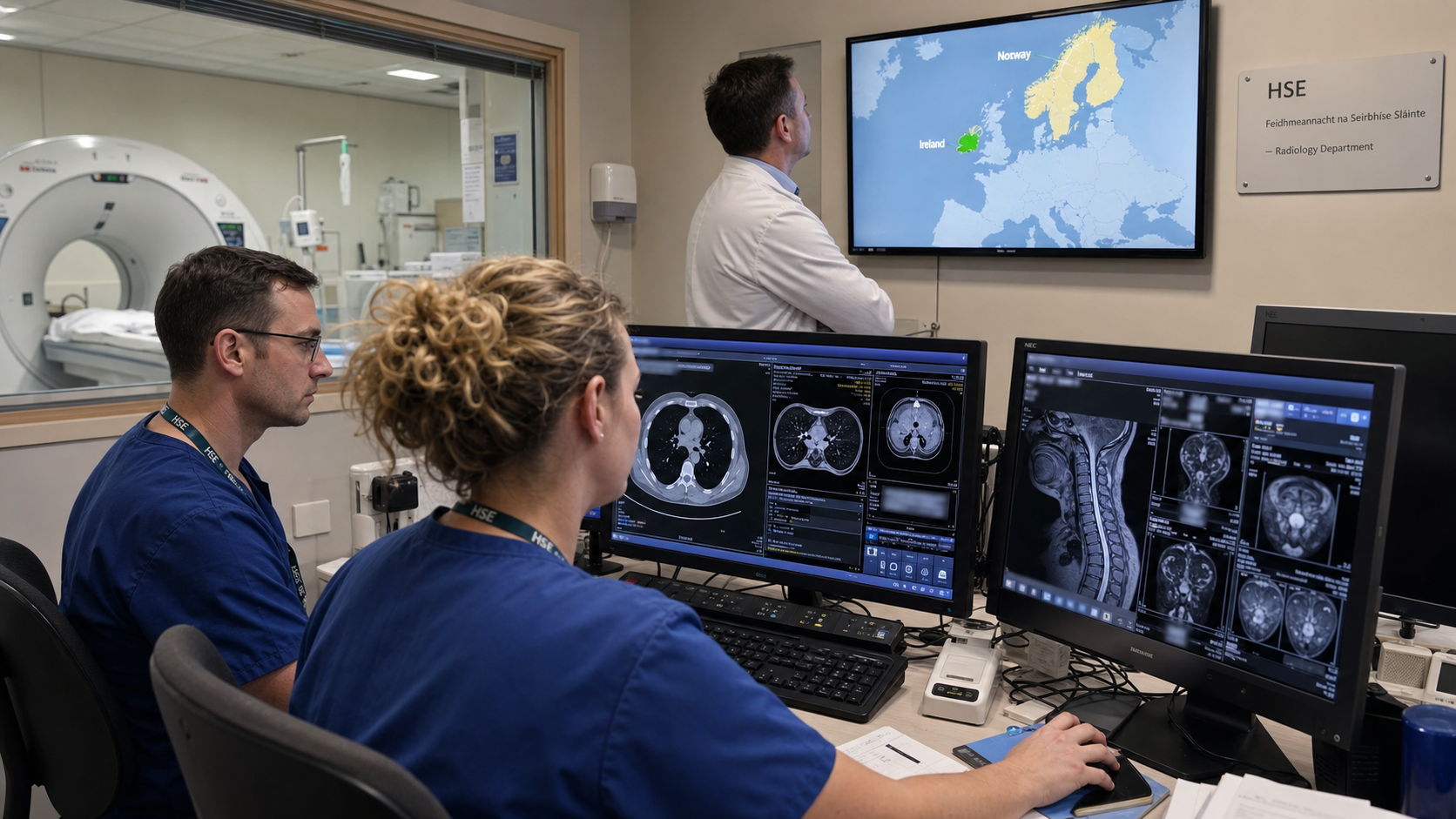
The Encompass digital health system — a major investment in electronic patient records that is being rolled out across the five trusts — is beginning to change how waiting time data is collected and reported. The transition from legacy paper-based and fragmented digital systems to a unified electronic record is expected to improve the accuracy and timeliness of waiting time data, though the transition period has created some challenges in data comparability.
Health Minister Mike Nesbitt has acknowledged the scale of the challenge and has indicated that the Executive is developing a new waiting list action plan that will set out a realistic pathway to reducing the backlog over the next three years. The plan is expected to include a combination of additional capacity — through the use of independent sector providers and extended working hours — and demand management measures designed to ensure that patients are seen in the most appropriate setting.
The voluntary sector has raised concerns about the impact of waiting list pressures on mental health services, noting that the long waits for CAMHS and adult mental health appointments are causing significant harm to patients who are not receiving the care they need in a timely manner. The Department of Health has indicated that mental health waiting lists will be a specific focus of the new action plan.
Why It Matters
Northern Ireland's waiting list crisis matters because it represents a fundamental failure to provide the standard of healthcare that the population is entitled to expect. The 301,000 people waiting more than a year for a first outpatient appointment are not statistics — they are individuals living with pain, anxiety, and uncertainty, unable to access the diagnosis and treatment that might significantly improve their quality of life. For many of them, the wait is not merely inconvenient but actively harmful, as conditions that might be manageable if treated promptly become more serious and more difficult to treat as time passes.
The comparison with the rest of the United Kingdom is stark. While waiting lists in England, Scotland, and Wales are also a source of concern, Northern Ireland's figures are consistently the worst in the UK — a distinction that reflects the region's particular combination of underfunding, workforce shortages, and structural challenges. The political instability of the Stormont Executive, which has spent significant periods in suspension since 2017, has also contributed to the problem by preventing the sustained policy focus and investment that addressing the backlog requires.
Local Impact
The waiting list crisis affects patients across Northern Ireland, but its impact is felt most acutely in areas where specialist services are most limited. In the Western Trust area — covering Derry/Londonderry, Fermanagh, and parts of Tyrone — patients often face the longest waits and the greatest distances to specialist centres. The closure of the Ulster University sports dome in Derry, announced last week, is a reminder of the broader resource constraints facing public institutions in the north-west. In Belfast, the concentration of specialist services at the Royal Victoria Hospital, the Belfast City Hospital, and the Mater Hospital means that patients from across Northern Ireland travel to the city for care, adding to the pressure on those facilities.
What's Next
The Department of Health's new waiting list action plan is expected to be published before the end of September 2026. The plan will set out specific targets for reducing waiting times across the main specialisms, along with the resources and mechanisms that will be used to achieve them. The Encompass system is expected to be fully operational across all five trusts by the end of 2026, at which point the quality and timeliness of waiting time data should improve significantly. Health Minister Nesbitt has indicated that he will provide a progress update to the Assembly in October.