NI Transplant Games Athletes Demonstrate Power of Sport in Recovery as Sheffield Competition Concludes
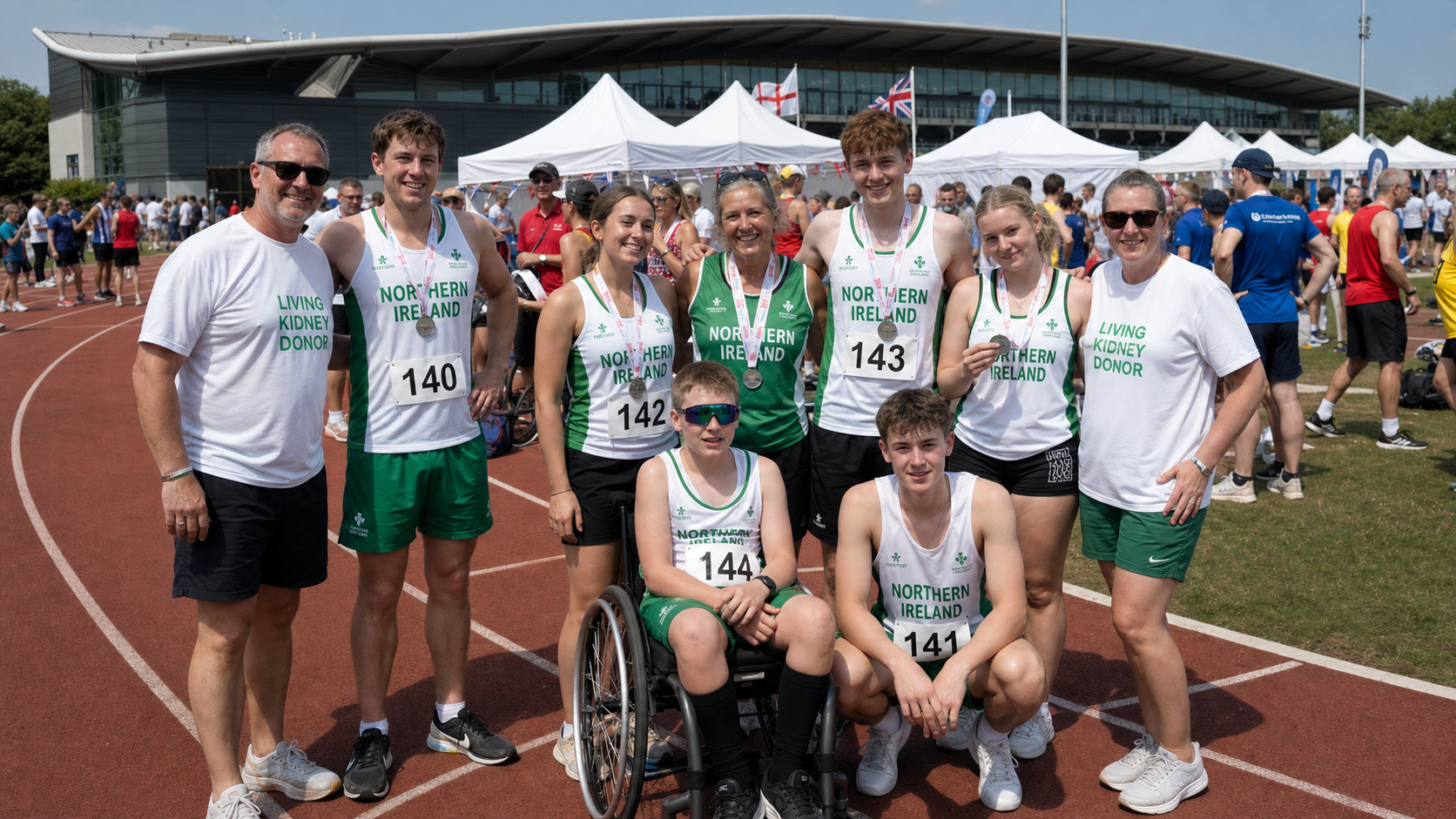
A 26-strong Northern Ireland team — comprising 20 transplant recipients and six living kidney donors — has competed at the British Transplant Games in Sheffield, with athletes ranging from cyclists and swimmers to golfers and track and field competitors demonstrating the extraordinary capacity of the human body to recover, rebuild, and excel following organ transplantation.
Background
The British Transplant Games, held annually by Transplant Sport UK, is one of the most emotionally resonant sporting events in the calendar. Unlike conventional competitions, the Transplant Games are not primarily about winning — they are about living. Every athlete who competes has a story of illness, of waiting, of the generosity of a donor or a living donor, and of the long road back to health and fitness. The event serves a dual purpose: celebrating the gift of life that organ donation represents, and raising awareness of the ongoing need for more donors across the UK and Ireland.
Transplant Sport Northern Ireland (TSNI), which coordinates the Northern Ireland team, works throughout the year to promote organ donation awareness and to support transplant recipients and living donors in using sport as a tool for rehabilitation and wellbeing. The organisation works closely with all five of Northern Ireland's health and social care trusts — Belfast, Northern, South Eastern, Southern, and Western — to identify and support athletes who are eligible to compete at the Transplant Games.
The 2026 British Transplant Games in Sheffield took place from August 6 to August 9, with athletes competing across 26 high-exertion, low-impact sports. The Northern Ireland team's participation has taken on added significance in the context of Dáithí's Law, the opt-out organ donation legislation that came into effect in Northern Ireland in 2023, which has increased the number of people registered as potential donors.
Key Developments
The Northern Ireland team competed across a range of disciplines at the Sheffield Games, with cycling, swimming, golf, archery, petanque, bowling, and track and field among the sports represented. The team's performance across the four days of competition reflected the high level of fitness and determination that characterises Transplant Games athletes — people who have, in many cases, been through experiences that would have ended the sporting ambitions of less resilient individuals.
Among the most powerful stories to emerge from the NI team's participation was that of a cyclist who described the sport as "mental medicine" following a cancer diagnosis — a testimony that captured the therapeutic dimension of the Transplant Games that goes beyond physical rehabilitation. The relationship between sport and mental health is well-established in the research literature, and the personal testimonies of Transplant Games athletes bring that relationship to life in a way that statistics cannot.
Why It Matters
The British Transplant Games matter because they put a human face on organ donation. The sight of 26 Northern Ireland athletes competing in Sheffield — running, cycling, swimming, and throwing — is a more powerful argument for organ donation than any public health campaign. Each of those athletes is alive, and competing, because someone made the decision to donate. That is the message that TSNI carries to every event it attends, and it is a message that resonates deeply in a society that has been moved by stories like Dáithí Mac Gabhann's. The passage of Dáithí's Law in 2023 has already had measurable effects on donor registration rates in Northern Ireland, and the Transplant Games provide an annual opportunity to reinforce that message.
The mental health dimension of the athletes' testimonies is also significant. Northern Ireland has some of the highest rates of mental health difficulties in the UK, a legacy in part of the Troubles and its aftermath. The role of sport in supporting mental health and wellbeing is increasingly recognised by the Public Health Agency and the health trusts, and the Transplant Games athletes' stories are a powerful illustration of that role in action.
Local Impact
For Northern Ireland's transplant community, the British Transplant Games are a highlight of the year. TSNI's work with the five health and social care trusts ensures that transplant recipients and living donors across the province are aware of the opportunity to compete, and the organisation's outreach has been particularly effective in reaching communities in rural areas of Fermanagh, Tyrone, and Armagh that might otherwise be less connected to the transplant support network. The Public Health Agency for Northern Ireland has highlighted the Transplant Games as an example of the kind of community-based health promotion that it wants to support and expand. The NI team's participation in Sheffield will be covered by local media, and TSNI hopes that the coverage will encourage more people in Northern Ireland to register as organ donors.
What's Next
The British Transplant Games concluded on Sunday, August 9, with a closing ceremony in Sheffield. The Northern Ireland team will return home with medals, memories, and the knowledge that their participation has helped to promote the cause of organ donation. TSNI will publish a full report on the team's performance and the awareness-raising activities associated with the Games in the coming weeks. The organisation is already planning for the 2027 British Transplant Games, and is encouraging transplant recipients and living donors across Northern Ireland to consider joining the team. Those interested in participating can contact TSNI through the organisation's website or through their health and social care trust's transplant coordinator.