NI Mental Health Strategy Scaled Back as Funding Shortfall Leaves Just 16% of Required Investment Delivered
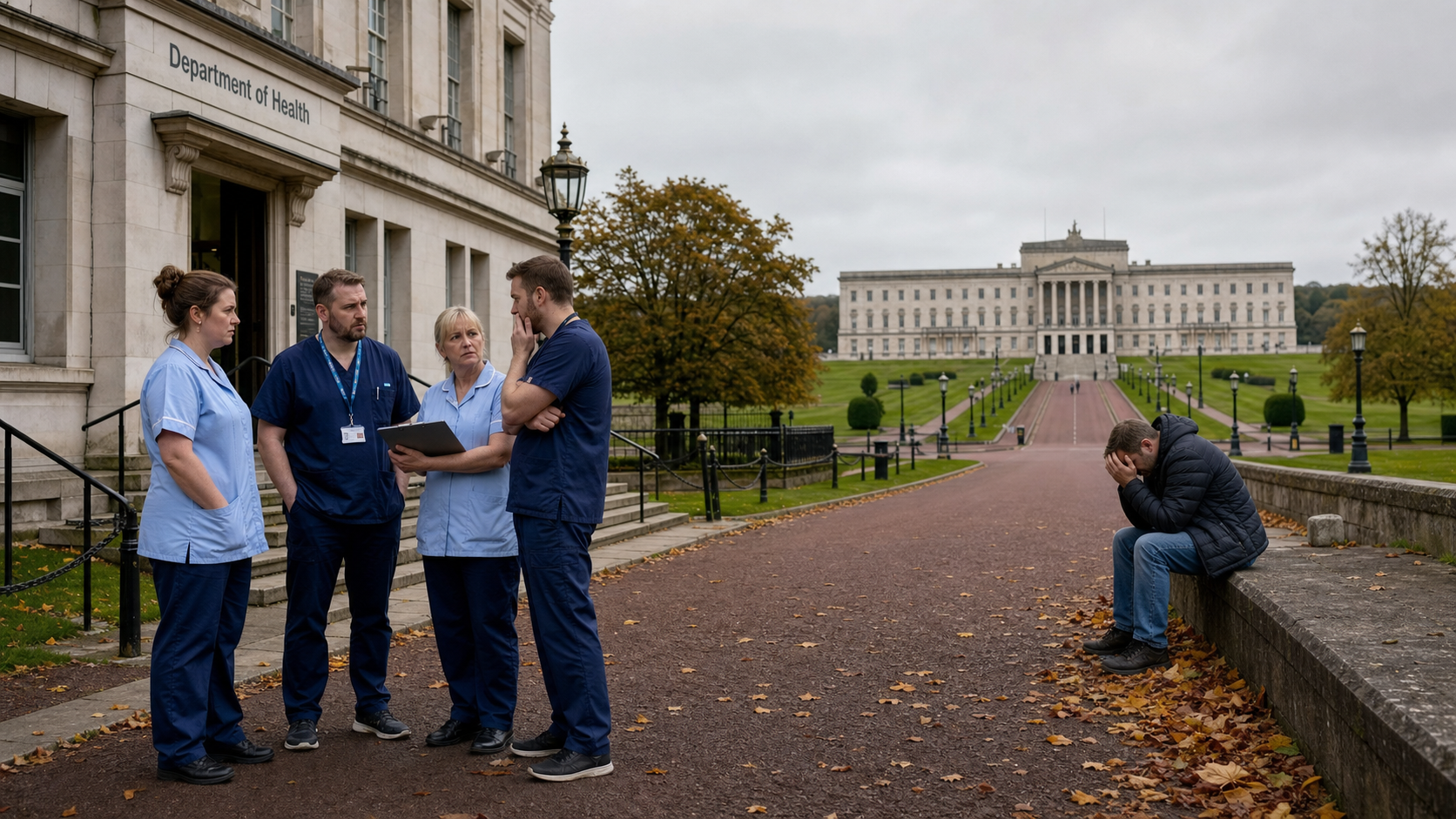
Northern Ireland's Department of Health has been forced to significantly scale back its ambitious 10-year Mental Health Strategy, with a devastating funding shortfall meaning that only £12.3 million — just 16% of the investment required — has been delivered since the strategy's launch in 2021, leaving the region's mental health services in a state of chronic underdevelopment that the strategy's own champion has described as 'devastating' and 'disastrous' for the people who depend on them.
Background
Northern Ireland's Mental Health Strategy 2021-2031 was launched with considerable ambition and genuine public expectation. The strategy set out a comprehensive vision for transforming mental health services in the region, addressing the significant gaps in provision that had been identified by a range of reviews and inquiries over the preceding decade. It committed to a programme of investment in community mental health services, crisis intervention, inpatient facilities, and the mental health workforce that was designed to bring Northern Ireland's services up to the standard of the best in the UK and Ireland.
The strategy was developed against a backdrop of well-documented need. Northern Ireland has some of the highest rates of mental ill-health in the UK, a legacy of the Troubles that has left deep psychological scars in communities across the region and that continues to manifest in elevated rates of depression, anxiety, post-traumatic stress disorder, and suicide. The waiting lists for mental health services in Northern Ireland are among the longest in the UK, and the availability of community-based support — which is widely recognised as the most effective and cost-efficient form of mental health care — has been chronically inadequate.
Professor Siobhan O'Neill, who was appointed as Northern Ireland's first Mental Health Champion in 2020, has been one of the most prominent advocates for improved mental health services in the region. Her role involves advising the Department of Health on mental health policy, raising public awareness of mental health issues, and holding the government to account for its commitments on mental health investment. Her willingness to speak publicly about the failure to fund the strategy reflects the depth of her concern and the inadequacy of the response from Stormont and Westminster.
Key Developments
The Department of Health's decision to scale back the Mental Health Strategy for the 2026/27 period means that the ambitious programme of service transformation set out in the original document will not be delivered within the planned timeframe. Instead, the Department has indicated that it will focus its limited resources on two priority areas: the mental health workforce and the development of a regional crisis service. While these are important priorities, they represent a significant narrowing of the strategy's original scope and a tacit acknowledgement that the broader transformation of mental health services in Northern Ireland will not be achieved within the strategy's 10-year timeframe.
The funding shortfall is stark. Only £12.3 million has been invested in the strategy since its launch in 2021, representing just 16% of the investment required to deliver the programme as planned. This means that 84% of the planned investment has not been made, leaving a vast gap between the strategy's ambitions and the reality of mental health service provision in Northern Ireland. The consequences of this underfunding are felt by the thousands of people across the region who are waiting for mental health support, many of whom are in acute distress and who have been told that they may wait months or years for an assessment or treatment.
Professor O'Neill's response to the scaling back of the strategy was unambiguous. She described the decision as 'devastating' and 'disastrous', warning that the failure to invest in mental health services will have long-term consequences for the wellbeing of Northern Ireland's population and for the sustainability of the health service more broadly. She called on the Department of Health and the Stormont Executive to make mental health funding a priority in any budget settlement reached with Westminster.
Why It Matters
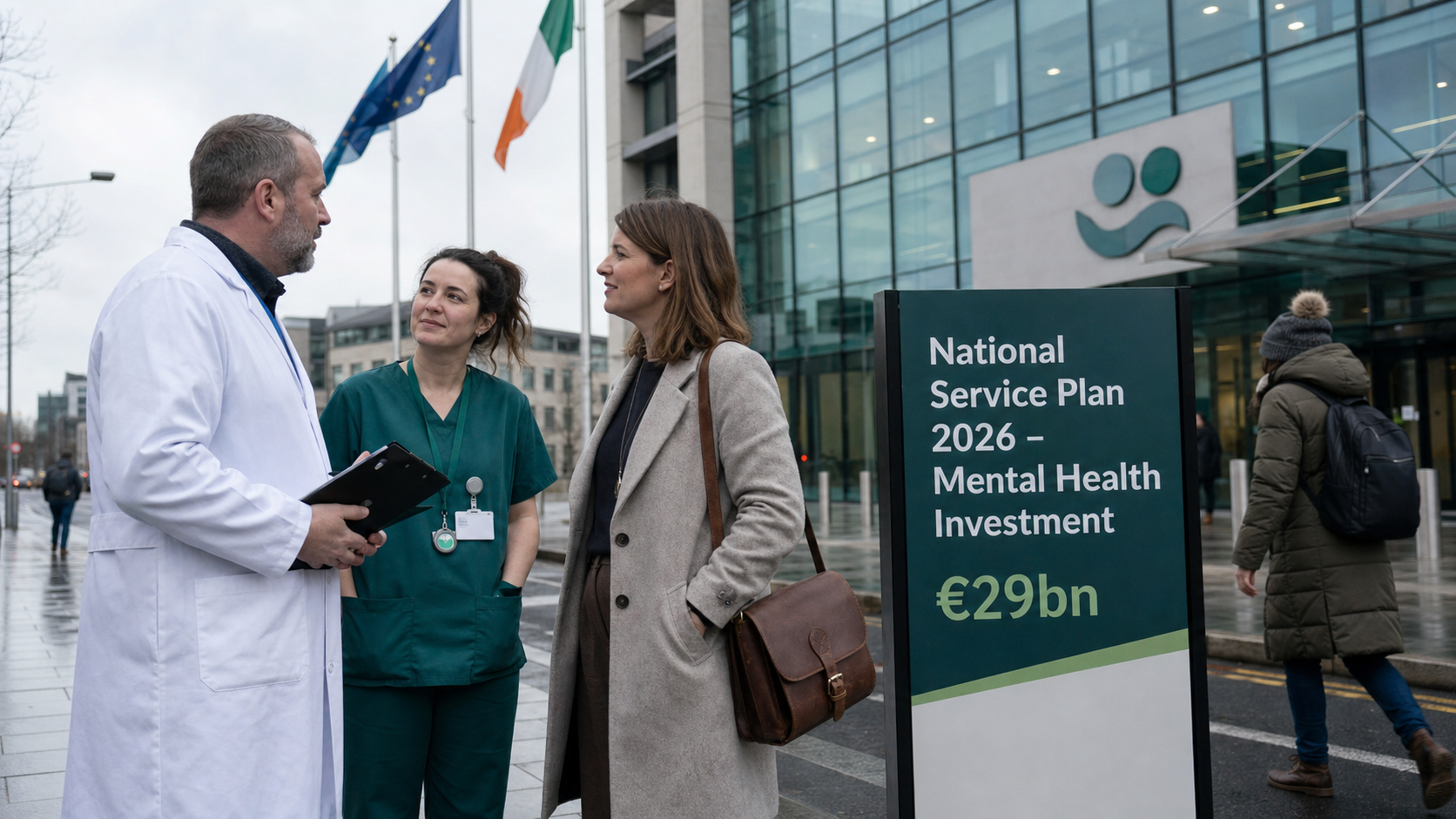
The scaling back of Northern Ireland's Mental Health Strategy matters because it represents a failure to deliver on a commitment that was made to some of the most vulnerable people in the region. Mental ill-health is not an abstract policy issue — it is a lived reality for hundreds of thousands of people in Northern Ireland, many of whom are struggling with conditions that are treatable but for which they cannot access timely and appropriate support. The contrast with the Republic of Ireland, where the HSE's 2026 National Service Plan includes a record staffing increase for mental health with 300 new posts and the establishment of three new Crisis Resolution Teams, is particularly stark and illustrates the divergence in mental health investment between the two jurisdictions. This divergence has implications not only for the individuals affected but for the broader case for devolved government in Northern Ireland — if the Executive cannot deliver on its commitments in an area as fundamental as mental health, the question of what devolution is for becomes increasingly difficult to answer.
Local Impact
The impact of the mental health funding shortfall is felt in communities across Northern Ireland. In the Western Trust area, which covers Derry/Londonderry, Fermanagh, and the surrounding areas, waiting times for mental health assessments have reached levels that mental health professionals describe as clinically dangerous. In the Northern Trust area, covering Antrim, Ballymena, and the north coast, community mental health teams are operating with significant staff vacancies that limit their capacity to provide timely support to people in crisis. The Belfast Trust, which operates the largest mental health services in the region, has reported that its crisis services are under sustained pressure, with the emergency department at the Royal Victoria Hospital regularly seeing patients in acute mental health crisis who cannot access appropriate community-based support. The Southern Trust and South Eastern Trust have similarly reported significant pressures on their mental health services, with waiting lists for both adult and child and adolescent mental health services at record levels.
What's Next
The Department of Health is expected to publish a revised implementation plan for the Mental Health Strategy in the coming months, setting out how it intends to deliver the priority areas of workforce development and crisis service development within the available budget. Professor O'Neill has indicated that she will continue to advocate publicly for increased mental health investment and will not accept the scaling back of the strategy as a permanent state of affairs. The Stormont Executive's budget negotiations with Westminster are expected to include a specific ask for mental health funding, and the outcome of those negotiations will be a key determinant of what can be delivered in the 2026/27 period. The Mental Health Alliance, which represents a range of voluntary and community sector organisations working in mental health in Northern Ireland, has called for an emergency summit on mental health funding to be convened before the end of July.