Cross-Border Health MOU Signals New Era for North-West Patients as Western Trust and HSE Unite
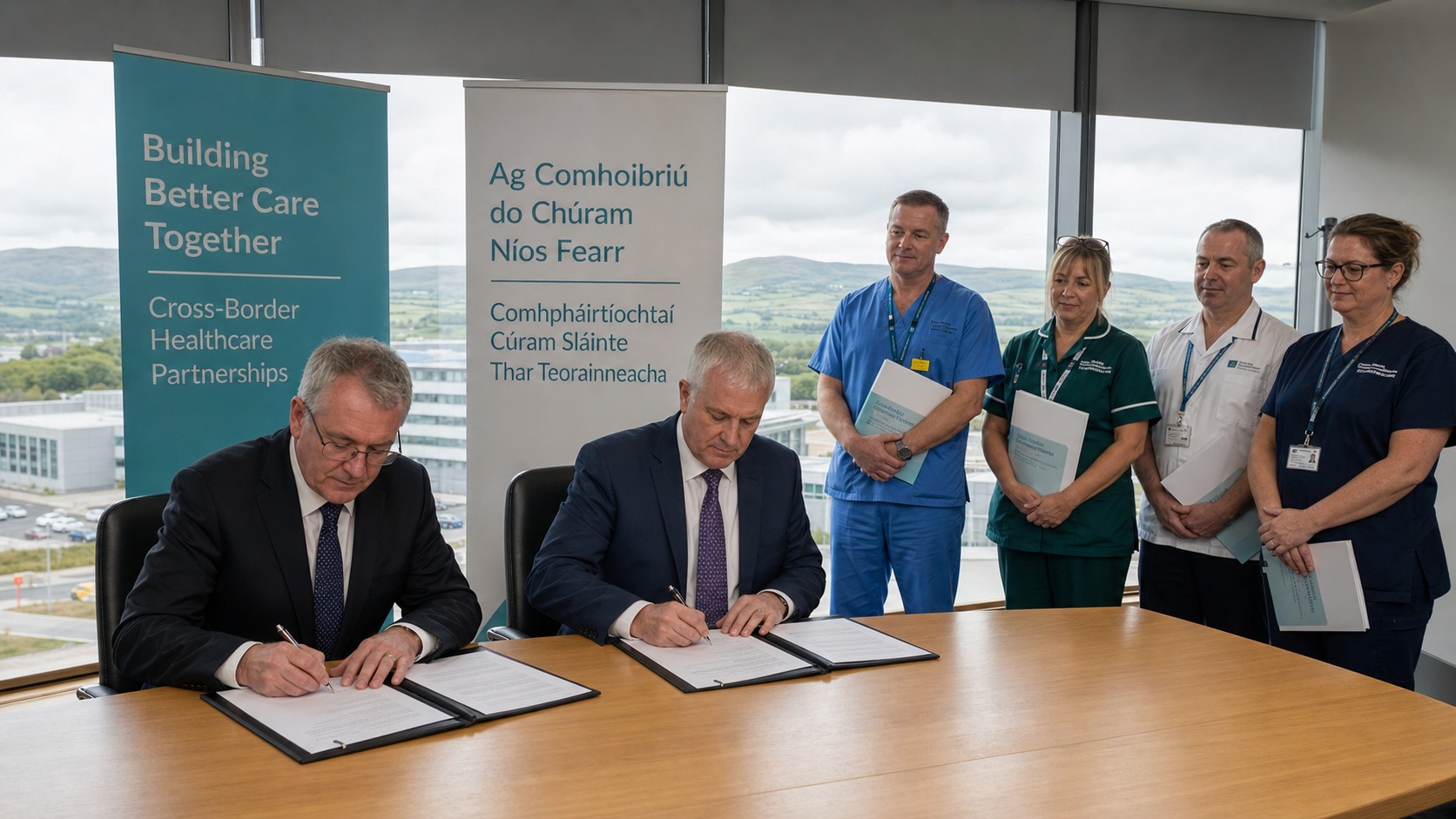
The signing of a cross-border Health Memorandum of Understanding between the Western Health and Social Care Trust and the HSE marks a significant step towards removing the administrative barriers that have long prevented patients in Derry, Strabane, and Donegal from accessing services across the border, with joint governance structures to be established within weeks and the first priority clinical areas to be identified by September.
Background
The health needs of communities in the north-west of Ireland have long been complicated by the border. Residents of County Donegal — the most northerly county in Ireland but geographically separated from the rest of the Republic by the border — have historically had to travel to Galway or Dublin for specialist services that are available much closer to home at Altnagelvin Area Hospital in Derry. Similarly, residents of the Strabane area who might benefit from HSE services in Letterkenny have been prevented from accessing them by the administrative boundary between the two health systems.
The Western Health and Social Care Trust, which covers the Derry, Strabane, and Fermanagh areas, and the HSE's Community Healthcare West, which covers Donegal, Galway, and Mayo, have been exploring closer cooperation for several years. Previous initiatives, including the Cooperation and Working Together (CAWT) programme, have facilitated some joint working, but the scope has been limited by funding constraints and the complexity of operating across two different health systems.
The political context for the MOU has also been significant. The NI Health Minister's recent statement that he has "no ideological objection" to expanding all-island health services was a notable departure from the traditional unionist position, and it created the political space for the Western Trust and the HSE to move forward with a more ambitious cooperation framework.
Key Developments
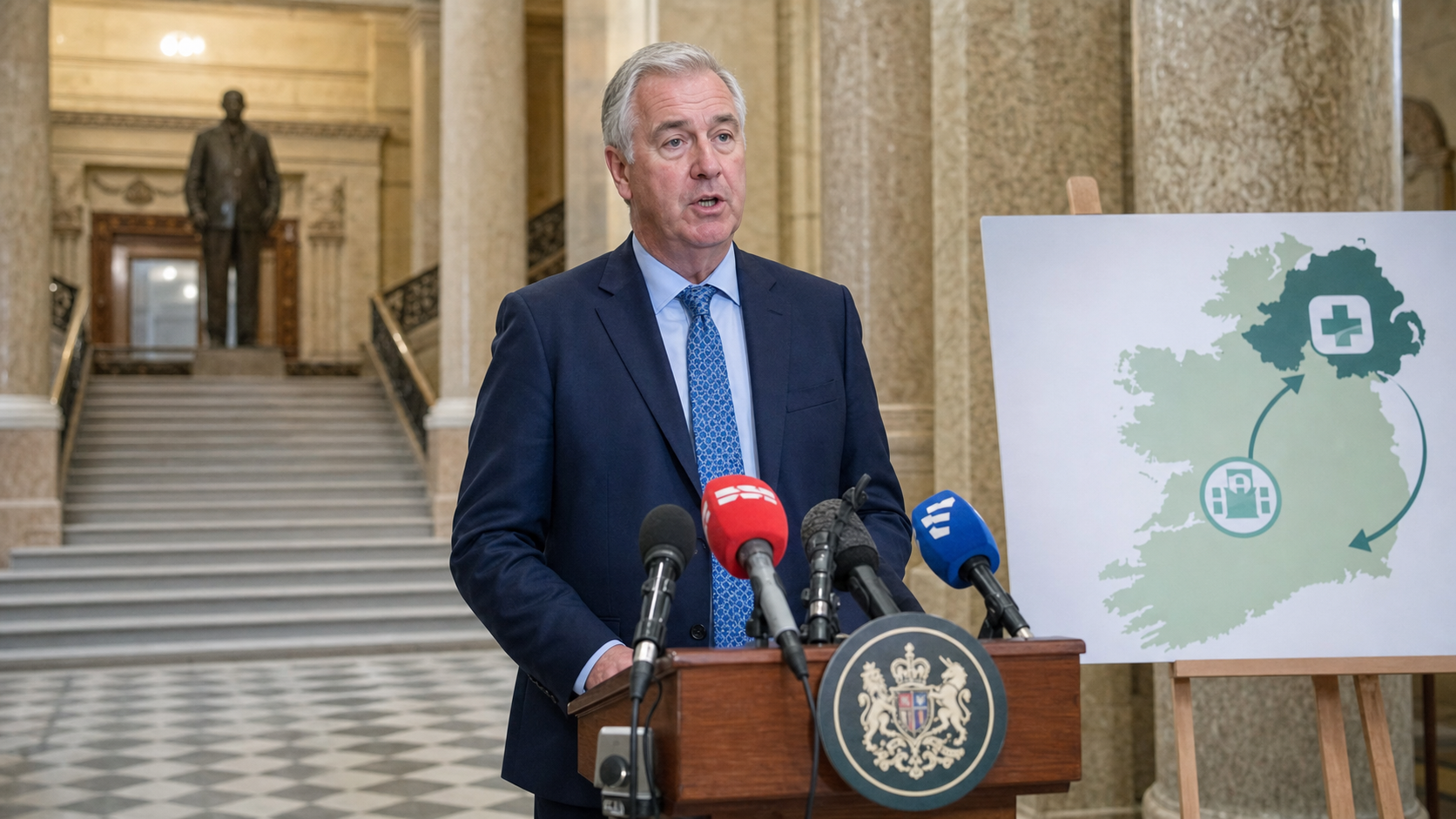
The MOU signed at Stormont on Tuesday commits the Western Trust and the HSE to a programme of joint working across a range of clinical areas, including cancer services, mental health, emergency care, and elective procedures. The agreement establishes a joint governance structure with senior leadership from both organisations, meeting quarterly to review progress and to identify new areas for cooperation.
The MOU also commits both organisations to a process of identifying and removing the administrative barriers that currently prevent patients from accessing services across the border. These barriers include differences in referral processes, information systems, and clinical protocols, as well as the practical challenges of cross-border billing and reimbursement. The joint governance structure will be tasked with developing solutions to these barriers on a case-by-case basis.
The first priority areas for joint working — likely to include cancer services and mental health — will be identified through a clinical needs assessment to be conducted over the summer. The assessment will map the current pattern of service use in the north-west region, identify the gaps and inefficiencies created by the border, and recommend specific areas where cross-border cooperation would deliver the greatest benefit to patients.
First Minister Michelle O'Neill, who attended the Stormont launch, described the MOU as "a practical demonstration of what the Good Friday Agreement makes possible." She noted that the agreement had been developed through a process of genuine partnership between the two health systems, and expressed confidence that it would deliver tangible benefits for patients in the north-west.
Why It Matters
The north-west MOU is significant because it demonstrates that cross-border health cooperation is achievable in practice, not just in principle. The health systems of Northern Ireland and the Republic are structured very differently — different funding models, different governance arrangements, different clinical protocols — and the challenge of making them work together effectively is substantial. The fact that the Western Trust and the HSE have been able to develop a workable framework for cooperation is a significant achievement.
The MOU also has implications for the broader debate about all-island health services. If the north-west cooperation framework delivers the benefits that its architects are promising, it will provide a model that could be replicated in other border regions — the South Eastern Trust and the HSE in Louth and Meath, for example, or the Southern Trust and the HSE in Cavan and Monaghan. The potential for a genuinely all-island approach to health service planning and delivery is significant.
For patients in the north-west, the most immediate benefit of the MOU will be the removal of the bureaucratic barriers that currently prevent them from accessing services across the border. A patient in Donegal who needs a cardiac procedure that is available at Altnagelvin but not at Letterkenny should, in principle, be able to access that procedure without the current administrative obstacles. The MOU creates the framework for making that a reality.
Local Impact
In Derry city, the MOU is expected to facilitate closer working between Altnagelvin Area Hospital and Letterkenny University Hospital. The two hospitals are separated by just 25 miles but currently operate as entirely separate systems, with patients unable to move seamlessly between them. The MOU creates the framework for developing shared clinical pathways that would allow patients to access the most appropriate service regardless of which side of the border it is on.
In Donegal, the MOU offers the prospect of patients being able to access services at Altnagelvin without the bureaucratic barriers that currently exist. For residents of Inishowen, the most northerly peninsula in Ireland, Altnagelvin is significantly closer than Letterkenny, and the ability to access services there would represent a major improvement in their healthcare access. The Donegal GP community has welcomed the MOU and has indicated it will work with both health systems to develop the referral pathways needed to make cross-border access a practical reality.
What's Next
The joint governance structure established by the MOU will hold its first formal meeting within the next month, with a work programme to be agreed by the end of September. The clinical needs assessment will be conducted over the summer, with findings expected in October. The first specific cross-border clinical pathways are expected to be operational by early 2027. The North-South Ministerial Council will receive a progress report on the MOU at its autumn meeting, and both governments have indicated they will provide the resources needed to support its implementation.