Nesbitt Opens Door to Expanded All-Island Health Services as NI Waiting Lists Reach Crisis Point
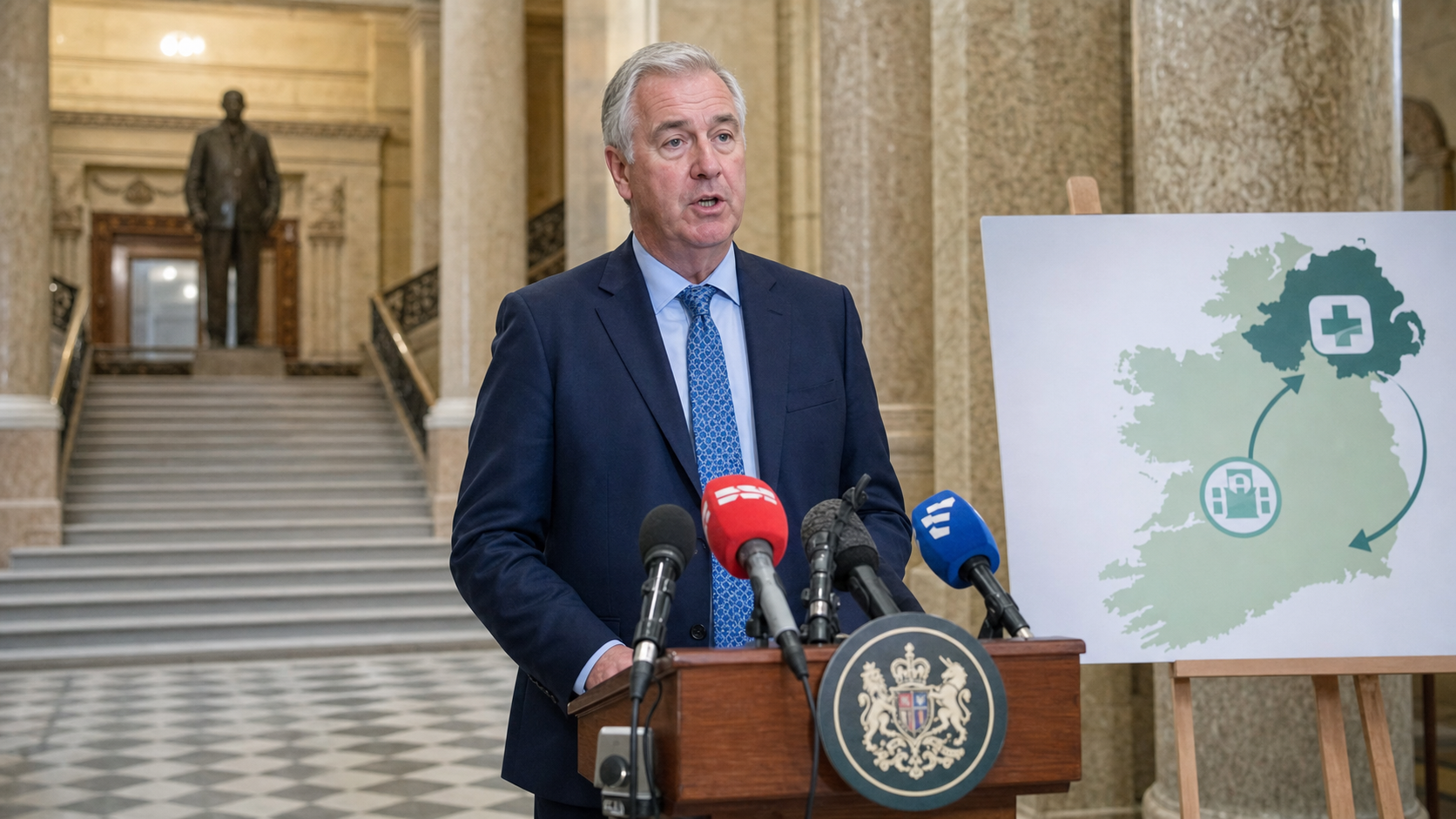
Northern Ireland's Health Minister Mike Nesbitt has signalled a significant shift in the political approach to cross-border healthcare, stating that he has "no ideological or political objection" to expanding all-island health initiatives — a statement that opens the door to deeper cooperation between the NHS in Northern Ireland and the HSE in the Republic at a time when both systems are struggling with waiting lists, workforce shortages, and funding pressures that are remarkably similar in character.
Background
Cross-border health cooperation on the island of Ireland has a long but uneven history. The formal structures for cooperation — established under the Good Friday Agreement and developed through the North-South Ministerial Council — have produced a number of joint initiatives over the years, including the all-island cancer services programme, the cross-border radiotherapy service at Altnagelvin Hospital in Derry/Londonderry, and various joint research and training programmes. However, the potential for deeper cooperation has consistently been constrained by political sensitivities, funding complexities, and the structural differences between the two health systems.
The NHS in Northern Ireland and the HSE in the Republic operate under different legislative frameworks, different funding models, and different governance structures. The NHS is funded through general taxation and provides services free at the point of use, while the HSE operates a mixed model that combines public funding with private health insurance and patient charges. These structural differences create practical complications for cross-border service delivery, including questions about who pays for services provided to patients from the other jurisdiction and how quality standards are maintained across different regulatory regimes.
Despite these complications, the case for expanded cross-border cooperation has been growing stronger. Both health systems face similar challenges — aging populations, rising demand for chronic disease management, workforce shortages, and the need to maintain specialist services that require a minimum population base to be clinically viable. In many cases, the most efficient solution to these challenges is an all-island approach that treats the island as a single health catchment area rather than two separate systems divided by a political border.
Key Developments
Health Minister Nesbitt's statement, made on 30 June, represents a significant departure from the more cautious approach that has characterised unionist politicians' engagement with cross-border health cooperation in the past. His acknowledgement that the border should not be a barrier to efficient service delivery is a pragmatic recognition of the geographic and demographic realities of healthcare provision on the island.
The context for his statement is stark. Patients in Northern Ireland are currently facing year-long waits for some cardiac procedures — a situation that is directly attributable to the shortage of cardiologists and cardiac surgeons in the NI health service. Over 1,400 people are waiting more than a month for cancer diagnostic tests, a delay that can have serious consequences for treatment outcomes. In both cases, there are facilities and specialists in the Republic that could, in principle, provide these services to NI patients if the appropriate cross-border arrangements were in place.
Nesbitt's statement was made in the context of a broader discussion about the future of health services in Northern Ireland, and was accompanied by an acknowledgement that the challenges faced by both health systems are "remarkably similar." This framing — emphasising the shared nature of the problem rather than the political differences between the two jurisdictions — is a significant shift in tone from the approach that has sometimes characterised unionist engagement with cross-border issues.
Why It Matters
The potential for expanded all-island health cooperation is significant. A number of specialist services — including paediatric cardiac surgery, certain cancer treatments, and some rare disease services — require a minimum population base to be clinically viable and cost-effective. On an island of seven million people, the case for treating these services on an all-island basis is compelling. The alternative — maintaining separate services in both jurisdictions, each operating below optimal scale — is both clinically suboptimal and economically inefficient.
The political significance of Nesbitt's statement should not be underestimated. As a member of the Ulster Unionist Party, he comes from a political tradition that has historically been cautious about cross-border cooperation, particularly in areas that could be seen as prefiguring political reunification. His willingness to engage pragmatically with the case for all-island health services reflects a broader shift in unionist politics towards a more functional and less ideological approach to North-South relations.
Local Impact
The practical impact of expanded cross-border health cooperation would be felt most acutely in the border communities of Northern Ireland — in Fermanagh, south Armagh, south Down, and the Derry/Londonderry area — where patients already travel to the Republic for some services and where the geographic logic of cross-border cooperation is most obvious. For patients in Enniskillen, the nearest major hospital in the Republic — Sligo University Hospital — is closer than the nearest major NI hospital in Belfast. For patients in Newry, the Louth County Hospital in Dundalk is a more accessible option than many NI facilities. Formalising and expanding the cross-border arrangements for these communities would have immediate and tangible benefits for their access to healthcare.
What's Next
Nesbitt's statement is expected to be followed by formal discussions between the NI Department of Health and the HSE about the scope for expanded cooperation. The North-South Ministerial Council's health sectoral meeting, scheduled for later in the summer, will provide a formal forum for these discussions. The outcome will depend in part on the willingness of both governments to provide the additional funding that expanded cross-border services would require, and on the ability of the two health systems to agree on the practical arrangements for service delivery, quality assurance, and financial settlement.