NI Health Minister Warns System Heading for 'Very Bad Place' as One in Six ED Patients Wait Over 12 Hours
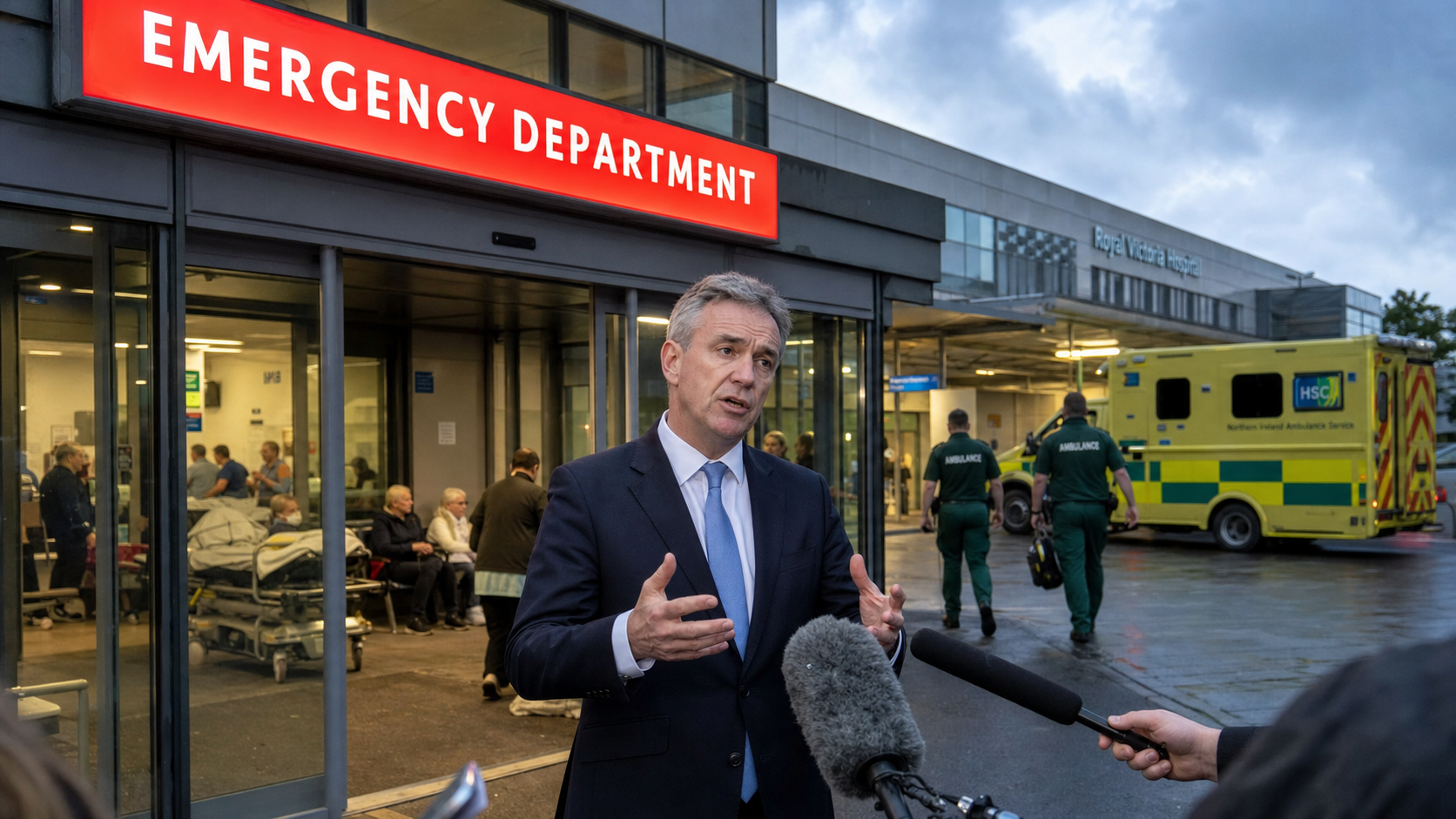
Northern Ireland Health Minister Mike Nesbitt has issued a stark warning that the health service is heading toward a 'very bad place', as new statistics confirm that one in six patients attending emergency departments across the region is waiting more than 12 hours — a figure that the Royal College of Emergency Medicine has characterised as evidence of a 'perma-crisis' in urgent care.
Background
Northern Ireland's emergency departments have been operating under extreme pressure for several years, with waiting times that are consistently among the worst in the United Kingdom and that have shown little sustained improvement despite repeated ministerial commitments and targeted funding interventions. The structural causes of the crisis are well-documented: an ageing population with complex health needs, a shortage of consultant and nursing staff, inadequate capacity in community and social care services to support timely discharge from hospital, and a primary care system under pressure that results in patients attending emergency departments for conditions that could be managed elsewhere.
The Department of Health published its emergency care waiting time statistics for the period April to June 2026 on 12 August, providing the most recent snapshot of performance across the five health and social care trusts. The statistics confirmed that no emergency department in Northern Ireland achieved either the four-hour target — under which 95% of patients should be seen, treated, and either admitted or discharged within four hours — or the 12-hour target, which requires that no patient should wait more than 12 hours from arrival to admission or discharge. The failure to meet these targets is not new, but the scale of the underperformance has worsened in recent years.
Minister Nesbitt, who has been in post since the restoration of the Stormont Executive in February 2024, has been candid about the scale of the challenge facing the health service and has consistently warned that there are "no quick fixes" to a crisis that has developed over decades of underfunding and structural neglect. His warning that the system is heading toward a "very bad place" is the most stark public statement he has made about the trajectory of the health service, and it reflects a genuine concern that the situation is deteriorating rather than improving.
Key Developments
The April to June 2026 statistics show that one in six patients attending emergency departments across Northern Ireland is waiting more than 12 hours from arrival to admission or discharge — a figure that represents a significant deterioration from the already poor performance recorded in previous quarters. Some patients are waiting more than 20 hours, a situation that the Royal College of Emergency Medicine has described as dangerous and that it attributes to the combination of high demand, inadequate staffing, and insufficient capacity in the wider health system to absorb patients who are ready for discharge from emergency departments.
Nesbitt has implemented several operational interventions to manage the pressure on emergency departments, including a directive that ambulances should not wait more than two hours outside emergency departments — a measure designed to ensure that ambulance crews are available to respond to new emergencies rather than being tied up waiting to hand over patients. He has also secured £80 million in ringfenced funding to reduce the most critical waiting lists over the 2026-27 financial year, building on previous allocations. However, the minister has acknowledged that these measures are insufficient to address the underlying structural problems and that sustainable improvement will require a whole-system approach and long-term investment.
The Royal College of Emergency Medicine has been particularly vocal in its criticism of the situation, with its Northern Ireland representative describing the emergency departments as operating in a "perma-crisis" in which staff are forced to prioritise between very sick patients due to the environment. The college has called for a fundamental review of emergency care capacity in Northern Ireland and for a commitment to multi-year funding that would allow the health service to plan and invest for the long term.
Why It Matters
The state of Northern Ireland's emergency departments is not merely a health service management issue — it is a matter of patient safety and of the fundamental right of citizens to access timely medical care when they need it. Patients who wait more than 12 hours in an emergency department are at significantly higher risk of adverse outcomes, including deterioration of their condition, hospital-acquired infections, and in the most serious cases, preventable death. The fact that one in six patients is experiencing waits of this length is a public health emergency that demands urgent action, not merely incremental improvement. The minister's warning that the system is heading toward a "very bad place" should be understood as a call for the kind of political and financial commitment that has so far been absent from the response to the crisis.
Local Impact
The impact of the emergency department crisis is felt most acutely by patients and their families across Northern Ireland. In Belfast, the Royal Victoria Hospital and the Ulster Hospital in Dundonald are among the busiest emergency departments in the region, and both have been consistently among the worst performers against the waiting time targets. In Derry, Altnagelvin Hospital serves a large catchment area that includes parts of County Donegal, and its emergency department has been under particular pressure. In rural areas of Fermanagh, Tyrone, and Down, patients face long travel times to reach emergency departments, adding to the stress of what are already difficult situations. The Southern Health and Social Care Trust, which covers Armagh, Down, and Newry, has been particularly affected by waiting list pressures across all specialties, and its emergency departments reflect the wider pressures on the trust's services.
What's Next
The Department of Health is expected to publish a response to the April to June statistics in the coming weeks, setting out the steps being taken to address the most acute pressures. The autumn spending review will be a critical moment for the health service, with Nesbitt seeking additional funding to support the transformation of emergency care and the reduction of waiting lists. The minister has indicated that he believes it will take approximately five years to reduce waiting lists to appropriate levels, a timeline that reflects the scale of the challenge but that will provide little comfort to the patients currently waiting for care. The Stormont Health Committee is expected to hold a hearing on the emergency department statistics in September.