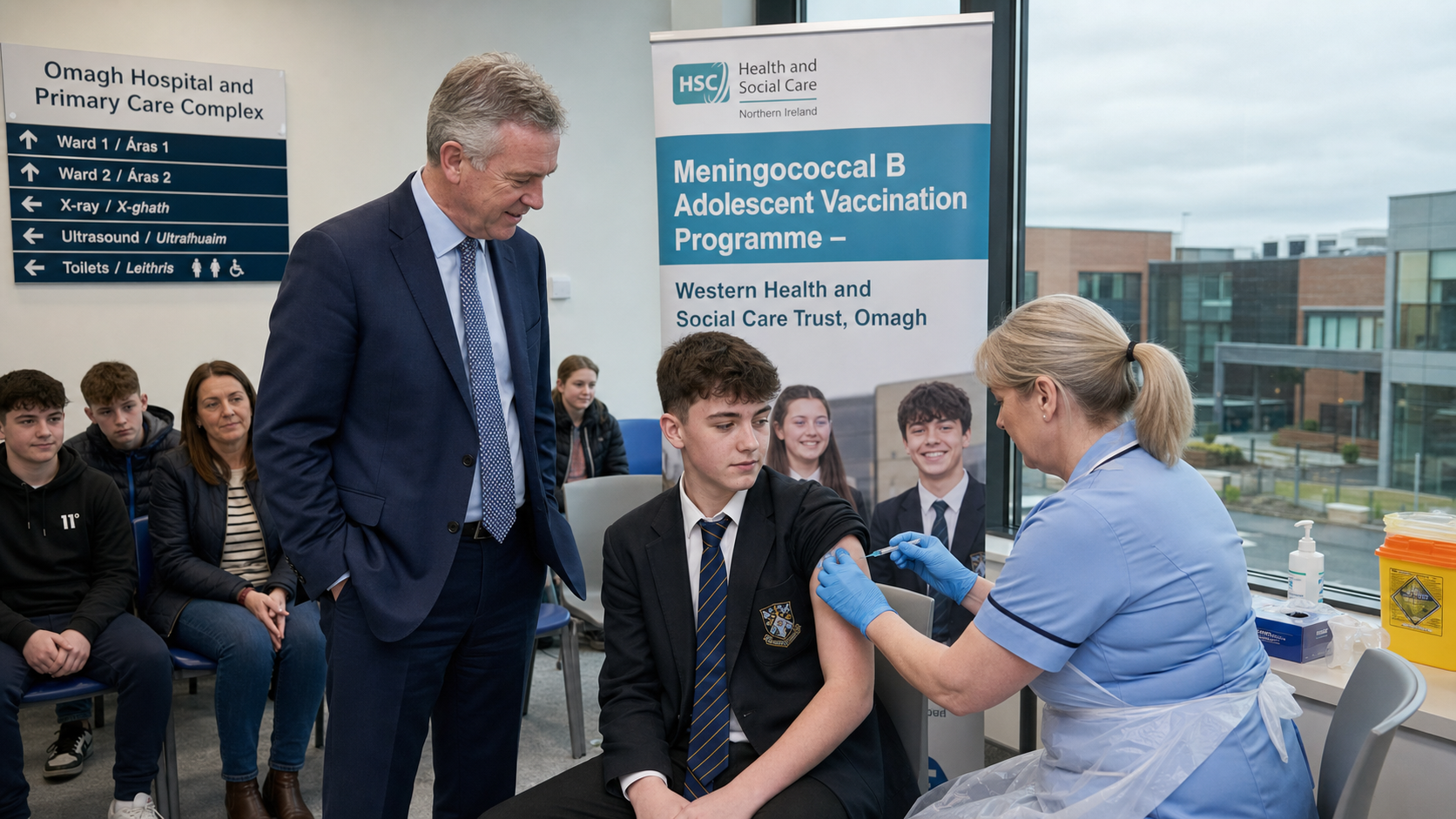
NI Health Minister Launches MenB Adolescent Vaccination Programme During Omagh Hospital Visit
Northern Ireland Health Minister Mike Nesbitt has announced a new one-off Meningococcal B vaccination programme targeting adolescents during a visit to Omagh Hospital and Primary Care Complex on Friday 12 June, providing a significant public health intervention for a region that has historically experienced higher rates of meningococcal disease than other parts of the United Kingdom.
Background
Meningococcal B disease — caused by the Neisseria meningitidis serogroup B bacterium — is one of the most feared infectious diseases in the United Kingdom and Ireland. It can progress from initial symptoms to life-threatening illness within hours, and even when treated promptly, it can leave survivors with permanent disabilities including limb loss, hearing impairment, and brain damage. Northern Ireland has historically had a higher incidence of meningococcal disease than England, Wales, or Scotland, a fact that has driven sustained advocacy from patient groups and medical professionals for enhanced vaccination programmes.
The MenB vaccine was introduced into the routine childhood immunisation schedule in Northern Ireland in September 2015, meaning that children born from that date onwards have been protected. However, a significant cohort of older children and teenagers — those born before September 2015 — did not receive the vaccine as infants and have therefore remained unprotected against the MenB strain. This gap in coverage has been a source of concern for public health officials and for the families of young people who contracted the disease after the vaccine became available.
The Omagh Hospital and Primary Care Complex, which serves a large rural catchment area in County Tyrone and the surrounding region, is one of the flagship facilities in the Western Health and Social Care Trust. Minister Nesbitt's choice of Omagh for the announcement reflects both the hospital's significance to the western region and the particular vulnerability of rural communities, where access to healthcare can be more limited than in urban areas.
Key Developments
The new programme announced by Minister Nesbitt will offer a one-off MenB vaccination to adolescents who were not covered by the 2015 introduction of the vaccine into the routine schedule. The specific age cohort to be targeted and the timeline for delivery will be confirmed by the Public Health Agency in the coming weeks, but the announcement represents a significant commitment of public health resources at a time when the Department of Health is under severe budget pressure.
Minister Nesbitt described the programme as a priority for his department, noting that meningococcal disease can strike without warning and that the consequences for affected families are devastating. He acknowledged the advocacy of patient groups, including Meningitis Now and the Meningitis Research Foundation, in pressing for the extension of MenB vaccination to older age groups.
The visit to Omagh also provided an opportunity for the Minister to meet with staff and patients at the hospital, which has faced significant pressures in recent years including staffing shortages and waiting list backlogs. The Western Trust, which operates Omagh Hospital, has been among the most vocal in warning about the impact of budget constraints on service delivery.
Why It Matters
The MenB vaccination announcement is significant for several reasons. First, it represents a concrete public health gain at a time when much of the news from the Department of Health has been dominated by budget disputes and service cuts. The five Health and Social Care Trust chairs issued a stark warning earlier this week that the draft Stormont budget would have "catastrophic impacts" on health services — the MenB programme provides a counterpoint, demonstrating that targeted investment in prevention is still possible even in a constrained fiscal environment.
Second, the programme addresses a genuine and documented gap in Northern Ireland's vaccination coverage. Unlike some public health interventions that are primarily precautionary, the MenB catch-up programme responds to a specific epidemiological reality: a cohort of teenagers who are more vulnerable to a serious disease than their younger siblings. The evidence base for the intervention is strong, and the cost-effectiveness of vaccination against meningococcal disease is well established.
Third, the choice of Omagh as the announcement venue sends a signal about the Department of Health's commitment to rural communities. The Western Trust area — which covers Tyrone, Fermanagh, and parts of Derry — has historically felt that health investment is concentrated in Belfast and the east of the province. The Omagh visit is a small but meaningful gesture in the direction of geographic equity.
Local Impact
In Omagh and the wider Tyrone area, the announcement has been welcomed by local GPs, public health nurses, and community groups. The Western Trust's catchment area includes a significant number of young people in the target age group, and local health professionals have indicated that they are well placed to deliver the programme through existing GP practices and community pharmacies. The Omagh Hospital itself will play a role in coordinating the programme for the western region, working alongside the Public Health Agency's local office.
For families in the region who have been affected by meningococcal disease, the announcement carries particular emotional weight. Several families in Tyrone and Fermanagh have campaigned publicly for extended MenB vaccination following the deaths or serious illness of young people in their communities, and the Minister's announcement represents a vindication of their advocacy.
What's Next
The Public Health Agency will publish detailed guidance on the MenB catch-up programme within the next few weeks, including the specific age cohort to be targeted, the vaccination schedule, and the delivery mechanism. GP practices and community pharmacies across Northern Ireland will be notified in advance of the programme's launch. The Department of Health has indicated that it will monitor uptake closely and will consider extending the programme if initial results are positive. A formal evaluation of the programme's impact on meningococcal disease incidence is planned for 2027.