NI Fertility Patients Describe Heartbreak of Attending Appointments in Maternity Units
Women undergoing fertility treatment in Northern Ireland have spoken of the profound emotional distress caused by being required to attend appointments in maternity units, where they are surrounded by pregnant women and newborns at some of the most vulnerable moments of their lives — a situation that campaigners say reflects the chronic underfunding of fertility services within the NHS NI system.
Background
Fertility treatment in Northern Ireland is provided through the NHS, but the service has long been characterised by long waiting times, limited access to IVF cycles, and inadequate facilities. Unlike the Republic of Ireland, where the government introduced a publicly funded IVF scheme in 2023, Northern Ireland has been slower to expand access to fertility treatment, leaving many couples facing waits of several years for NHS-funded cycles or the prospect of paying for private treatment at a cost of several thousand pounds per cycle.
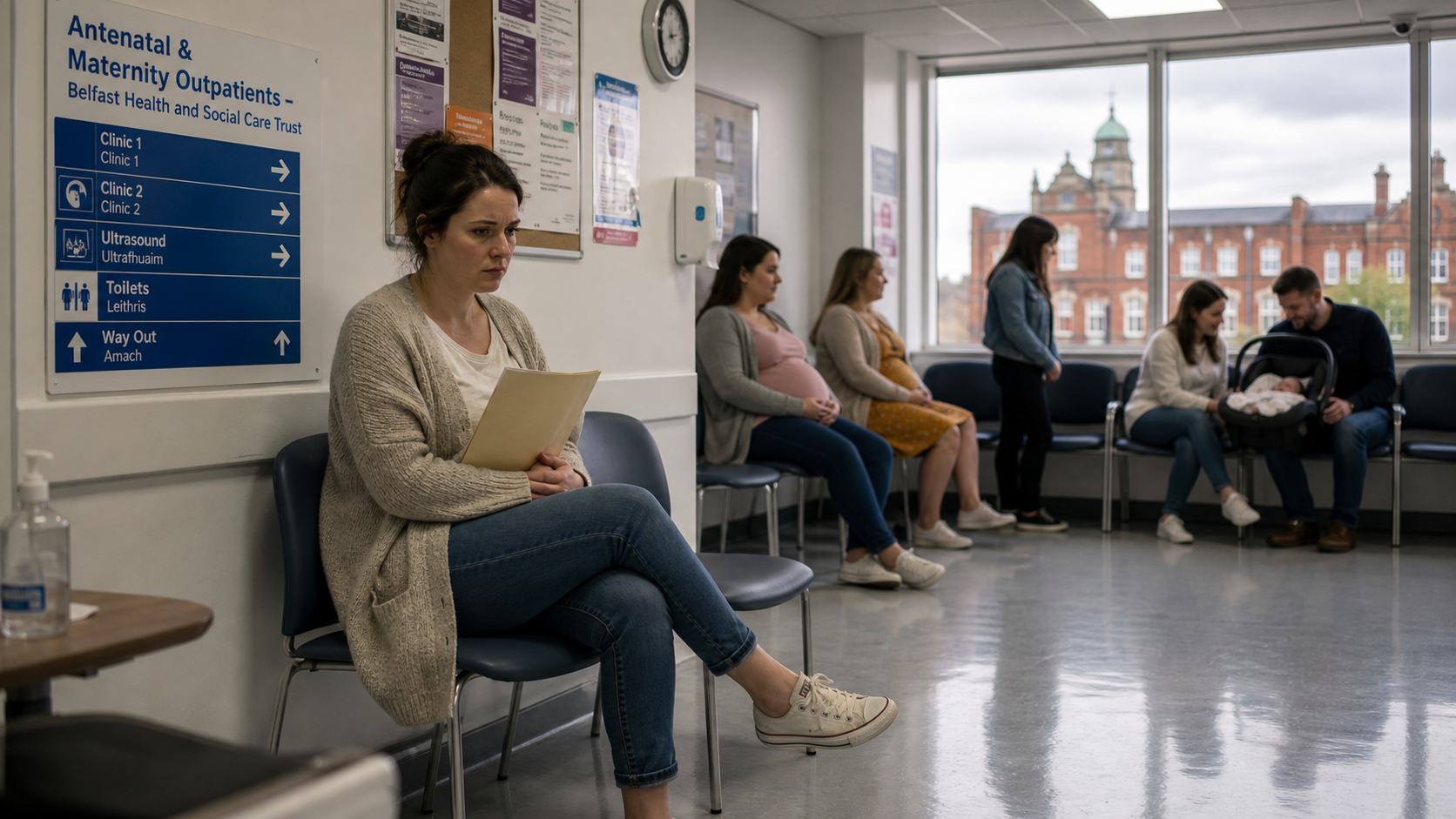
The issue of where fertility appointments are held has emerged as a particular source of distress for patients. In several Northern Ireland hospitals, fertility clinics are co-located with maternity units, meaning that women attending for fertility consultations, egg collection procedures, or embryo transfers must pass through areas where pregnant women and new mothers are present. For women who have experienced miscarriage, failed IVF cycles, or prolonged infertility, this proximity can be deeply painful.
The problem is not unique to Northern Ireland — similar issues have been reported in hospitals across the UK — but the limited investment in dedicated fertility facilities within the NHS NI system means that the situation is particularly acute here. The five health and social care trusts have varying arrangements for fertility services, with some providing better-separated facilities than others.
Key Developments
A BBC NI report published on 30 July gave voice to several women who have experienced the distress of attending fertility appointments in maternity settings. One woman described it as "heartbreaking to attend a fertility appointment in a maternity unit," saying that the experience of sitting in a waiting room surrounded by pregnant women while facing the uncertainty of her own fertility journey was "almost unbearable." Another described having to walk past a ward of newborns to reach her consultation room, an experience she said left her in tears.
Campaigners from the Fertility Network UK's Northern Ireland branch have called on the Department of Health to commission a review of fertility service provision across the five trusts, with a view to establishing dedicated fertility clinics that are physically separated from maternity services. They have also called for an increase in the number of NHS-funded IVF cycles available to eligible couples, noting that Northern Ireland's current provision — typically one funded cycle per couple — is below the standard recommended by the National Institute for Health and Care Excellence.
The Department of Health has acknowledged the concerns raised and indicated that it is reviewing the provision of fertility services as part of a broader women's health strategy. However, campaigners have expressed frustration at the pace of progress, noting that similar commitments have been made in previous years without resulting in meaningful change.
Why It Matters
The experience of fertility patients in Northern Ireland reflects a broader pattern of inadequate investment in women's health services within the NHS NI system. Fertility treatment is not a luxury — for the couples who need it, it is a medical necessity that can determine whether they are able to have children at all. The emotional dimension of fertility treatment is well-documented, with research consistently showing that the psychological impact of infertility and failed treatment cycles is comparable to that of other serious medical conditions. Requiring patients to navigate these experiences in environments that are not designed for their specific needs adds an unnecessary layer of distress to an already difficult situation. The solution — dedicated fertility facilities, separated from maternity services — is not complex or prohibitively expensive, but it requires a commitment of resources and political will that has so far been lacking.
Local Impact
The impact of inadequate fertility services is felt across Northern Ireland, but it is particularly acute in areas where access to private treatment is limited by cost. In rural areas such as Fermanagh, Tyrone, and south Armagh, couples who cannot afford private treatment face the prospect of waiting years for NHS-funded cycles, during which time their chances of successful treatment may diminish. The Belfast Health and Social Care Trust, which provides the largest volume of fertility services in Northern Ireland, has acknowledged the co-location issue and indicated that it is exploring options for improving the patient experience, but no specific timeline for change has been provided.
What's Next
The Department of Health is expected to publish its women's health strategy in the autumn, which is expected to include a section on fertility services. Campaigners have called for the strategy to include specific commitments on dedicated fertility facilities and increased NHS-funded IVF cycles, with a clear timeline for implementation. The Stormont Health Committee is expected to hold hearings on fertility services in September, providing an opportunity for patients and campaigners to present their experiences directly to elected representatives.