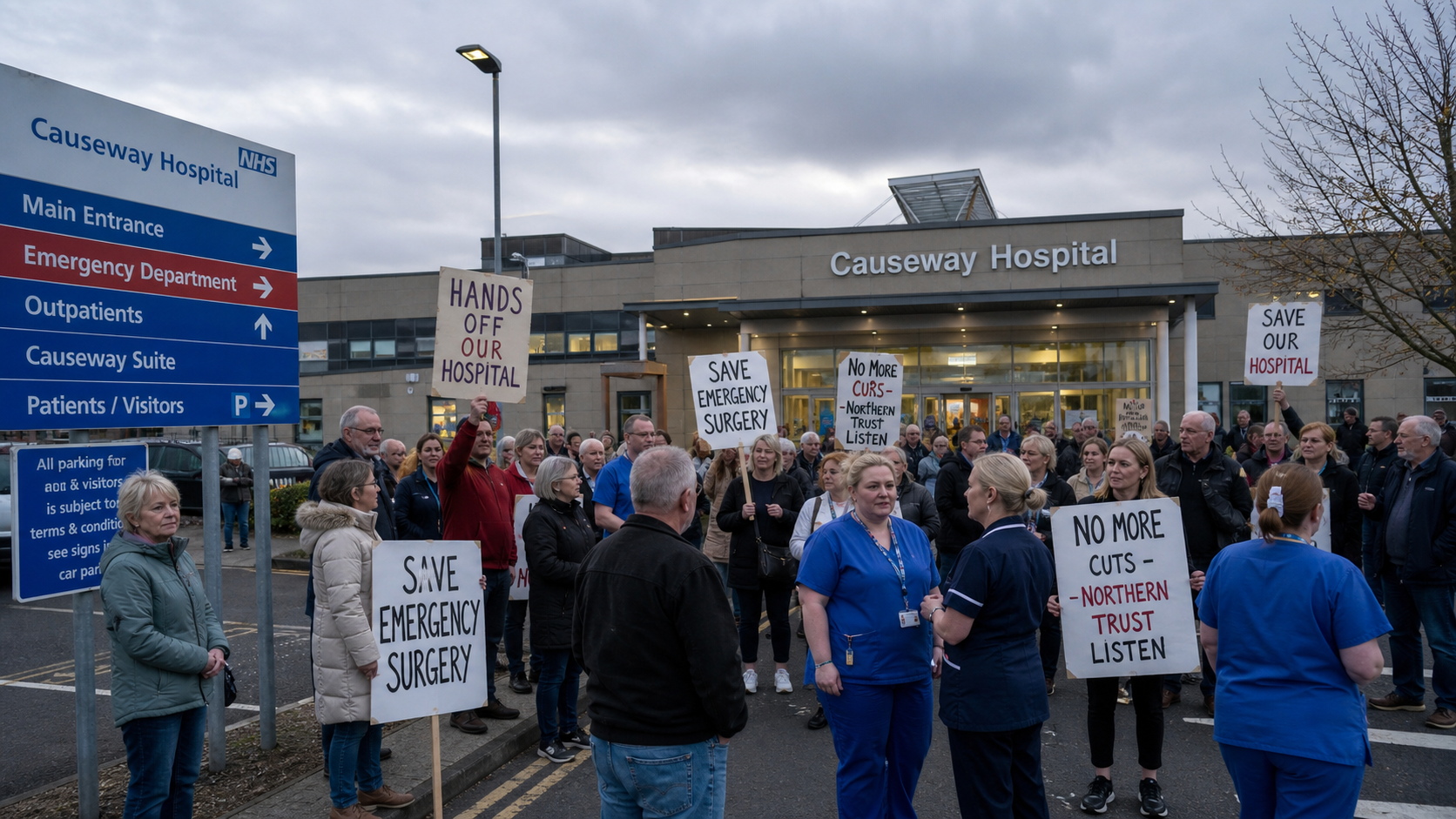
Causeway Hospital Campaigners Warn of 'Domino Effect' as Emergency Surgery Battle Intensifies
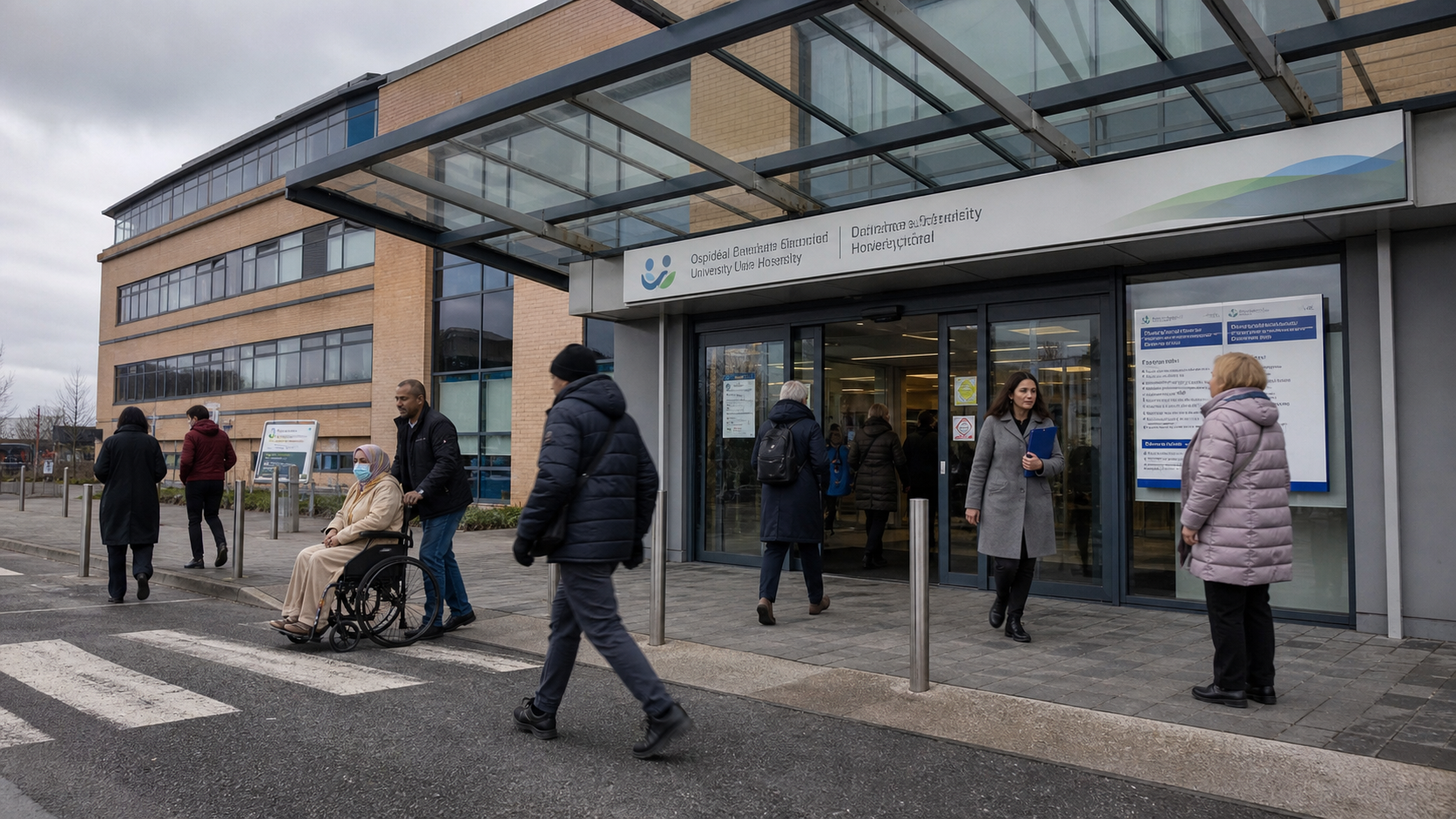
Campaigners fighting to preserve emergency general surgery at Causeway Hospital in Coleraine have issued a stark warning that the removal of the service will trigger a dangerous domino effect that leaves the hospital's remaining acute services vulnerable to further cuts, as a packed public meeting at Coleraine Town Hall heard impassioned testimony from retired clinicians, union officials, and community representatives about the consequences of the Northern Trust's centralisation plans.
Background
The campaign to save emergency general surgery at Causeway Hospital has been building for several months, driven by community concern that the Northern Health and Social Care Trust is pursuing a policy of gradual service centralisation that will ultimately leave the hospital without the acute capabilities needed to serve the north coast population. The removal of consultant-led maternity services to Antrim Area Hospital was the first step in what campaigners fear is a planned process of hollowing out Causeway's acute function.
Emergency general surgery — covering conditions such as appendicitis, bowel obstructions, and perforated ulcers — is one of the most time-sensitive services in any acute hospital. The Northern Trust has proposed redirecting emergency surgery patients to Antrim Area Hospital, a journey of approximately thirty-eight miles from Coleraine. For patients in the more rural parts of the catchment area, the journey could be significantly longer, and the time implications for conditions that require rapid surgical intervention are a source of serious clinical concern.
The campaign has drawn support from an unusually broad coalition, including UNISON, Farmers For Action, retired medical professionals, and political representatives from across the community divide. That breadth of support reflects the depth of feeling in a community that has watched its hospital services diminish over successive years and that is determined to resist further erosion.
Key Developments
Retired nurse Madeline Killen, who worked at Causeway Hospital for many years, was among the most powerful voices at Thursday's public meeting. She argued that the "temporary" suspension of emergency surgery — the model used at the South West Acute Hospital in Enniskillen, where emergency surgery has been suspended since December 2022 — creates a domino effect that leaves other acute services vulnerable. Once a service is removed, she argued, the staffing and infrastructure that supported it are dispersed, making restoration increasingly difficult and providing a rationale for further cuts.
The parallel situation at the South West Acute Hospital in Enniskillen, where the Save Our Acute Services group has launched a legal challenge over the suspension of emergency surgery, was cited repeatedly at the Coleraine meeting as a warning of what could happen at Causeway. SOAS has argued that comments by senior Western Trust executives suggest the suspension has effectively become permanent, despite public assurances to the contrary.
Health Minister Mike Nesbitt has stated that no permanent removal of emergency surgery can proceed without his explicit approval, but campaigners argue that the practical effect of prolonged suspension is indistinguishable from permanent closure.
Why It Matters
The health of Northern Ireland's acute hospital network is a matter of profound public concern. The region has some of the longest waiting lists in the United Kingdom, and the centralisation of services — while it may improve clinical outcomes in some respects — also creates access barriers for patients in rural and peripheral areas who cannot easily travel to larger centres. The NHS in Northern Ireland is under severe financial pressure, and the temptation to use service centralisation as a cost-saving measure — rather than purely as a clinical improvement — is real. Campaigners at Causeway and Enniskillen are right to scrutinise the Trust's stated rationale for its proposals and to demand transparency about the financial as well as clinical drivers of the decisions being made.
Local Impact
For the communities served by Causeway Hospital — stretching from Coleraine and Portrush along the north coast to Ballymoney and Ballymena — the prospect of losing emergency surgery is not an abstraction. It is a concrete risk that falls most heavily on older residents, those without access to private transport, and those living in the more rural parts of the catchment area. Local GPs have raised concerns about the knock-on effects on their own capacity to manage acute presentations in the community, and the North West 200 Race Director has warned that the degradation of local medical services could threaten the future of the event, which is of significant economic importance to the region.
What's Next
The Northern Trust is expected to publish a formal consultation document on the future of emergency surgery at Causeway in the coming months. UNISON has invited Health Minister Mike Nesbitt to attend a future public meeting in Coleraine. The campaign group has indicated it will engage fully with the consultation process while maintaining pressure through direct action. The parallel legal challenge at the South West Acute Hospital is expected to be heard in the High Court in Belfast in the autumn.