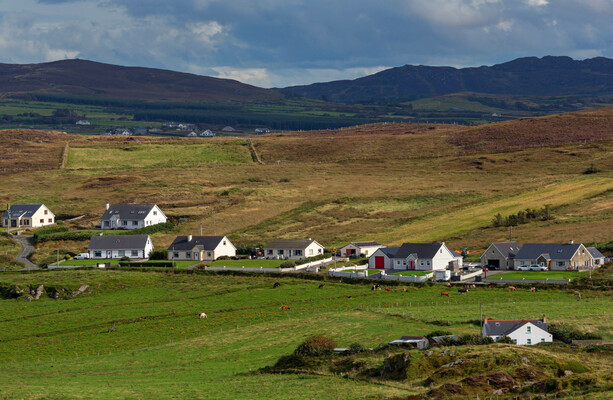
New Rural Housing Guidelines to End 'Eircode Lottery' as Government Seeks Consistency Across Planning Authorities
The Irish government has published draft planning guidelines for rural and Gaeltacht housing that promise to end the 'Eircode lottery' — the frustrating inconsistency in planning decisions that has seen identical applications approved in one county and refused in the next — by establishing a uniform national policy that prioritises applicants with genuine economic or social ties to rural communities.
Background
Rural housing policy has been one of the most contentious areas of Irish planning law for decades. The right to build a home in the countryside — particularly for people with family connections to a rural area — is deeply embedded in Irish cultural identity and has been fiercely defended by rural communities, farming organisations, and rural politicians. At the same time, planning authorities, environmental groups, and urban planners have consistently argued that uncontrolled one-off rural housing is environmentally unsustainable, contributes to car dependency, and undermines the viability of rural towns and villages.
The result has been a patchwork of local authority development plans that vary enormously in their approach to rural housing applications. What is permitted in County Mayo may be refused in County Wicklow; what is acceptable in rural Donegal may be rejected in the commuter belt of County Kildare. This inconsistency — the 'Eircode lottery' — has been a source of enormous frustration for applicants, their families, and their legal advisers, who have struggled to predict outcomes in a system that appears to operate without coherent national principles.
The government's decision to publish new national guidelines represents an attempt to impose order on this chaotic landscape. The guidelines, developed by the Department of Housing, Local Government and Heritage, draw on extensive consultation with local authorities, planning professionals, rural organisations, and environmental groups, and are intended to provide a clear and consistent framework that all planning authorities must apply.
Key Developments
The draft guidelines, published on 6 July, establish a clear hierarchy of applicants for rural housing permission. At the top of the hierarchy are farmers and their immediate family members, who are recognised as having an inherent connection to the land and a legitimate need to live in rural areas. Next are essential local workers — teachers, healthcare professionals, emergency services personnel — whose presence in rural communities is deemed necessary for the functioning of local services. The guidelines also make specific provision for Gaeltacht areas, recognising the importance of maintaining Irish-speaking communities in their traditional heartlands.
Housing Minister James Browne described the policy as a step towards fairness: 'This is about ensuring fairness and consistency in our planning system, allowing people with genuine local ties to build homes in their communities.' The minister emphasised that the guidelines are not intended to restrict rural housing but to ensure that permissions are granted on the basis of genuine need rather than the accident of which local authority area an applicant happens to fall within.
The most controversial element of the guidelines is the exclusion of remote workers from the specific rural need criterion. The rise of remote working since 2020 has led to significant demand for rural housing from urban professionals who wish to relocate to the countryside, and many rural communities have welcomed this trend as a source of economic revitalisation. The guidelines' decision not to recognise remote working as a sufficient basis for rural housing permission has been criticised by rural advocacy groups, who argue that it fails to reflect the changed nature of work in post-pandemic Ireland.
Why It Matters
The rural housing debate sits at the intersection of some of the most fundamental tensions in Irish society: between urban and rural interests, between environmental sustainability and cultural tradition, between national planning principles and local democratic decision-making. The government's attempt to impose national consistency on rural planning decisions is a significant intervention that will affect thousands of planning applications each year. For context, approximately 6,000 one-off rural housing applications are submitted to Irish planning authorities annually, of which roughly 70% are approved. The new guidelines are expected to increase consistency in decision-making but may also result in a higher refusal rate in areas where local authorities have historically been permissive. Environmental groups have welcomed the guidelines' emphasis on genuine local need but have called for stronger protections for sensitive landscapes and water catchment areas.
Local Impact
The practical impact of the new guidelines will be felt most acutely in the counties where rural housing demand is highest. In Galway, where the Gaeltacht areas of Connemara and south Galway have seen significant pressure from both local applicants and urban migrants, the guidelines' specific provisions for Irish-speaking communities will be closely scrutinised. In Wicklow and Kildare, where the commuter belt meets the rural hinterland, the exclusion of remote workers from the rural need criterion is likely to result in a significant increase in refusals for applicants who cannot demonstrate a genuine local connection. In Donegal, where rural housing has traditionally been viewed as a right rather than a privilege, local councillors have expressed concern that the new guidelines will be applied too rigidly by An Bord Pleanála on appeal. Bus Éireann's rural transport programme and the National Transport Authority's Local Link services will be relevant considerations in assessing the sustainability of rural housing locations under the new guidelines.
What's Next
The draft guidelines are open for public consultation until 31 August 2026, with submissions invited from planning authorities, professional bodies, community organisations, and members of the public. The Department of Housing will review all submissions before finalising the guidelines, which are expected to come into effect in early 2027. An Bord Pleanála has indicated that it will update its internal guidance to reflect the new national policy once it is finalised. The Oireachtas Committee on Housing will hold hearings on the draft guidelines in September, with planning professionals, rural advocacy groups, and environmental organisations expected to give evidence.