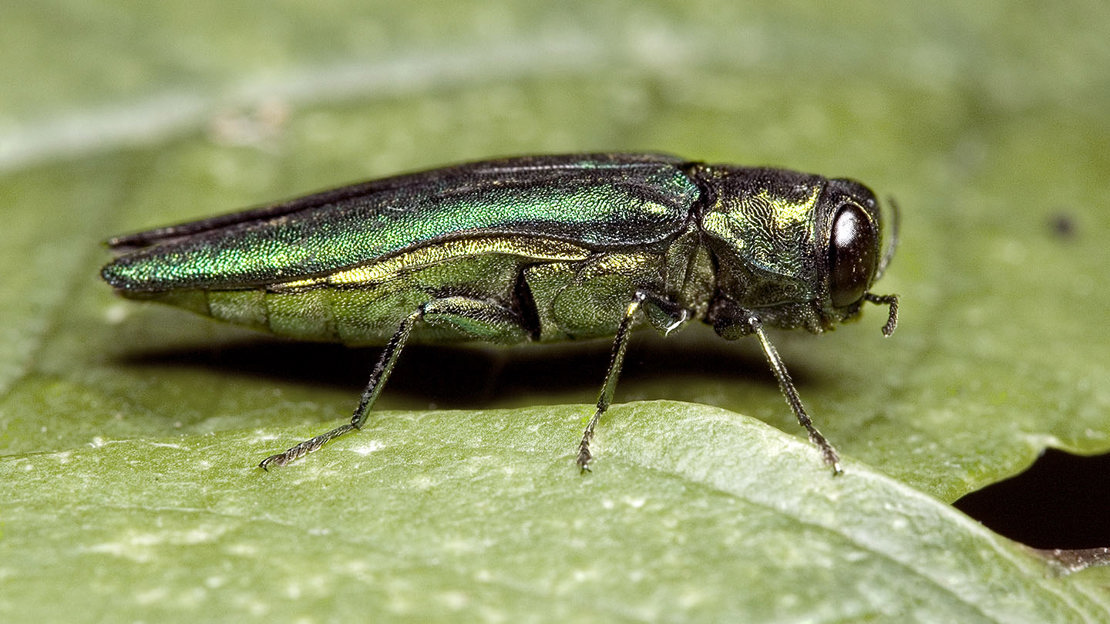
New Project Targets Invasive Pest Threatening Northern Ireland's Native Ash Trees
A new scientific project has been launched to address the growing threat posed by the emerald ash borer — an invasive beetle that has devastated ash tree populations across North America and parts of continental Europe — to Northern Ireland's native woodland. The initiative, which brings together researchers from Queen's University Belfast, the Agri-Food and Biosciences Institute, and forestry practitioners, aims to develop early detection tools and management strategies before the pest can establish itself in the region.
Background
Northern Ireland's ash trees are already under severe pressure. Ash dieback, caused by the fungal pathogen Hymenoscyphus fraxineus, has been spreading through the region's woodlands since it was first confirmed in Northern Ireland in 2012. The disease, which causes progressive die-back of branches and ultimately kills affected trees, has already destroyed a significant proportion of the ash population in parts of the region, and forestry experts estimate that the majority of Northern Ireland's ash trees will eventually succumb to the disease without intervention.
Against this backdrop, the potential arrival of the emerald ash borer — Agrilus planipennis — represents what scientists describe as a "dual threat" to a species that is already fighting for survival. The beetle, which is native to Asia, was accidentally introduced to North America in the 1990s and has since killed hundreds of millions of ash trees across the continent. It arrived in continental Europe in 2003 and has been spreading westward, prompting urgent concern among forestry authorities in the United Kingdom and Ireland.
The emerald ash borer attacks ash trees by laying its eggs beneath the bark; the larvae then feed on the tissue that carries water and nutrients through the tree, effectively strangling it from within. Infested trees typically die within three to five years of first infection, and the pest spreads rapidly through both natural movement and the transport of infected timber. There is currently no established population of the beetle in the United Kingdom or Ireland, but forestry authorities regard its arrival as a matter of when rather than if.
Key Developments
The new project, which has received funding from the Department of Agriculture, Environment and Rural Affairs (DAERA), will focus on three main areas: developing rapid detection methods that can identify the presence of the beetle before it becomes established; assessing the vulnerability of Northern Ireland's ash population to the pest; and identifying management strategies that could slow its spread if it does arrive.
Researchers at Queen's University Belfast are developing pheromone-based trapping systems that can detect the presence of the beetle at very low population densities — a critical capability given that the pest is extremely difficult to spot visually in its early stages. The Agri-Food and Biosciences Institute is conducting surveys of Northern Ireland's ash population to identify trees that may have natural resistance to the beetle, with a view to using these as the basis for a breeding programme.
Dr Sarah Mitchell, who is leading the Queen's University element of the project, described the dual threat facing Northern Ireland's ash trees as "one of the most serious challenges facing our native woodland in living memory." She added: "We are in a race against time. If we can develop the detection and management tools now, before the beetle arrives, we have a much better chance of limiting the damage it causes."
Why It Matters
Ash trees are among the most ecologically important species in Northern Ireland's native woodland. They support a wide range of insects, birds, and other wildlife, and they play a significant role in the landscape of the region's countryside, hedgerows, and urban green spaces. Their loss — first to ash dieback and potentially now to the emerald ash borer — would represent a profound and lasting change to the natural environment.
The economic implications are also significant. Ash timber is highly valued for its strength and flexibility, and it is used in everything from furniture and flooring to hurley sticks — a fact that has given the ash dieback crisis a particular resonance in GAA communities across Ireland. The loss of mature ash trees also has implications for carbon sequestration, flood management, and the amenity value of Northern Ireland's countryside and urban green spaces.
The project also has implications for the Republic of Ireland, where ash trees face the same dual threat. Researchers on both sides of the border are sharing data and coordinating their approaches, recognising that an all-island strategy is essential given that pests and diseases do not respect political boundaries.
Local Impact
In practical terms, the project will involve surveys of ash trees across Northern Ireland, with particular attention to areas where the risk of the beetle's introduction is highest — ports, timber yards, and areas with high volumes of imported wood products. Landowners and forestry managers will be provided with guidance on what to look for and how to report suspected sightings. DAERA has also issued updated biosecurity guidance for anyone moving ash timber or ash products, emphasising the importance of sourcing material from verified, pest-free sources.
In the Fermanagh lakelands, the Mourne Mountains, and the Antrim plateau — areas where ash woodland is particularly significant — local conservation groups have been briefed on the project and are being asked to assist with monitoring. The Ulster Wildlife Trust has welcomed the initiative and called for it to be accompanied by a broader programme of native woodland restoration to build resilience into the landscape.
What's Next
The project is expected to run for three years, with an interim report due in spring 2027. Researchers will present their initial findings at a forestry conference in Belfast in October 2026. DAERA is also in discussions with the UK Plant Health Service about the possibility of establishing a dedicated surveillance programme for the emerald ash borer at Northern Ireland's ports and timber import facilities. The project team is seeking additional funding to extend the scope of the work to include collaboration with counterparts in the Republic of Ireland and in Scotland, where the threat is similarly acute.