New NI Secretary of State Chris Bryant Arrives in Belfast Pledging Open Door and Economic Focus
Sir Chris Bryant, the newly appointed Secretary of State for Northern Ireland, has arrived in Belfast for his first formal engagements in the role, pledging an open door to all political parties and communities and identifying economic growth, political stability, and the effective delivery of devolved government as his primary priorities for the months ahead.
Background
Sir Chris Bryant's appointment as Secretary of State for Northern Ireland on 20 July 2026 was part of the cabinet reshuffle that followed Andy Burnham's assumption of the Labour leadership and the premiership. Bryant, the Member of Parliament for Rhondda and Ogmore, succeeded Hilary Benn, who had held the position since 2024 and had developed a detailed understanding of the complexities of Northern Ireland politics during his tenure. Bryant brings a different background to the role — he is a former Anglican priest, a published author on British political history, and an experienced parliamentarian first elected in 2001, but he has not previously held a brief with direct responsibility for Northern Ireland affairs.
The Secretary of State for Northern Ireland occupies a unique position in the British constitutional landscape, serving simultaneously as a member of the UK cabinet and as the primary interlocutor between the Westminster government and the devolved institutions at Stormont. The role requires a delicate balance between respecting the autonomy of the Northern Ireland Executive and Assembly and maintaining the UK government's responsibilities under the Good Friday Agreement and subsequent legislation. Bryant has described the appointment as a "heavy responsibility" and has indicated that he has been studying the brief intensively since his appointment.
The political context in which Bryant arrives is complex. The Stormont Executive, restored in February 2024 after a two-year collapse, has been operating under significant financial pressure, with the block grant from Westminster insufficient to meet the costs of public services at the level that the Executive's parties have committed to. The Windsor Framework, which governs Northern Ireland's trading relationship with both the UK and the EU, remains a source of tension within unionism, and the legacy of the Troubles continues to generate controversy through the ongoing implementation of the Legacy Act.
Key Developments
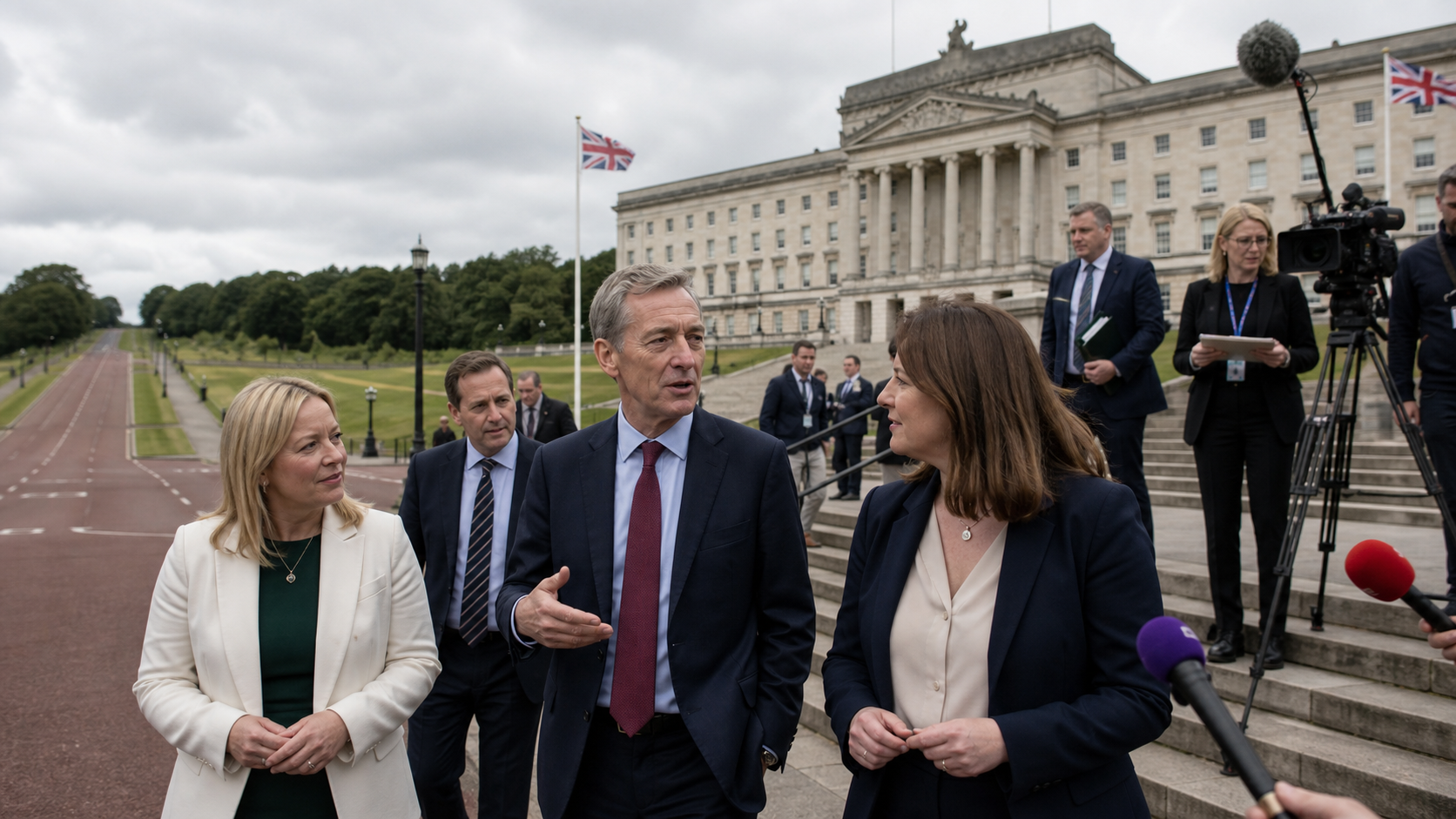
Bryant's initial engagements in Belfast have included meetings with First Minister Michelle O'Neill and Deputy First Minister Emma Little-Pengelly, as well as with the leaders of the other parties represented in the Executive. He has emphasised his commitment to an "open door" policy for all political parties and communities, a formulation designed to signal that he will not favour any particular tradition in his approach to the role. On the border poll question — whether the UK government should call a referendum on Irish unity — Bryant has stated clearly that this is not among his current priorities, a position consistent with that of his predecessor.
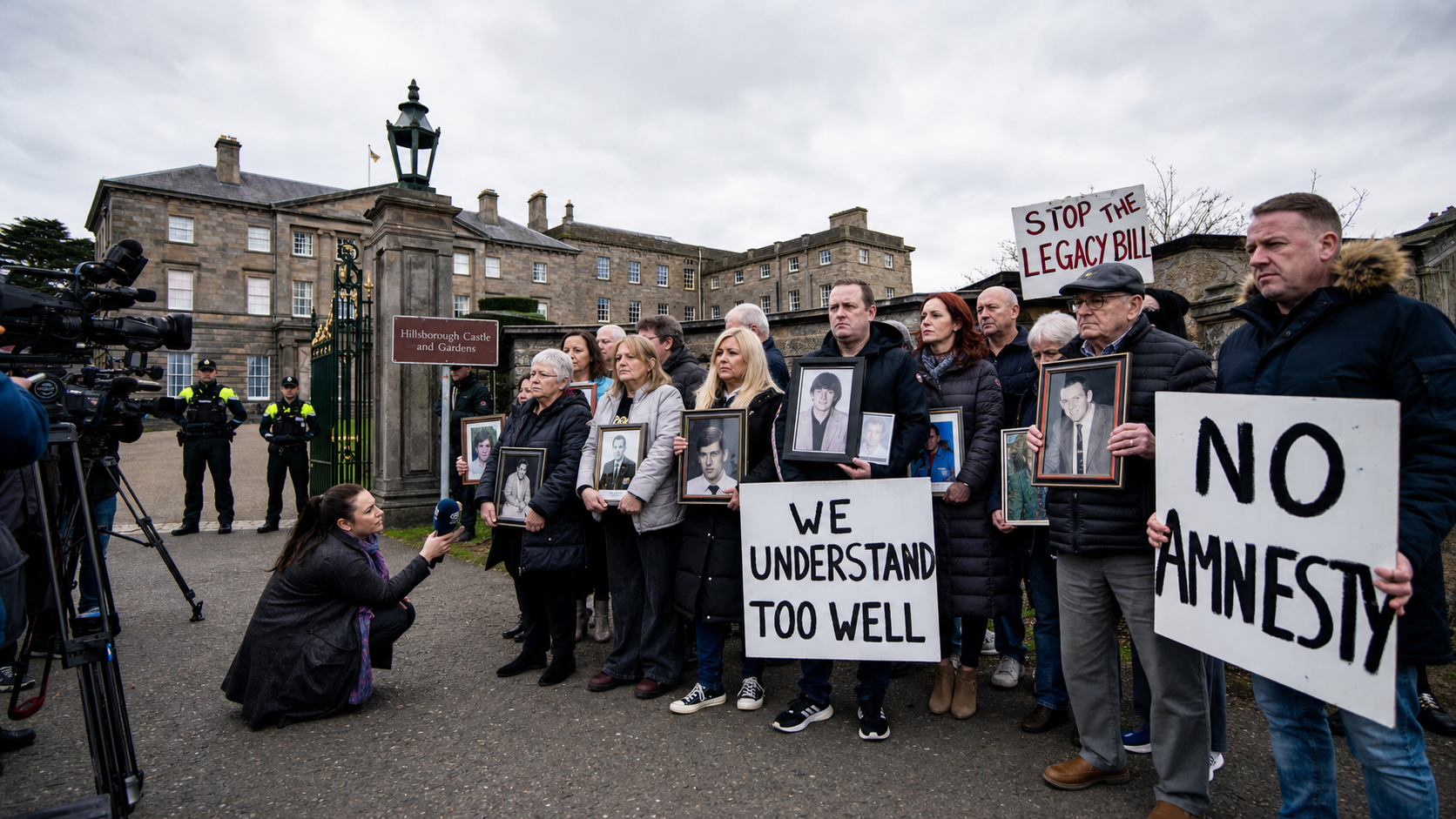
On legacy, Bryant has indicated an intention to take forward the UK's legacy legislation in a manner that "works for everybody," a formulation that acknowledges the widespread criticism of the Legacy Act from victims' groups, political parties, and the Irish government without committing to specific changes. The reaction from Northern Ireland's political parties has been mixed. Sinn Féin has urged a "change of approach" regarding the government's impact on families and legacy issues, while the DUP has noted Bryant's perceived favourable stance toward the European Union and expressed concerns about the implementation of specific tax and trade arrangements under the Windsor Framework.
Bryant has also been tasked with addressing the budget crisis at Stormont, where the Executive has been operating under severe financial constraints that have led to cuts in public services and disputes between the parties about spending priorities. The UK government's spending review, expected in the autumn, will be a critical moment for Northern Ireland's finances, and Bryant's ability to secure a favourable settlement for the region will be an early test of his effectiveness in the role.
Why It Matters
The appointment of a new Secretary of State is always a significant moment in Northern Ireland politics, bringing the possibility of fresh perspectives and new approaches to longstanding challenges. Bryant's background as a former priest and his reputation as a thoughtful and principled politician have generated cautious optimism in some quarters, though the structural challenges facing Northern Ireland — the budget crisis, the legacy controversy, the ongoing tensions over the Windsor Framework — are not amenable to resolution through goodwill alone. His relationship with the Irish government will also be important, given the centrality of the North-South dimension to the Good Friday Agreement and the ongoing work of the North-South Ministerial Council.
Local Impact
For communities across Northern Ireland, the arrival of a new Secretary of State is a reminder of the continuing importance of the Westminster dimension in the governance of the region. While the Stormont Executive has primary responsibility for most domestic policy areas, the UK government retains significant influence through the block grant, reserved matters such as security and immigration, and its role as a co-guarantor of the Good Friday Agreement. Bryant's approach to the budget negotiations, his handling of legacy issues, and his management of the Windsor Framework will all have direct consequences for the lives of people in Belfast, Derry, Newry, and communities across the six counties.
What's Next
Bryant is expected to make his first formal statement to the House of Commons on Northern Ireland affairs in September, following the return of Parliament from recess. The autumn spending review will be a critical early test of his ability to secure additional resources for Stormont. On legacy, the ongoing legal challenges to the Legacy Act — including cases before the European Court of Human Rights — will require careful management. Bryant has also indicated that he intends to visit communities across Northern Ireland in the coming months to develop a direct understanding of the issues facing people on the ground, beyond the formal political engagements that dominate a Secretary of State's diary.