"Our Story Is Irish Too": Multi-Heritage Emigrants Call for Recognition in Ireland's Diaspora Narrative
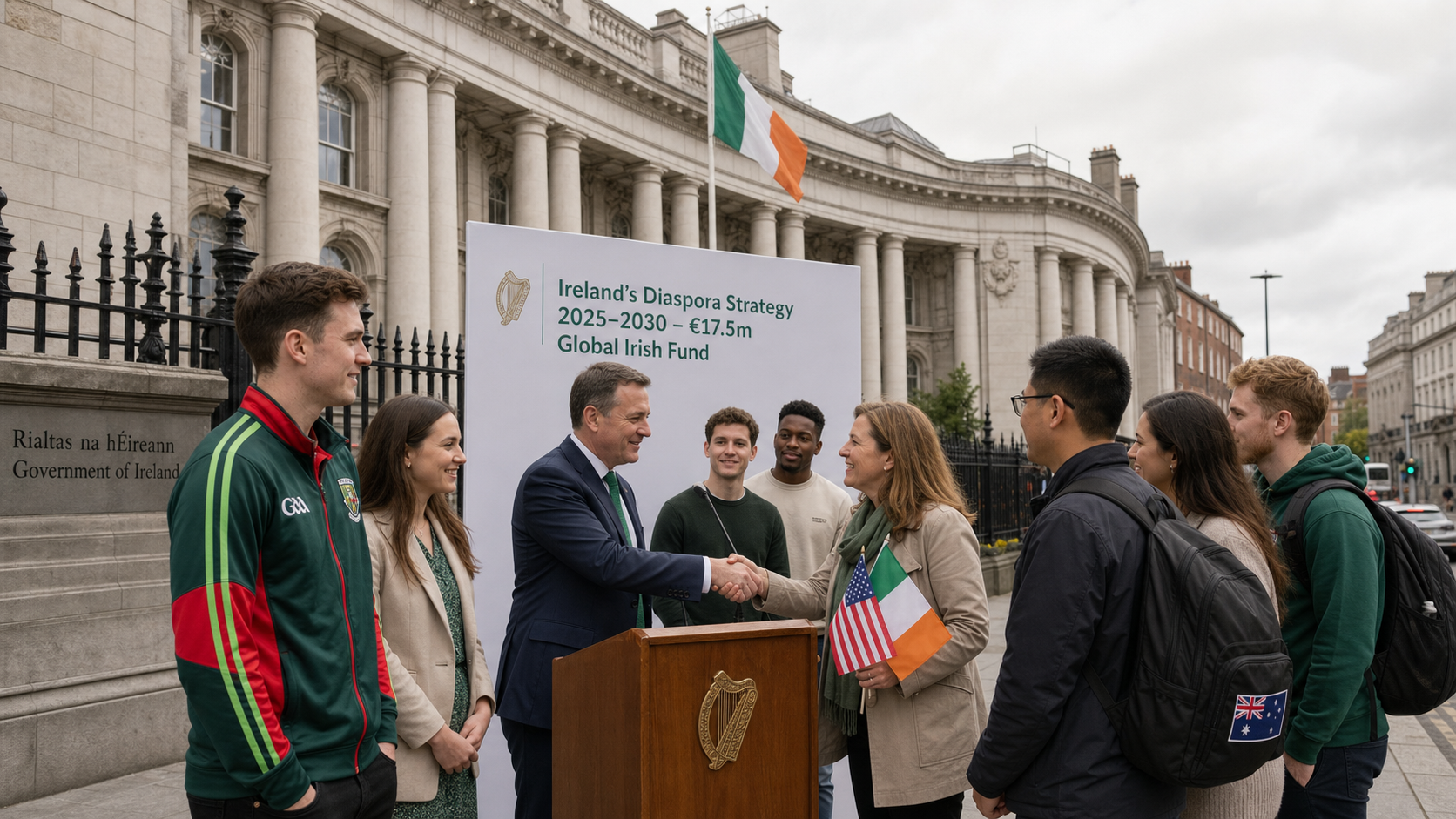
A growing movement of community leaders, activists, and academics is calling for the stories of multi-heritage and multi-ethnic Irish emigrants to be formally recognised as part of Ireland's national diaspora narrative. The movement, which has been gaining momentum in recent months, highlights the experiences of the children of immigrants who grew up in Ireland and have since moved abroad — people who are Irish in every meaningful sense but who have often found themselves excluded from the traditional conception of the Irish diaspora. The push for a more inclusive diaspora narrative is being reflected in modern engagement strategies, but advocates say more needs to be done.
Background
Ireland's relationship with emigration and diaspora is one of the defining features of its national identity. The country has sent millions of its people to every corner of the world over the past two centuries, and the Irish diaspora — estimated at more than 70 million people worldwide — is one of the largest in proportion to the home country's population of any nation on earth. The diaspora has been a source of enormous pride and a significant resource for Ireland, providing political support, economic investment, and cultural connection across the globe.
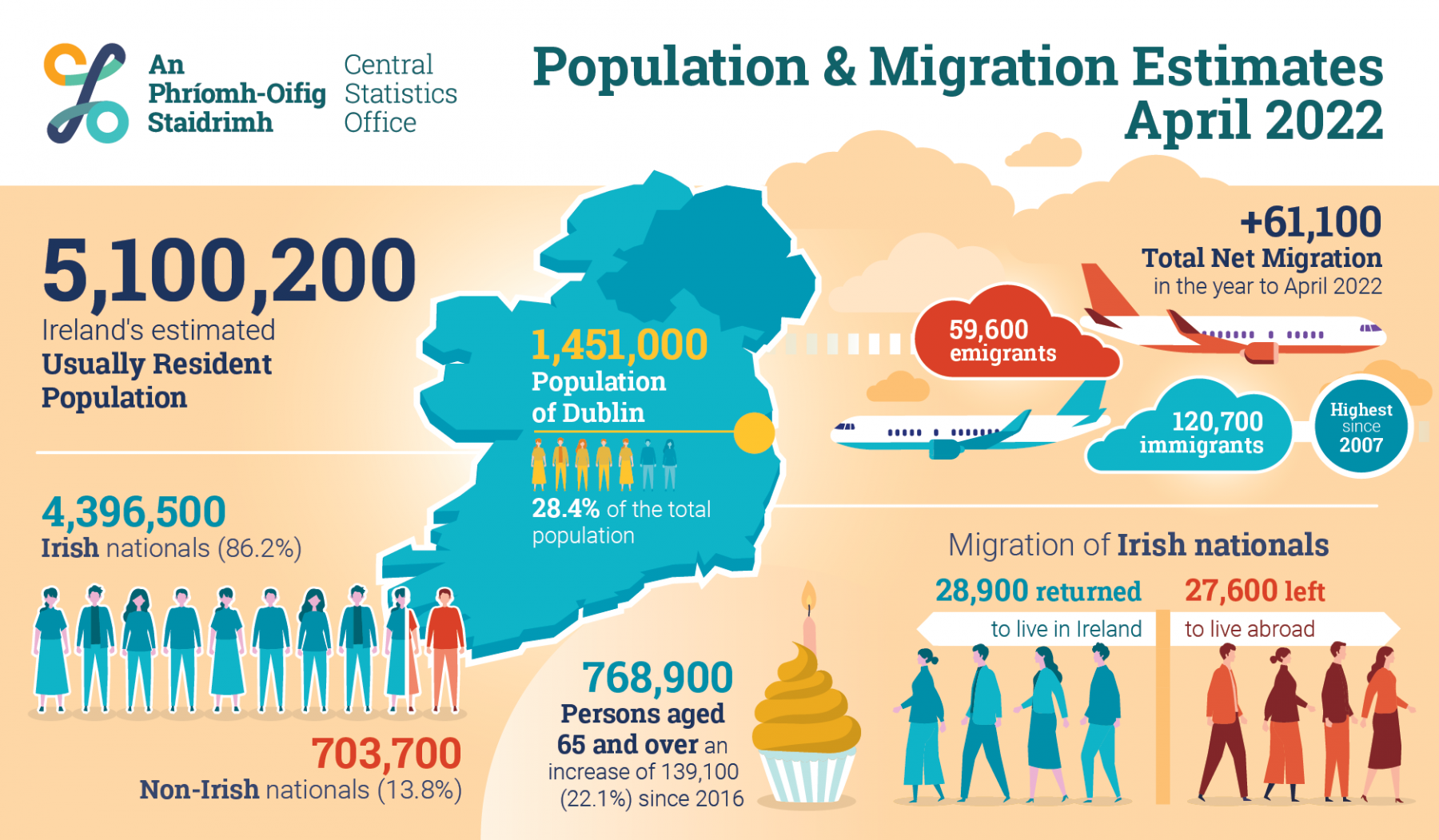
But the traditional conception of the Irish diaspora — rooted in ancestry, in the experience of emigration from a predominantly white, Catholic Ireland — has not always reflected the full diversity of the people who identify as Irish. Ireland has changed dramatically in recent decades, becoming a more diverse, multicultural society as a result of immigration from across the world. The children of those immigrants — people who grew up in Ireland, who went to Irish schools, who support Irish sports teams, who speak with Irish accents — are as Irish as anyone born to Irish parents. But when they emigrate, they often find that the diaspora infrastructure — the community organisations, the cultural programmes, the government support — was not designed with them in mind.
The movement for a more inclusive diaspora narrative is a response to this gap. It is driven by people who have experienced the disconnect between their sense of Irish identity and the way that identity is recognised — or not recognised — by the institutions and organisations that claim to represent the Irish abroad.
Key Developments
The movement has been gaining visibility through a combination of community organising, academic research, and media advocacy. Community leaders and activists have been sharing their stories — of growing up in Ireland, of feeling fully Irish, and of finding that their Irishness is questioned or overlooked when they move abroad — through social media, community events, and engagement with Irish government officials.
An advocate for a more inclusive diaspora narrative articulated the core argument clearly: "Whether your parents are from Dublin or Lagos, if you grew up in Ireland and feel that connection, your story is part of the modern Irish diaspora." This formulation — which defines Irishness by experience and connection rather than by ancestry — represents a significant departure from the traditional conception of the diaspora, and it is one that is gaining traction within the Irish government's diaspora policy community.
The Department of Foreign Affairs has acknowledged the need to broaden its approach to diaspora engagement, and the Emigrant Support Programme has been gradually expanding its definition of who it supports. But advocates argue that the pace of change is too slow and that the institutional culture of diaspora organisations — which has been shaped by decades of engagement with the traditional, ancestry-based diaspora — is resistant to change.
Why It Matters
The push for a more inclusive diaspora narrative matters because it reflects a fundamental question about Irish identity — about who gets to be Irish and who gets to be part of the Irish story. If Ireland is serious about being a diverse, inclusive society, that commitment must extend to how it thinks about and engages with its diaspora. A diaspora narrative that excludes the children of immigrants — people who are Irish in every meaningful sense — is not just incomplete; it is a form of exclusion that contradicts Ireland's stated values.
The practical implications are also significant. The multi-heritage Irish diaspora is a growing and increasingly influential community, with members in positions of influence in business, politics, culture, and civil society across the world. Engaging with this community — recognising their Irishness, supporting their connection to Ireland, and drawing on their skills and networks — is in Ireland's national interest as well as being the right thing to do.
The movement also has implications for how Ireland thinks about immigration and integration at home. If the children of immigrants who grow up in Ireland are to be recognised as fully Irish — as part of the diaspora when they move abroad — then the policies and practices that shape their experience of growing up in Ireland must reflect that recognition. The diaspora narrative and the integration narrative are, in this sense, two sides of the same coin.
Local Impact
The movement for a more inclusive diaspora narrative has its roots in communities across Ireland, where the children of immigrants have grown up as fully Irish but have sometimes experienced a disconnect between their sense of identity and how that identity is recognised by institutions and organisations. In Dublin, Cork, Galway, and other cities with significant immigrant communities, the movement has found a receptive audience among young people who are navigating questions of identity and belonging.
What's Next
The Department of Foreign Affairs is expected to engage with the movement's advocates in the coming months, as part of its review of diaspora engagement strategy. The Emigrant Support Programme's next funding cycle, which opens in 2027, is expected to include provisions that more explicitly recognise and support multi-heritage Irish communities abroad. Academic research on the multi-heritage diaspora is also expected to inform policy development, with several Irish universities currently conducting studies on the experiences of multi-ethnic Irish emigrants.