Reaching Out to the Global Irish
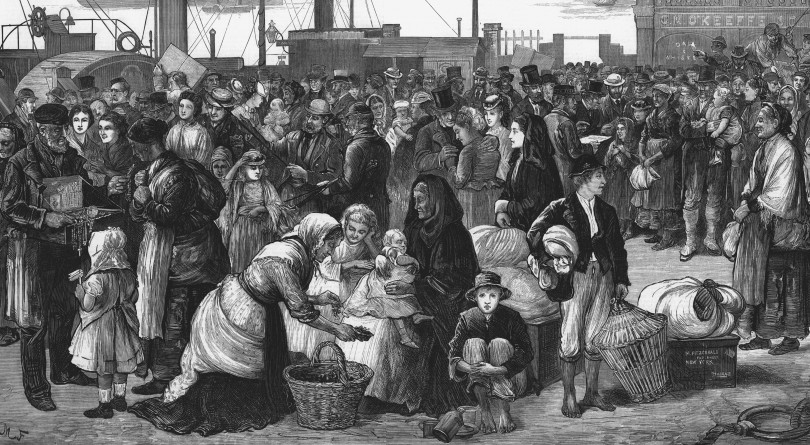
There are, by various estimates, between 70 and 80 million people of Irish descent living outside Ireland — a diaspora that is, in numerical terms, many times larger than the population of the island itself. These are the descendants of the millions who left Ireland during the Great Famine, the economic emigrations of the 19th and 20th centuries, and the more recent waves of emigration that followed the financial crisis of 2008. They live in the United States, Britain, Australia, Canada, Argentina, South Africa, and dozens of other countries, and they maintain connections to Ireland that range from the deeply personal to the broadly cultural.
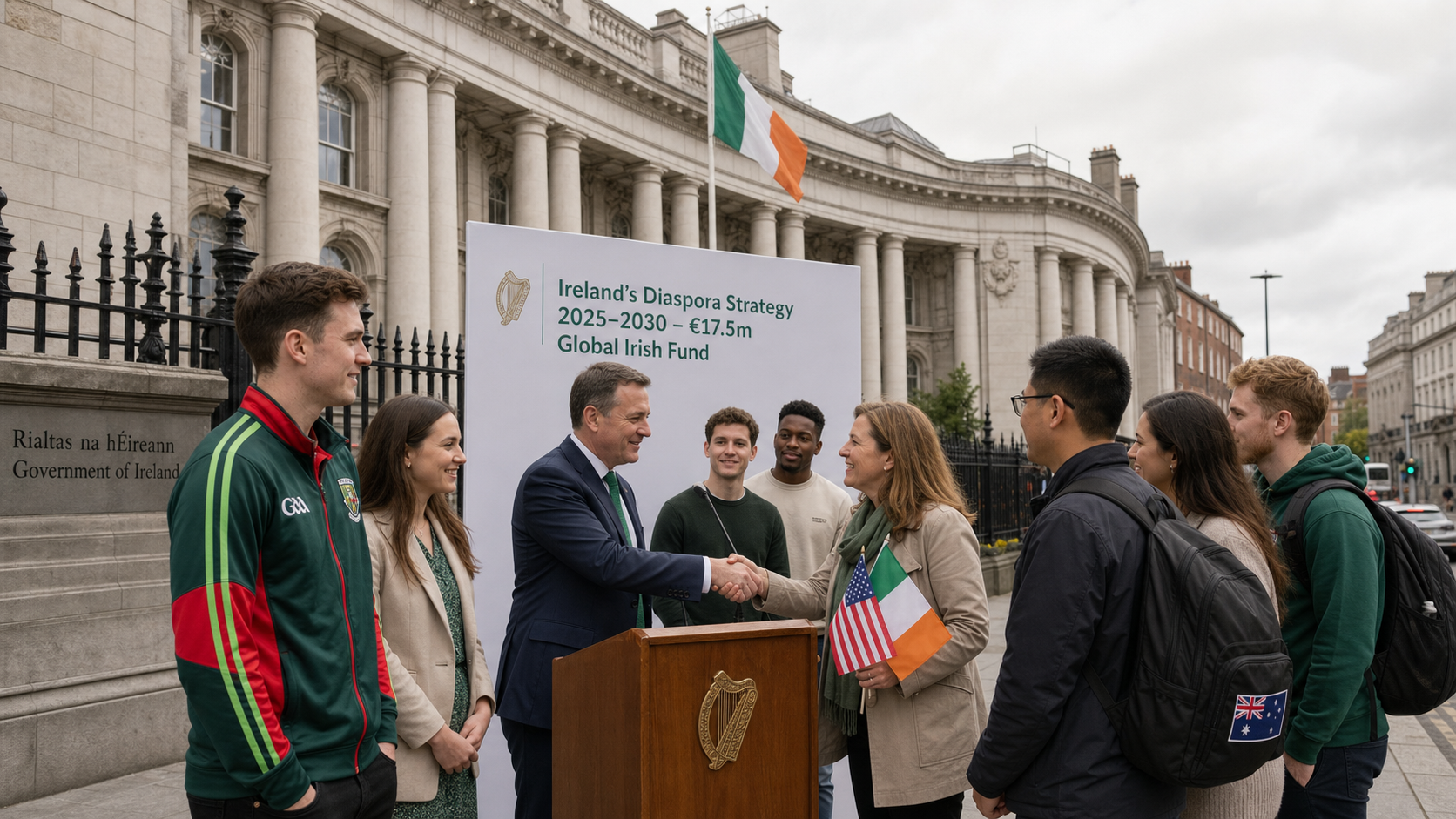
The Irish government's new Diaspora Strategy, launched this week by Minister of State for the Diaspora Joe O'Brien, is the third such strategy since Ireland began formally engaging with its global community in the 1990s. Backed by a €17.5 million fund over five years, it sets out a comprehensive programme of engagement, support, and connection designed to strengthen the ties between Ireland and its global community.
What the Strategy Covers
The strategy is built around five pillars: supporting Irish communities abroad, particularly those in disadvantaged circumstances; promoting Irish culture and language internationally; facilitating connections between the diaspora and Ireland's economic and innovation ecosystem; supporting Irish emigrants who wish to return to Ireland; and engaging young people of Irish descent in their connection to Ireland.
The €17.5 million fund will be distributed through a range of mechanisms, including grants to Irish community organisations abroad, funding for cultural programmes and events, support for Irish language initiatives in diaspora communities, and investment in digital platforms that allow Irish people abroad to maintain connections with home.
A significant portion of the fund — approximately €4 million — is earmarked for the support of elderly and vulnerable Irish emigrants, particularly in Britain, where a significant population of Irish people who emigrated in the 1950s, 60s, and 70s are now in their 70s, 80s, and 90s and may be in need of social, health, and welfare support. Organisations such as the Irish in Britain and the London Irish Centre will be among the primary beneficiaries of this strand of funding.
The Diaspora as an Asset
The strategy reflects a growing recognition within Irish government and business circles that the diaspora is not just a sentimental connection to the past but a genuine strategic asset for Ireland's future. Irish-Americans in senior positions in US technology companies, Irish-Australians in the resources sector, Irish-Canadians in finance and law — these are people who can open doors for Irish businesses, advocate for Irish interests in foreign capitals, and contribute to Ireland's reputation and influence in the world.
"The Irish diaspora is one of our greatest national assets," said Minister O'Brien at the launch. "We want to invest in that asset — to deepen the connections, to support the communities, and to ensure that the global Irish family remains a living, vibrant reality rather than a historical memory."
The Return Dimension
One of the most practically significant aspects of the new strategy is its focus on supporting Irish emigrants who wish to return to Ireland. The government has committed to developing a dedicated return migration support service, providing information and guidance on housing, employment, healthcare, and education for returning emigrants and their families.
This is a response to a real and growing phenomenon: the number of Irish people returning from abroad has increased significantly in recent years, driven by a combination of improved economic conditions in Ireland, the desire to be closer to family, and, for some, disillusionment with conditions in the countries they emigrated to. The return migration support service will aim to make the transition back to Ireland as smooth as possible.
A Living Connection
The Irish diaspora is not a fixed or static thing. It is constantly evolving — new emigrants leaving, others returning, second and third generations discovering or rediscovering their Irish roots. The new Diaspora Strategy is an attempt to engage with that living, changing reality in a way that is meaningful, practical, and respectful of the diversity of experience that the global Irish community represents. It is, in the truest sense, a strategy for the long term.