Australia Now Ireland's Number One Emigrant Destination as "Affinity Diaspora" Reshapes Global Irish Community
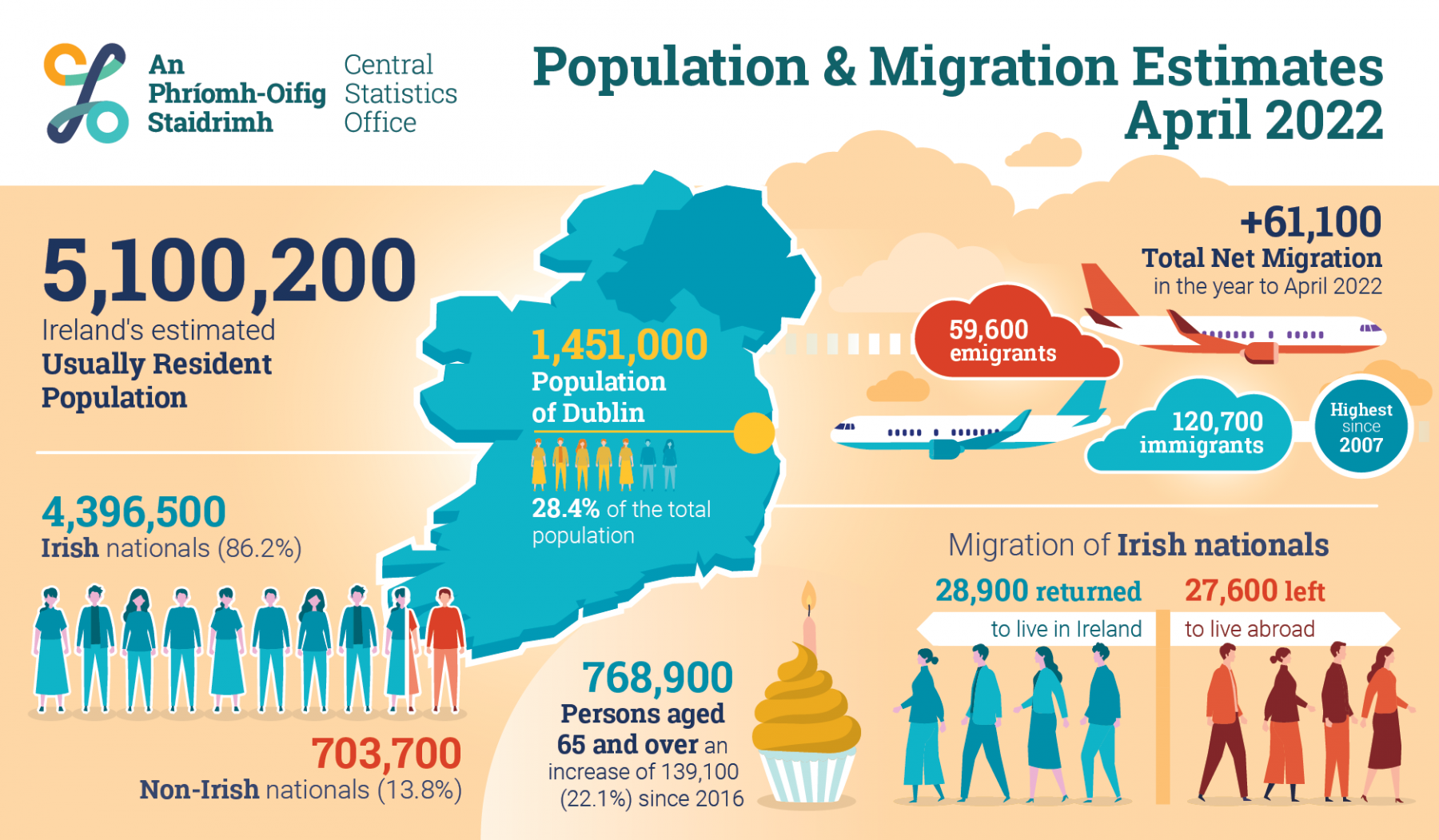
Australia has overtaken the United States as the most popular destination for new Irish emigrants, according to analysis published on Saturday 12 July, with approximately 13,500 people moving from Ireland to Australia in the year to April 2025, compared to 6,100 to the United States. The shift reflects changing patterns of Irish emigration that have been developing for more than a decade, driven by Australia's strong economy, its demand for skilled workers, and its established Irish community. The analysis also highlights the growth of an "affinity diaspora" — individuals with no Irish heritage who have a strong connection to Ireland — that is prompting a fundamental rethink of how Ireland engages with its global community.
Background
Irish emigration has been a defining feature of the country's history for centuries, from the mass emigration of the Famine era to the economic migrations of the 1950s, 1980s, and post-2008 recession. Each wave of emigration has shaped the Irish diaspora in different ways, creating communities in different parts of the world with different relationships to Ireland and different needs from the Irish state.
The traditional destinations for Irish emigrants — the United States, the United Kingdom, and Australia — have remained important, but their relative significance has shifted over time. The United States, which was the primary destination for Irish emigrants for much of the nineteenth and twentieth centuries, has become less accessible in recent years due to changes in US immigration policy and the difficulty of obtaining work visas. Australia, by contrast, has maintained a relatively open immigration policy and has actively recruited skilled workers from Ireland and other English-speaking countries.
The result has been a significant shift in the geography of Irish emigration, with Australia emerging as the dominant destination for new emigrants. This shift has implications for how Ireland thinks about its diaspora — the communities, institutions, and relationships that connect the Irish state to its citizens and former citizens abroad.
Key Developments
The analysis, based on CSO emigration data and diaspora research, reveals that Australia received approximately 13,500 Irish emigrants in the year to April 2025, more than double the number who moved to the United States in the same period. The United Kingdom, which has historically been the largest destination for Irish emigrants due to its proximity and the absence of immigration barriers, remains significant but has seen its share of Irish emigration decline in the post-Brexit era.
The analysis also highlights the growth of what researchers are calling the "affinity diaspora" — a category of people who have no Irish heritage but who have a strong connection to Ireland from having lived, worked, or studied there. This group, which includes former international students, workers who came to Ireland during the Celtic Tiger era and subsequently moved on, and the partners and children of Irish emigrants, is growing rapidly and represents a new dimension of the Irish diaspora that existing engagement strategies have not fully addressed.
A sociologist quoted in the analysis noted that "the definition of Irishness abroad is becoming broader and more inclusive, based on shared experience rather than just ancestry." This observation reflects a genuine shift in how the Irish diaspora is constituted and how it relates to Ireland, with implications for everything from cultural programming to political engagement.
Why It Matters
The shift in Irish emigration patterns matters because it has practical implications for how the Irish state engages with its diaspora. The Emigrant Support Programme, which provides funding to Irish community organisations abroad, was designed primarily with the traditional diaspora in mind — the communities of Irish descent in the United States, the United Kingdom, and Australia that have been established for generations. The growth of the affinity diaspora and the shift in emigration patterns towards Australia require a rethinking of that approach.
The Australia dimension is particularly significant. The Irish community in Australia is large, well-established, and growing, but it has historically received less attention from the Irish state than the communities in the United States and the United Kingdom. The shift in emigration patterns suggests that this imbalance needs to be addressed, with greater investment in the infrastructure and services that support the Irish community in Australia.
The affinity diaspora concept is also important because it challenges traditional assumptions about who counts as part of the Irish diaspora. If the diaspora is defined purely by ancestry, it excludes a growing number of people who have a genuine and deep connection to Ireland. If it is defined more broadly, to include those with an affinity connection, it becomes a much larger and more diverse community — one that requires different approaches to engagement and support.
Local Impact
The shift in emigration patterns has implications for communities across Ireland, as the people who are leaving are drawn from every county and every social background. The loss of skilled workers — nurses, engineers, teachers, and others — to Australia and other destinations has a direct impact on the communities they leave behind, and on the public services that depend on their skills. The challenge for the Irish state is to create conditions that make it possible for people to build good lives in Ireland, while also maintaining strong connections with those who choose to live abroad.
What's Next
The Department of Foreign Affairs, which has responsibility for diaspora policy, is expected to review its engagement strategy in light of the changing patterns of Irish emigration. The Emigrant Support Programme is due for review in 2027, and the analysis of emigration patterns is likely to inform that review. The Irish government's Global Ireland strategy, which sets out the framework for Ireland's engagement with its diaspora, is also expected to be updated to reflect the growing importance of Australia and the affinity diaspora.