Moderna's mRNA Cancer Vaccine Breakthrough Prompts Irish Oncologists to Call for Accelerated Reimbursement Process
Irish oncologists and patient advocacy groups have called for an accelerated HSE reimbursement process following the landmark trial success of Moderna and Merck's personalised mRNA cancer vaccine for high-risk melanoma — warning that Ireland's current drug assessment timeline could leave patients waiting until 2029 or beyond for access to a treatment that could be approved by European regulators as early as 2027.
Background
Ireland's drug reimbursement system has been a source of persistent frustration for patients, clinicians, and advocacy groups for many years. The process by which new medicines are assessed for inclusion on the HSE's reimbursement list — the list of drugs that are available to patients through the public health system without direct cost — is managed by the National Centre for Pharmacoeconomics (NCPE), which evaluates the clinical and cost-effectiveness of new treatments before making a recommendation to the HSE.
The process is thorough and evidence-based, but it is also slow. From the point at which a drug receives marketing authorisation from the European Medicines Agency to the point at which it is available to patients through the public health system, the average time in Ireland is approximately 18 months — significantly longer than in many comparable European countries. For patients with serious conditions who are waiting for access to potentially life-saving treatments, that delay can be devastating.
The issue has been particularly acute in oncology, where the pace of innovation has been rapid and the gap between what is available in clinical trials or in other countries and what is available through the Irish public health system has been a source of ongoing concern. The Skyclarys case — where the HSE drugs group recommended against reimbursement of a treatment for Friedreich's ataxia despite clinical evidence of benefit — is a recent and painful illustration of the tensions involved.
Key Developments
The announcement of positive final-stage trial results for Moderna and Merck's intismeran autogene vaccine has prompted immediate calls from the Irish oncology community for a proactive approach to the reimbursement question. Professor Cliona O'Farrelly, a leading Irish immunologist, described the trial results as "genuinely transformative" and called on the HSE to begin its assessment process as soon as the drug receives EMA marketing authorisation, rather than waiting for a formal application from the manufacturer.
The Irish Cancer Society has also responded to the announcement, welcoming the trial results and calling for a review of the HSE's reimbursement timeline for oncology drugs. "We cannot afford to have Irish patients waiting two or three years for access to a treatment that could prevent their cancer from recurring," said a spokesperson for the society. "The HSE needs to develop a faster pathway for genuinely innovative treatments, particularly in oncology where the stakes are so high."
The Department of Health has indicated that it is monitoring the development of the Moderna-Merck vaccine closely and that it will engage with the NCPE about the appropriate approach to assessment once the drug receives EMA approval. Minister for Health Stephen Donnelly has previously acknowledged the need to reform the drug reimbursement process, and the Moderna-Merck announcement is expected to add urgency to that reform agenda.
Why It Matters
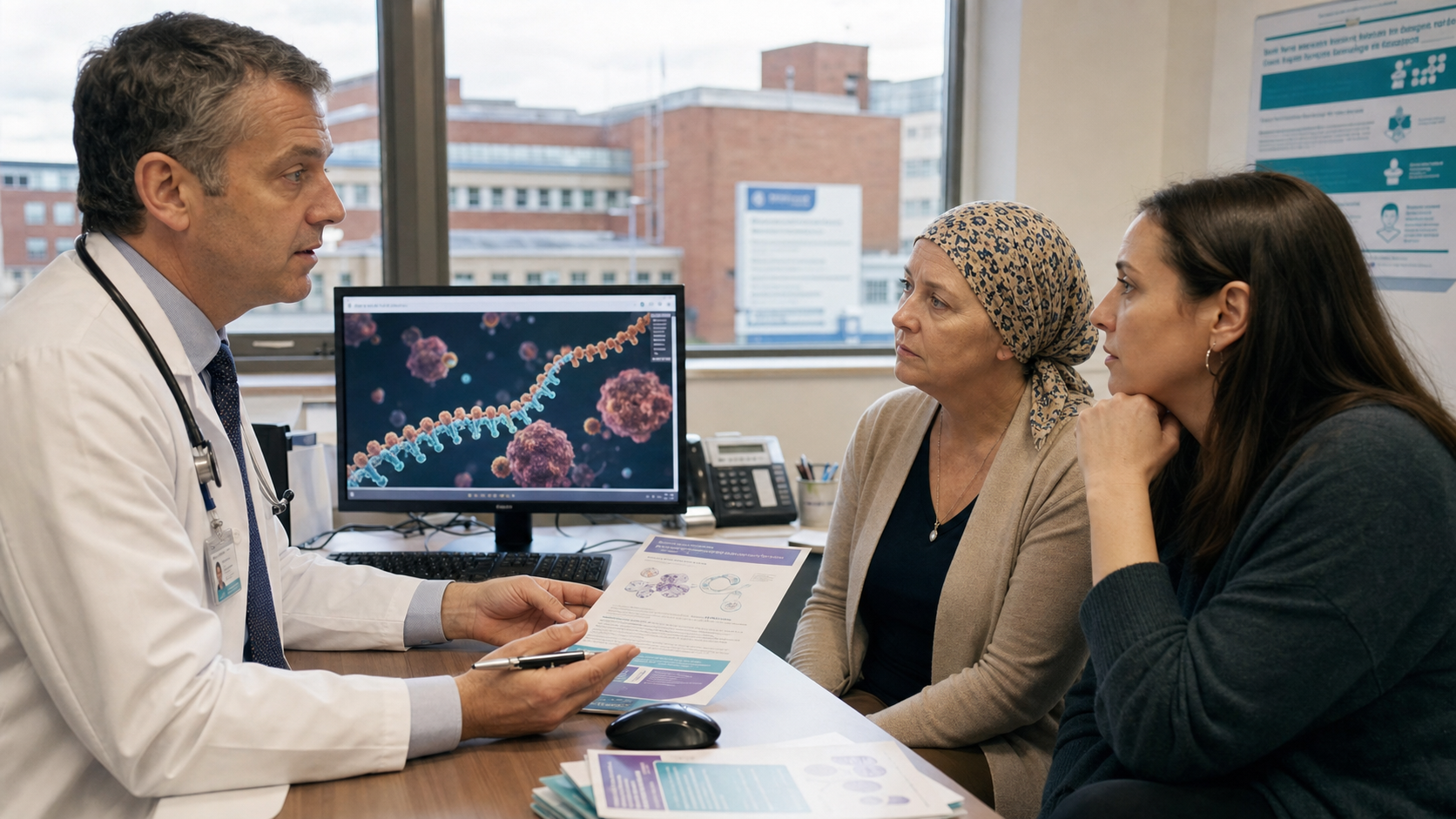
The Moderna-Merck vaccine represents a new category of cancer treatment — one that is personalised to the individual patient's tumour profile and that uses mRNA technology to prime the immune system against the specific mutations present in that tumour. If the treatment is as effective in clinical practice as the trial results suggest, it could significantly improve outcomes for patients with high-risk melanoma — a group for whom the current treatment options, while improved in recent years, are not sufficient for all patients.
The personalised nature of the treatment also raises important questions about the HSE's capacity to deliver it. Each dose of intismeran autogene is manufactured specifically for one patient, using a process that takes approximately six weeks. The infrastructure required to deliver such a treatment — the genomic sequencing, the manufacturing, the logistics — is significantly more complex than that required for conventional cancer drugs. The HSE will need to invest in that infrastructure if it is to make the treatment available to Irish patients in a timely way.
The cost of the treatment is also a significant consideration. Personalised cancer vaccines are likely to be among the most expensive treatments ever considered for reimbursement by the HSE, and the cost-effectiveness assessment will need to grapple with the challenge of valuing a treatment that is, by definition, unique to each patient. The NCPE's existing methodological framework may need to be adapted to handle this kind of assessment.
Local Impact
In Ireland, approximately 1,200 new cases of melanoma are diagnosed each year. The majority are caught at an early stage, when the prognosis is generally good. But high-risk melanoma — the category targeted by the Moderna-Merck vaccine — carries a significantly worse prognosis, and the patients in this group are precisely those who stand to benefit most from a treatment that can reduce recurrence and slow spread.
For oncology departments at St James's Hospital, the Mater Hospital, Cork University Hospital, and the other major cancer centres across Ireland, the prospect of a new treatment for high-risk melanoma is genuinely exciting. But the excitement is tempered by the awareness that the path from trial success to clinical availability in Ireland is long and uncertain, and that the patients who need the treatment most may not be able to wait.
What's Next
Moderna and Merck are expected to submit a marketing authorisation application to the EMA in late 2026 or early 2027. The EMA's assessment process typically takes 12-18 months, meaning that approval could come as early as late 2027. The NCPE would then begin its assessment, which typically takes a further 12-18 months. On that timeline, the treatment could be available to Irish patients through the public health system by 2029 at the earliest — a timeline that patient advocates are already arguing is too slow.