Men Outnumber Women Two-to-One Among Candidates in UK's May Elections
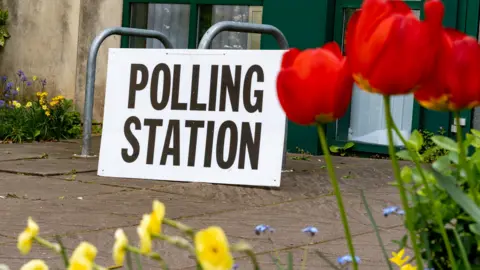
With major elections scheduled across England, Scotland, and Wales on 7 May, new analysis has laid bare a stark gender imbalance on the ballot paper: men account for two-thirds of all candidates, with the name "David" appearing nearly four times more often than "Sarah" — the only female name in the top 20 most common candidate names. Campaigners say the figures represent a democratic deficit that will shape the decisions made in council chambers and devolved parliaments for years to come.Background
The underrepresentation of women in British politics is a persistent and well-documented problem. Despite comprising slightly more than half the population, women have never held more than a third of seats in the House of Commons, and the picture in local government is similarly skewed. The 2024 general election saw a record number of female MPs elected — 263 out of 650 — but that still represented only 40% of the total, and the figure masks significant variation between parties and regions.
The research published ahead of the 7 May elections was conducted by 50:50 Parliament, a cross-party campaign organisation, in partnership with Democracy Club, which aggregates candidate data from across the UK. Their analysis covers all elections taking place on 7 May: 136 English local councils, six mayoral contests, the Welsh Senedd, and the Scottish Parliament. Together, these represent one of the largest single-day electoral events in the UK outside of a general election.
The barriers to women standing for election are well-established: the financial cost of campaigning, the demands of combining political life with caring responsibilities, the prevalence of online abuse directed at female politicians, and the culture of many local party organisations, which can be unwelcoming to women and particularly to women from minority ethnic backgrounds.
Key Developments
Across all elections on 7 May, approximately one-third of candidates are women, while two-thirds are men. In the English local elections — which have the largest number of candidates — only 34% are female. The gender gap is even more pronounced in the six mayoral elections, where just 18% of candidates are women.
The party breakdown reveals significant variation. Labour has the highest proportion of female candidates at 42%, followed by the Green Party at 41% and the Liberal Democrats at 33%. The Conservatives trail at an unspecified figure, while Reform UK has the lowest proportion of any major party at just 23%. In Wales, 38% of Senedd candidates are female; in Scotland, the figure is 36%, with the Scottish Green Party and Scottish Labour notable for having 60% and 50% female candidates respectively.
Lyanne Nicholl, the chief executive of 50:50 Parliament, said: "Men continue to dominate both locally and nationally, and without proper representation women's views and perspectives will once again be sidelined. This isn't about political point scoring, this is about women's representation and how that has benefits for everyone."
Why It Matters
The composition of elected bodies matters because it shapes the decisions those bodies make. Research consistently shows that councils and parliaments with higher proportions of female members are more likely to prioritise issues such as childcare, domestic violence services, and social care — areas that disproportionately affect women. The 23% figure for Reform UK is particularly significant given the party's projected gains on 7 May: if Reform takes control of councils in Essex, Norfolk, and Suffolk as predicted, those councils will be governed by bodies that are overwhelmingly male.
This is not a new problem, but the scale of the imbalance in 2026 is a reminder that progress has been painfully slow. Unlike Scotland, where the introduction of gender-balanced candidate lists by some parties has made a measurable difference, England has no equivalent mechanism, and the voluntary approach adopted by Labour and the Greens has not been replicated across the political spectrum. For context, the Inter-Parliamentary Union ranks the UK 47th globally for female representation in national parliaments — behind Rwanda, Iceland, and New Zealand.
Local Impact
In Northern Ireland, where elections are not taking place on 7 May, the Stormont Assembly has its own record on gender representation — one that is similarly mixed. Sinn Féin has consistently fielded high proportions of female candidates, while the DUP and TUV have lagged behind. In the Republic of Ireland, gender quotas for party candidate lists were introduced in 2012 and have gradually increased female representation in the Dáil. The contrast with England's voluntary approach is instructive: where quotas or targets have been mandated, representation has improved; where they have been left to individual parties, progress has been uneven and slow.
What's Next
The results on 7 May will provide a snapshot of how many women are actually elected, which may differ from the candidate figures depending on which parties perform well. 50:50 Parliament has committed to publishing a post-election analysis of the gender breakdown of those elected. Campaigners are also calling on the government to consider legislative measures — including candidate quotas — ahead of the next general election, which must be held by 2029. A parliamentary debate on gender representation in local government is expected before the summer recess.
Sources: The Guardian | Democracy Club