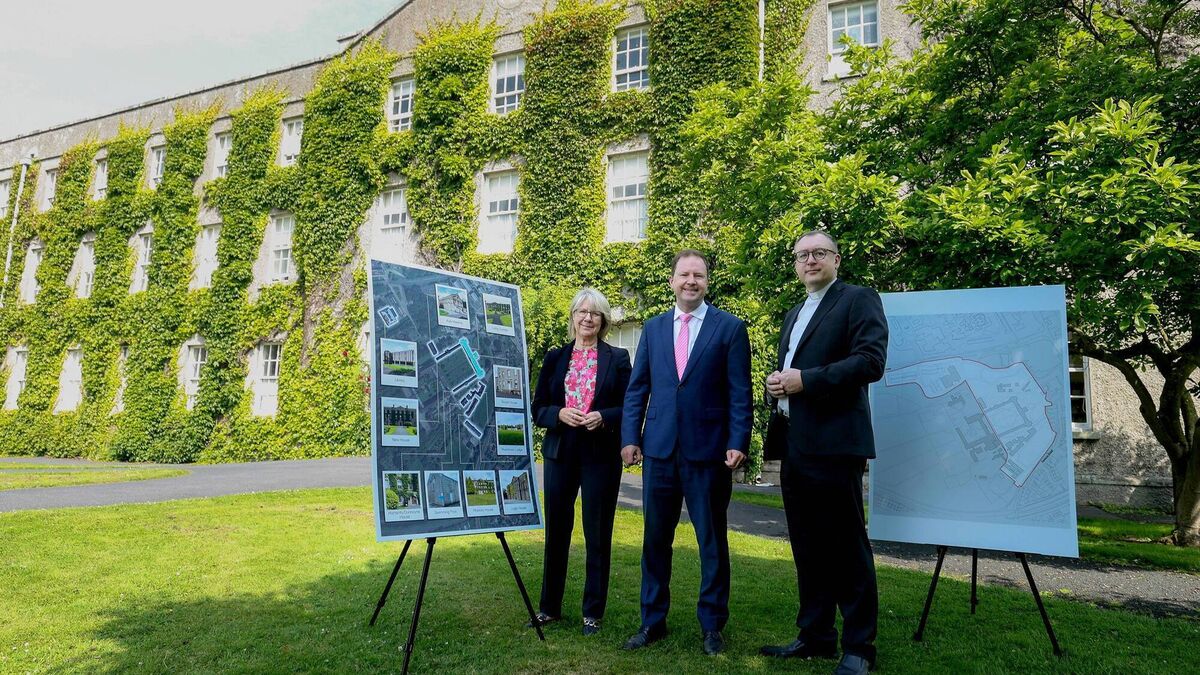
Maynooth University Acquires St Patrick's College Land to Build Swimming Pool and Performance Space for Town
Maynooth University has secured a landmark land deal with the adjacent St Patrick's College, acquiring a parcel of the historic seminary's grounds that will be developed into a new swimming pool and performance space — facilities that will be open to the wider Maynooth community and represent the most significant expansion of public amenities in the north Kildare town in a generation.
Background
Maynooth has been one of the fastest-growing towns in Ireland over the past two decades, its population swelling as Dublin's commuter belt expanded westward along the M4 corridor and the Maynooth rail line. The town's infrastructure, however, has struggled to keep pace with that growth. Residents have long pointed to the absence of a public swimming pool as one of the most glaring gaps in local amenities — a gap that has persisted despite repeated calls from community groups, local councillors, and the university itself.
St Patrick's College, the national seminary of the Catholic Church in Ireland, occupies a vast and historically significant campus adjacent to Maynooth University. The two institutions have coexisted on the same grounds for centuries, sharing some facilities and maintaining a complex institutional relationship. In recent years, as the seminary's student numbers have declined sharply in line with broader trends in religious vocations, the college has been exploring options for the sustainable use of its extensive landholding.
Maynooth University, by contrast, has been on a sustained growth trajectory, with student numbers rising and demand for campus facilities increasing accordingly. The acquisition of land from St Patrick's College represents a strategic opportunity for the university to expand its footprint while simultaneously delivering a public good for the town that hosts it.
Key Developments
The land acquisition was announced on July 15, 2026, and reported by the Irish Independent. While the precise financial terms of the deal have not been disclosed, the university has confirmed that the acquired land will be developed to include a swimming pool and a new performance space. Both facilities are intended to serve a dual purpose: meeting the needs of the university's growing student body while also being accessible to the broader Maynooth community.
The swimming pool, in particular, has been a long-standing priority for local residents. Kildare County Council has been unable to deliver a public pool for Maynooth despite the town's size, and the university's commitment to building one on its expanded campus — with community access built into the design — has been welcomed by local representatives across the political spectrum.
The performance space is equally significant for a town that has developed a vibrant arts and cultural scene in recent years. Maynooth's proximity to Dublin has made it attractive to artists, musicians, and theatre practitioners seeking more affordable living and working conditions, and a dedicated performance venue would provide a much-needed home for that creative community.
Why It Matters
The Maynooth land deal matters because it represents a model of university-community partnership that is too rarely seen in Ireland. Universities are often perceived as self-contained institutions that exist alongside their host communities rather than within them. Maynooth University's decision to prioritise community-accessible facilities in its expansion plans is a meaningful departure from that pattern.
The absence of a swimming pool in Maynooth has had real consequences for local families, particularly those with young children who must travel to Leixlip, Celbridge, or Naas to access aquatic facilities. For a town of Maynooth's size — the population of the wider Maynooth Local Electoral Area exceeds 25,000 — this is a significant quality-of-life deficit. The university's intervention to address it, even if the timeline for construction remains to be confirmed, is a genuinely positive development.
There is also a broader point about the relationship between higher education institutions and the communities that surround them. As universities compete for students and staff in an increasingly mobile market, the quality of life in their host towns becomes a competitive factor. Maynooth's investment in community amenities is therefore both altruistic and strategically sensible.
Local Impact
For Maynooth residents, the announcement has been met with considerable enthusiasm. Local community groups that have campaigned for a swimming pool for years have described the news as a breakthrough. Parents of young children in the town's rapidly expanding housing estates — including the large developments along the Straffan Road and in the Carton area — have been among the most vocal in welcoming the plans.
The performance space will also benefit the town's growing arts community, including the Maynooth University Arts and Humanities faculty, which has developed strong links with local cultural organisations. Kildare County Council's arts office has expressed interest in working with the university to programme the new venue once it opens.
What's Next
The university has indicated that detailed planning and design work will begin in the coming months, with a planning application expected to be submitted to Kildare County Council in 2027. Construction timelines will depend on planning approval and funding arrangements, but the university has expressed its intention to move as quickly as possible given the strength of community demand. Local councillors have pledged to support the planning process and to advocate for the facilities to be delivered without unnecessary delay.