Limerick's Directly Elected Mayor Experiment Under Scrutiny as Irish Times Warns It May Be Last of Its Kind
Ireland's first directly elected mayor, John Moran of Limerick, is facing sustained political friction with city councillors and growing questions about the viability of the model he was elected to embody — with commentators warning that the troubled experiment may prove to be the last of its kind, as legislative ambiguity and governance clashes undermine the promise of a new form of local democracy.
Background
The idea of a directly elected mayor for Limerick was approved by the city's voters in a 2019 plebiscite, making it the first — and so far only — such office in Ireland. The concept was inspired by models in cities like London, New York, and Manchester, where directly elected mayors with significant executive powers have been credited with providing clearer accountability and stronger civic leadership than traditional council-based systems. The Limerick plebiscite was seen as a potential template for other Irish cities, with Dublin, Cork, and Galway all identified as possible candidates for similar arrangements.
John Moran, a former secretary general of the Department of Finance and an independent candidate, was elected to the inaugural five-year term in June 2024. His background in public administration and his independence from the main political parties were seen as assets, and his election was greeted with cautious optimism by those who hoped the new model would deliver a more dynamic and accountable form of local government for Limerick.
The reality has been more complicated. The legislation underpinning the mayor's role has proven to be ambiguous in key areas, creating confusion about the division of powers between the mayor, the council's director general, and the elected councillors. Moran has described the role as a "Catch-22" — held accountable by the public for delivery, but lacking independent control over the human resources and budget allocation that would enable him to deliver.
Key Developments
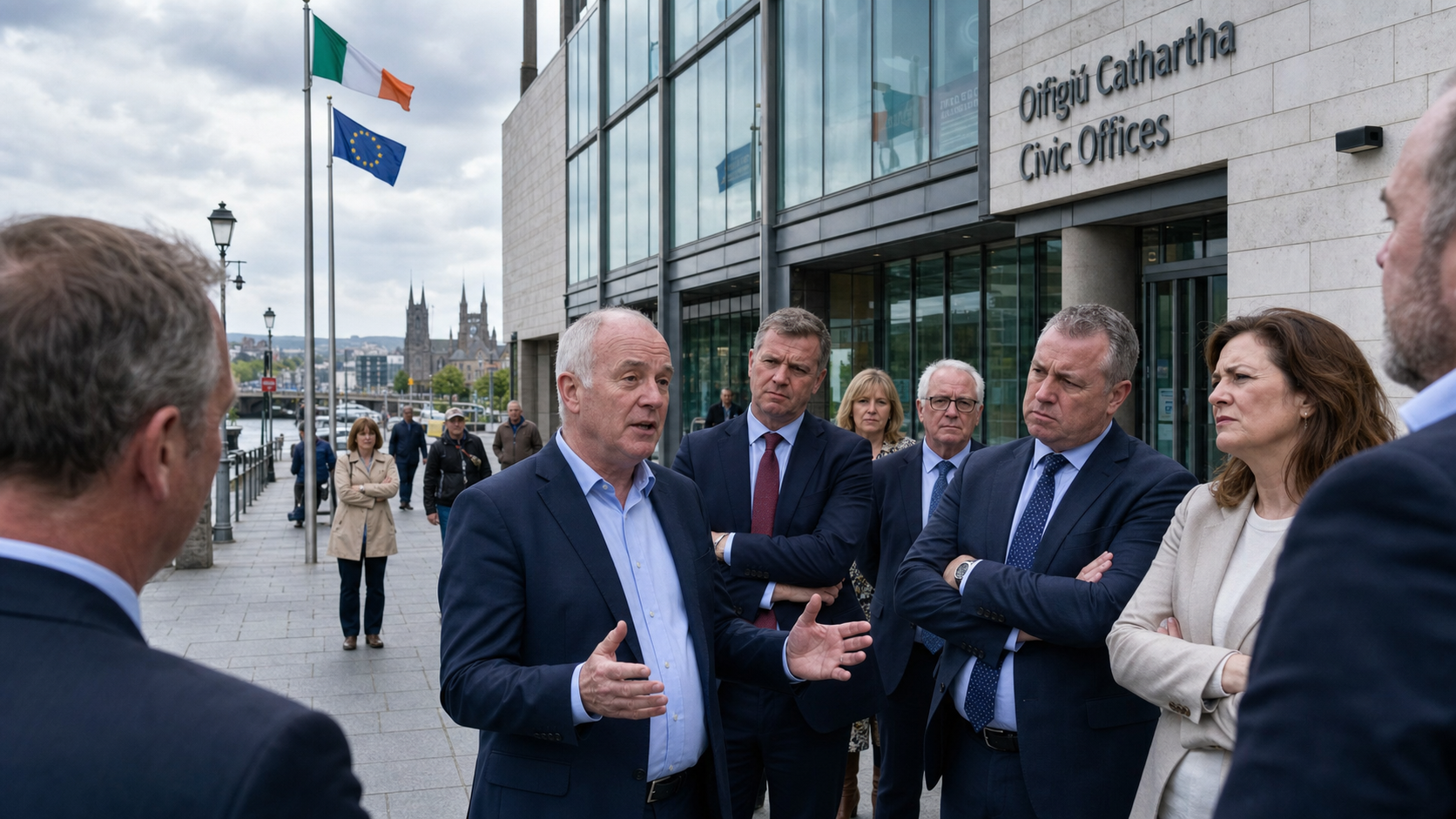
The tensions between Moran and the council came to a head in February 2026, when a seven-hour meeting on the council's corporate plan for 2025-2029 ended with the plan being passed in the mayor's absence after he left due to health concerns. Moran subsequently accused a "small negotiating group" of Fine Gael and Fianna Fáil councillors of orchestrating a strategy to undermine his mandate. Councillors from those parties defended their actions as part of a normal democratic process, arguing that the mayor must work collaboratively with other elected representatives.
The dispute prompted calls for an early review of the legislation, with Tánaiste Simon Harris confirming the government's intention to initiate a review "shortly." The original plan had been to review the office's effectiveness three years after its establishment, in mid-2027, but the scale of the governance difficulties has accelerated that timeline. Moran has vowed to continue in the role, maintaining that the experiment is workable if the legislative ambiguities are resolved.
Why It Matters
The Limerick mayoral experiment matters because it is the only test case Ireland has for a model of local government that has been widely discussed as a potential improvement on the existing system. If the experiment fails — or is perceived to have failed — it will set back the cause of local government reform significantly. The difficulties Moran has encountered are not primarily personal; they reflect genuine structural problems with the legislation that created the role. The ambiguity about the division of powers between the mayor and the director general is a design flaw that needs to be corrected, and the government's willingness to conduct an early review is a recognition of that fact.
The broader question is whether Ireland's political culture is ready for the kind of strong executive mayoral model that has worked in other countries. The resistance from Fine Gael and Fianna Fáil councillors in Limerick suggests that established political parties are uncomfortable with a model that reduces their influence over local government decisions — a dynamic that would likely be replicated in any other city where a similar arrangement was introduced.
Local Impact
For Limerick city and county, the governance difficulties at the mayoral level have created uncertainty about the delivery of key projects and initiatives. The mayor's office has been involved in a range of economic development, housing, and transport initiatives, and the political friction has slowed progress on some of these. Limerick's business community, which was broadly supportive of the directly elected mayor model, has expressed frustration at the governance difficulties and called for a resolution that allows the city to move forward. The University of Limerick and Limerick Institute of Technology, both significant employers and economic drivers in the region, have also indicated their support for a stable and effective mayoral office.
What's Next
The government's review of the directly elected mayor legislation is expected to begin in the autumn, with a report due before the end of 2026. The review will examine the division of powers between the mayor, the director general, and the council, and is expected to recommend legislative changes to clarify the respective roles. Moran has indicated he will engage constructively with the review process, while maintaining his position that the fundamental model is sound. The outcome of the review will have significant implications not just for Limerick but for the future of local government reform across Ireland.