James McClean's Derry City Future in Doubt as Club Seeks Settlement to End Turbulent Return
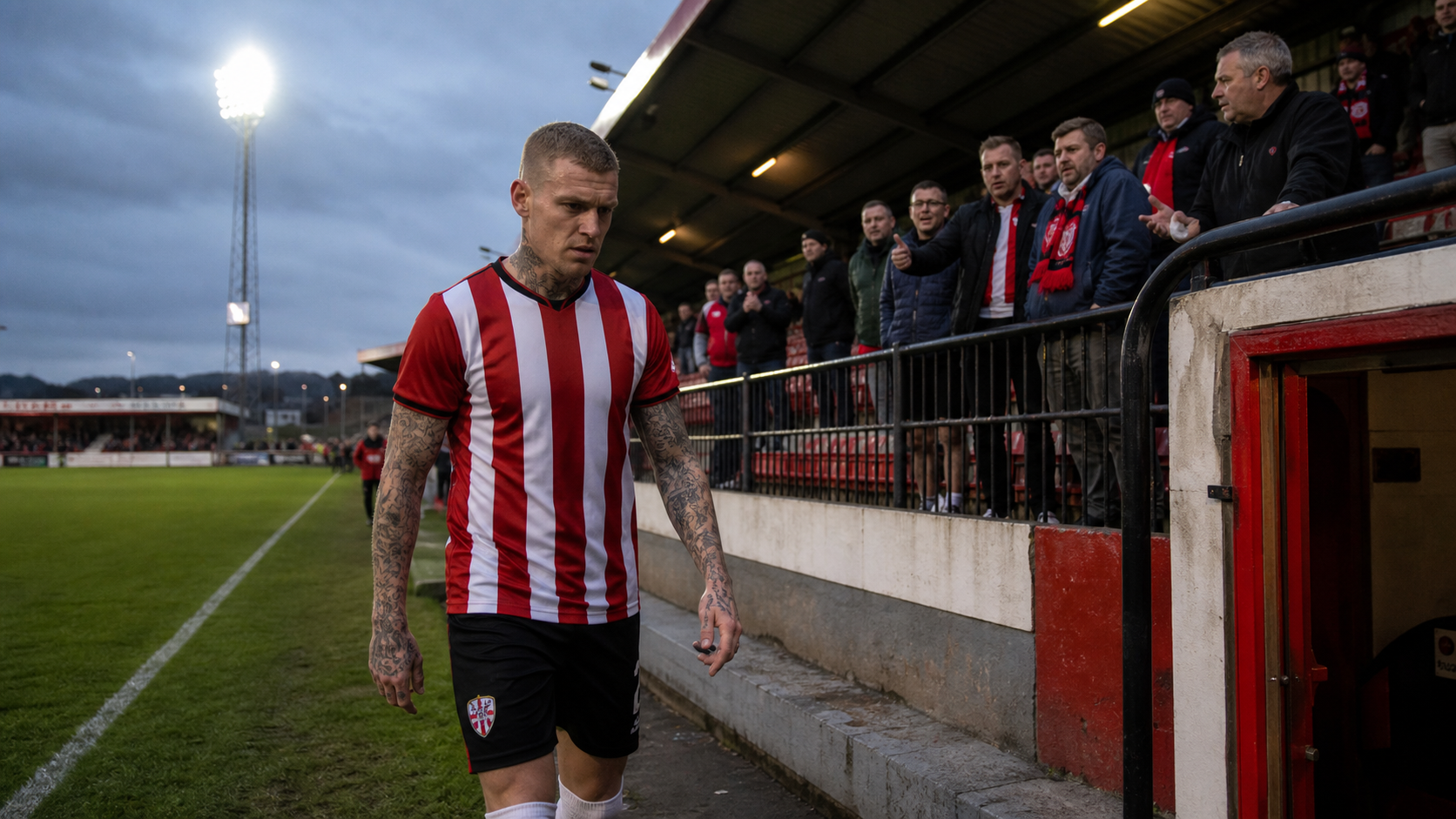
Republic of Ireland international James McClean's return to his hometown club Derry City appears to be heading toward an acrimonious conclusion, with reports indicating that the club is seeking a mutual termination of his contract just seven months after he signed from Wrexham. The 37-year-old attended an open training session at the Brandywell on Tuesday, but BBC Sport NI reported that he is "clearly still a Derry player" only in the technical sense, with negotiations over a settlement understood to be at an advanced stage.
Background
James McClean's return to Derry City in January 2026 was greeted with considerable fanfare. The Creggan-born winger, who had spent the majority of his professional career in England — at Sunderland, Wigan Athletic, West Bromwich Albion, Stoke City, and Wrexham — was coming home to the club where he had begun his career, and the narrative of the prodigal son returning to the Brandywell carried obvious emotional resonance for supporters.
McClean had always been a polarising figure in Irish football. His refusal to wear a poppy on his shirt during Remembrance weekend — a stance he has maintained throughout his career and explained in terms of his Derry upbringing and the events of Bloody Sunday — made him a target for sustained abuse from sections of English football crowds and generated significant media controversy. But in Derry, where the events of 30 January 1972 remain a living memory for many families, his position was widely understood and respected.
The expectation was that McClean would provide experience, leadership, and a degree of star quality to a Derry City squad that had been competitive in the SSE Airtricity Premier Division in recent seasons. The reality has been considerably more complicated.
Key Developments
Reports emerged last week that McClean's contract was to be terminated by mutual agreement, following a period in which he had been absent from the squad for several fixtures and had been openly critical of the club's situation in media interviews. The 37-year-old has not specified the nature of his grievances publicly, but sources close to the situation have indicated that disagreements over the club's ambitions, squad investment, and his own role within the team have contributed to the breakdown.
McClean attended Derry City's open training session at the Brandywell on Tuesday, a development that BBC Sport NI described as confirmation that he remains technically a Derry player while negotiations over a settlement continue. The club has not commented publicly on the situation, maintaining a position of studied silence that has done little to dampen speculation.
The political dimension of the story — McClean's public profile, his history of controversy, and the symbolic significance of his return to Derry — has ensured that the situation has attracted attention well beyond the usual football media. Several Derry politicians have commented on the situation, with some expressing disappointment at the apparent breakdown and others suggesting that the club's management of the situation has been less than ideal.
McClean's international career is also a factor. The Republic of Ireland manager has indicated that the winger remains in his plans, but a player who is not getting regular club football is unlikely to be considered for international selection. At 37, McClean's window for adding to his international caps is limited, and the uncertainty over his club situation is an unwelcome distraction.
Why It Matters
The McClean situation matters beyond the immediate question of one player's club future because it touches on broader questions about the League of Ireland's capacity to attract and retain high-profile players. The league has made significant strides in recent years — improved facilities, better broadcast deals, and a growing fanbase — but it continues to operate at a level of resource that makes it difficult to meet the expectations of players accustomed to the financial environment of English professional football.
McClean's return was always going to be a test of whether the League of Ireland could provide a meaningful home for a player of his profile and experience. The apparent failure of the experiment — if that is what it proves to be — will be used by sceptics to argue that the league is not yet ready to compete for players of that calibre. Supporters of the league will counter that the problem is specific to this situation rather than systemic, and that the league's overall trajectory remains positive.
Local Impact
For Derry City supporters, the situation is a source of genuine disappointment. The club has a passionate and loyal fanbase that had invested emotionally in McClean's return, and the prospect of his departure after just seven months — without the fairytale ending that the narrative seemed to promise — is a deflating one. The Brandywell, which has been redeveloped in recent years and now provides a significantly improved matchday experience, deserves better than a story that has become defined by off-field controversy rather than on-field achievement.
What's Next
A resolution to the contract situation is expected within the next two weeks. If McClean's contract is terminated, he will become a free agent and will be free to sign for another club. Several League of Ireland clubs have been linked with an interest, as have clubs in Scotland and the lower divisions of English football. Derry City will need to move quickly to identify a replacement if McClean departs, with the club currently in mid-table in the Premier Division and with European qualification still a realistic target for the season.