McClean's Derry Homecoming Ends in Acrimony as Seven-Month Stint Unravels
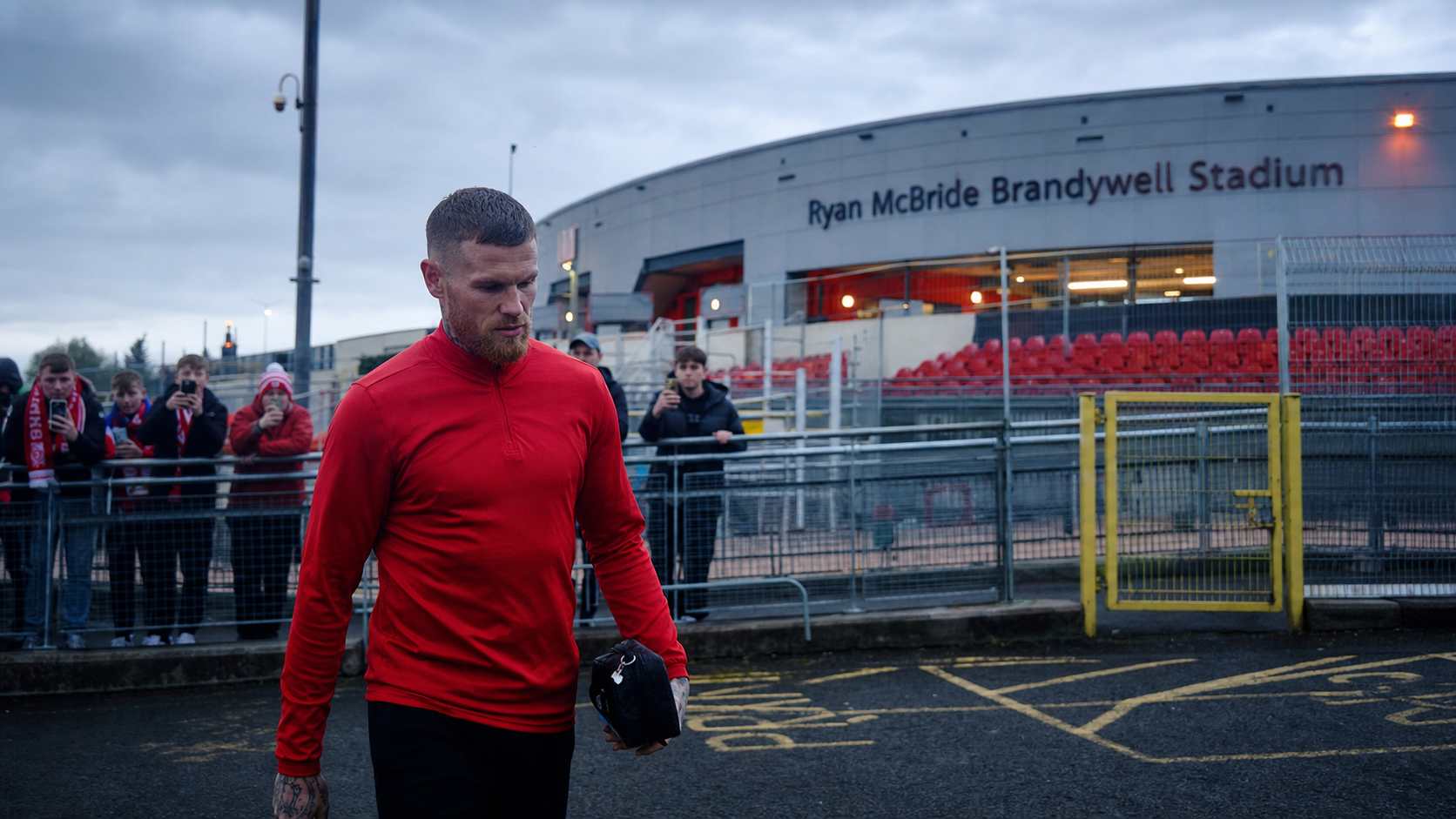
James McClean, the 37-year-old Republic of Ireland international who returned to his hometown club Derry City in January 2026 with ambitions of ending his career at the Brandywell and helping the club win a league title, is expected to leave the club after just seven months following a turbulent stint marked by public dissatisfaction, injuries, and a team performance that has fallen well short of the expectations he brought with him from Wrexham.
Background
James McClean is one of the most recognisable and, at times, controversial figures in Irish football. Born and raised in the Creggan area of Derry, he came through the Derry City academy before moving to Sunderland in 2011, launching a career that took him through Wigan Athletic, West Bromwich Albion, Stoke City, and Wrexham, among others. He earned more than 100 caps for the Republic of Ireland, becoming one of the most capped players in the country's history, and his performances at international level — particularly his work rate and commitment — earned him widespread respect even among those who disagreed with his political views.
His return to Derry City in January 2026 was greeted with considerable excitement in the city. McClean had spoken publicly about his desire to end his career at the club where it began, and the prospect of a local hero returning to help the Candystripes challenge for the League of Ireland Premier Division title generated genuine enthusiasm among supporters. The club signed him on a multi-year deal, and McClean spoke at his unveiling about his ambitions for the club and his personal connection to the city.
The reality, however, proved considerably more complicated. A hip injury curtailed his early months at the club, limiting his availability and preventing him from making the impact he had hoped for. When he did play, his performances were inconsistent, and the team as a whole struggled to mount a serious title challenge. The departure of manager Tiernan Lynch after 19 months in charge added further instability, with Mark Connolly stepping in as interim manager.
Key Developments
The signs of trouble became increasingly public in the weeks leading up to the expected departure. McClean was notably absent from the squad for Derry's 2-0 victory over Sligo Rovers, and he was an unused substitute during the club's Conference League qualifier against Rijeka. His public comments became increasingly pointed: following a 1-1 draw against St Patrick's Athletic in early August, he suggested that "there is an issue somewhere else" rather than a lack of effort or quality among the players — a remark widely interpreted as a criticism of the club's management or structure.
The situation deteriorated further when McClean posted an image on social media showing himself watching his former club Wrexham on television during a Derry City match — a gesture that was interpreted by many supporters as a statement of disengagement. He also became involved in a public online dispute with former Derry City manager Roddy Collins, adding to the sense of a situation that had become untenable for all parties.
During his appearances as a pundit for RTÉ during the 2026 World Cup, McClean openly admitted that he was not enjoying his time at the club — a remarkable public disclosure that effectively confirmed what many had suspected. As of 10 August, both the club and the player had remained silent and had not provided official comments regarding the expected termination of his contract.
Why It Matters
The McClean situation at Derry City is a cautionary tale about the gap between the romance of a homecoming and the reality of a professional football environment. The narrative of a local hero returning to end his career at his hometown club is a compelling one, and it generated genuine goodwill on both sides. But professional football clubs are not sentimental institutions, and the pressures of competing in the League of Ireland Premier Division — with its limited resources, demanding schedule, and high expectations — leave little room for sentiment when results are not forthcoming.
For Derry City, the episode raises questions about the club's recruitment strategy and its ability to manage high-profile signings. The decision to offer McClean a multi-year deal was a significant financial commitment for a club of Derry's resources, and the failure of the arrangement to deliver the expected results will prompt reflection about how such decisions are made. For McClean himself, the Derry experience is a difficult end to what has been a distinguished career, and the manner of his departure — with public recriminations on both sides — is unlikely to be the farewell he had envisaged.
Local Impact
In Derry, the reaction among supporters has been mixed. Many had invested emotionally in the homecoming narrative and are disappointed that it has not worked out. Others are more pragmatic, acknowledging that the fit between McClean's expectations and the club's current situation was never quite right. The club's focus now turns to the remainder of the League of Ireland season, with interim manager Mark Connolly tasked with stabilising results and identifying a permanent successor to Tiernan Lynch. The search for a new manager is expected to be a priority in the coming weeks, with several names already being linked to the vacancy.
What's Next
The formal termination of McClean's contract is expected to be confirmed in the coming days, though neither the club nor the player has yet made an official statement. McClean's future in football is uncertain — at 37, he may choose to retire, or he may seek a move to another club where he can play out the final months of his career. His international career with the Republic of Ireland is also likely to be drawing to a close, though manager Heimir Hallgrímsson has not yet indicated whether he will be included in future squads. Derry City's next fixture provides an opportunity for the club to draw a line under the episode and refocus on the remainder of the season.